How to Find Safe Board and Train for a Reactive Dog Near You
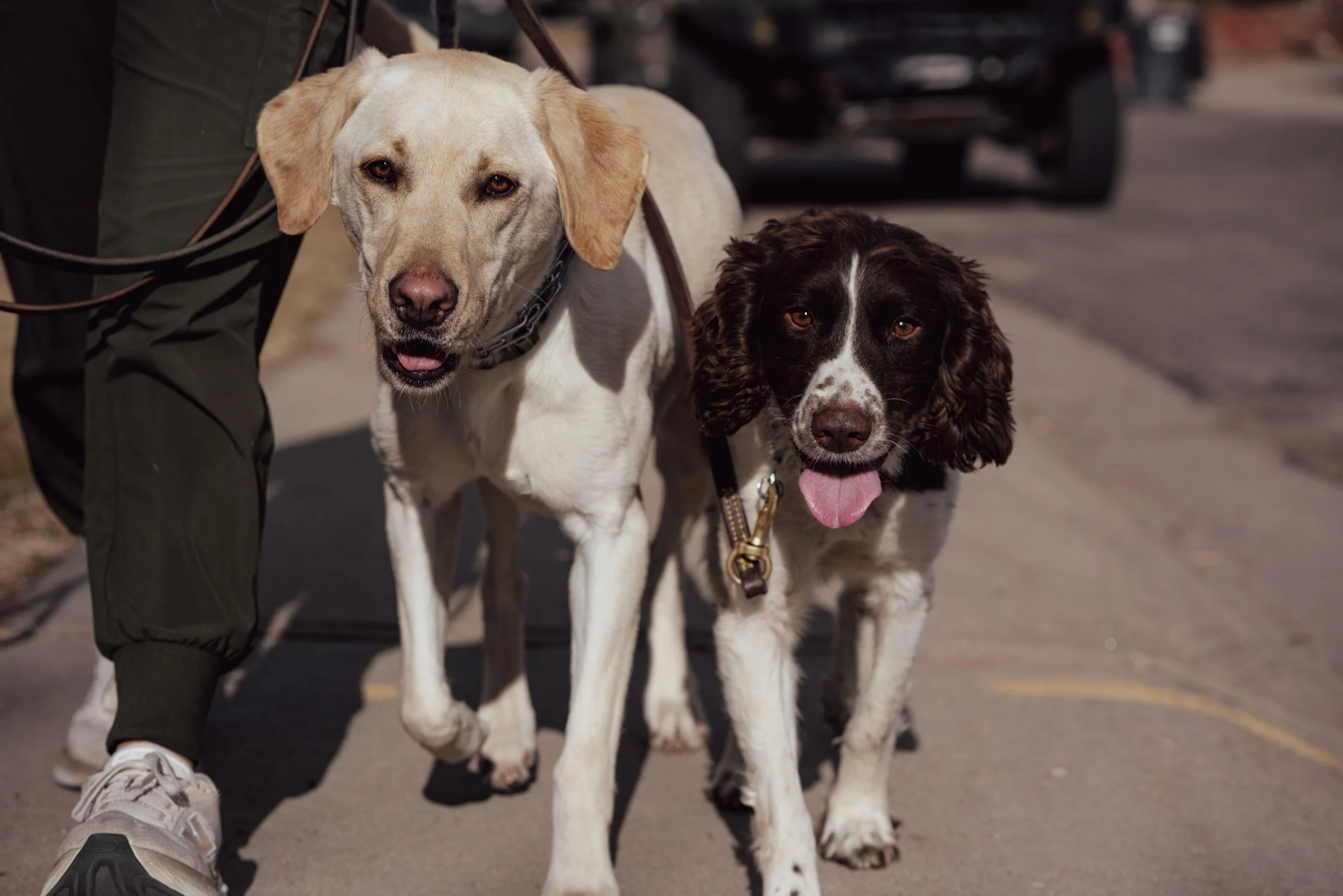
Start with trainers who work with reactivity, not just basic obedience. Ask how they handle your dog's specific triggers, whether they can safely manage a bite history, and what you'll practice together when your dog comes home. Tour the space, ask to see the training methods, and skip anyone who promises a quick cure.
A good program should build safer habits for your dog and give you a plan you can keep using. If you're searching for an aggression board and train near me, you want a program that treats your dog as an individual, not a case number. I'm Katelyn Mendigorin, owner of Good Dog Greeley, and I've spent 10 years working with dogs through training, board and train, and structured walks, including reactive adults. I'll help you know what to ask before you book.
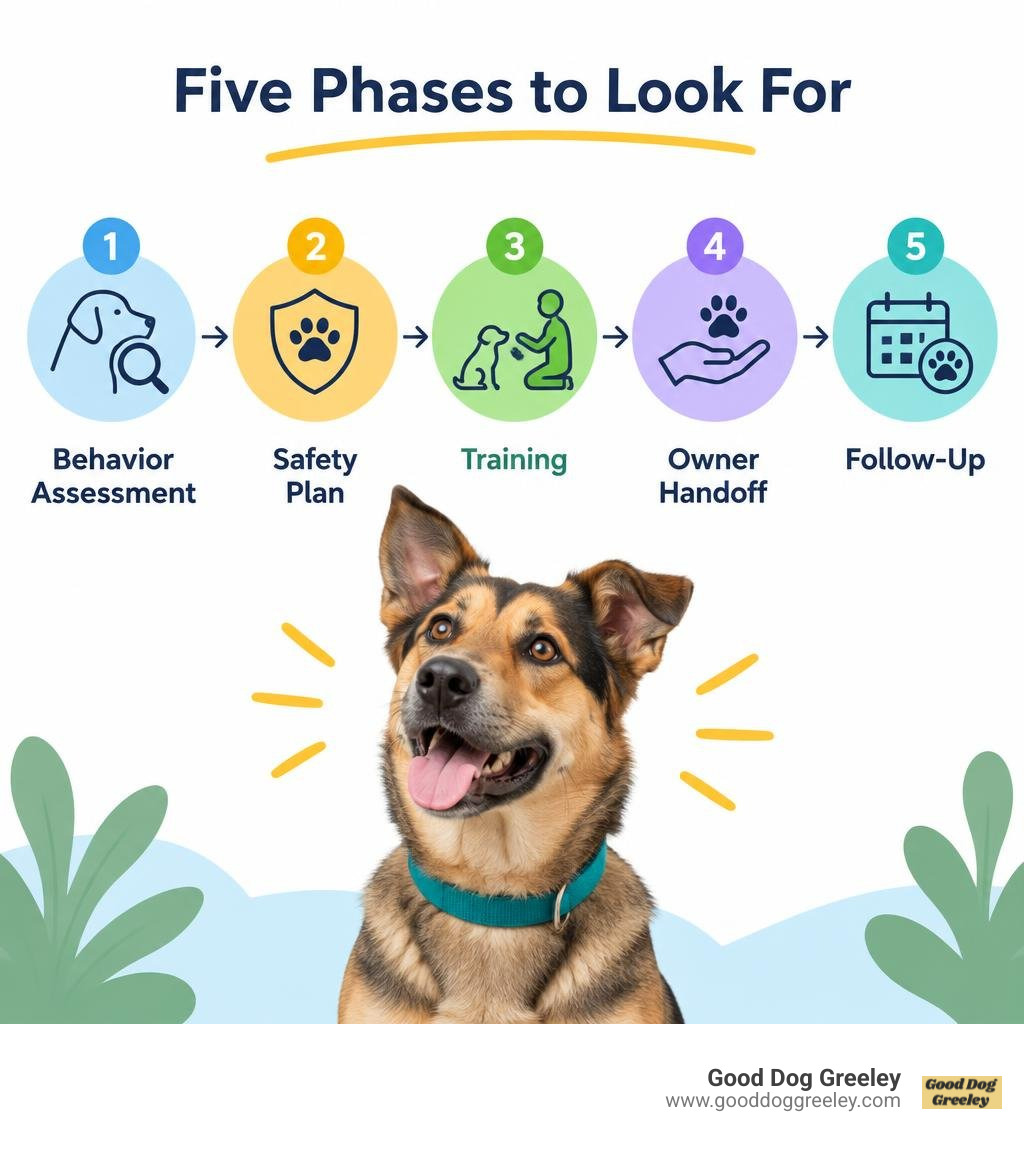
Understanding Aggressive Dog Rehabilitation Programs
Living with a reactive or aggressive dog can feel isolating. Every knock at the door sends your heart racing, and neighborhood walks turn into high-stakes scouting missions. When you look into intensive behavior programs, it helps to understand how true behavior modification differs from everyday obedience.
Standard obedience teaches skills like sit, down, heel, and stay in low-distraction environments. These are great life skills, but a solid sit command does not magically resolve deep emotional triggers. Aggressive dog rehabilitation focuses on the underlying emotions driving unwanted behaviors, whether that is fear, territorial guarding, or frustration.
A comprehensive program addresses specific, complex behavioral issues:
- Dog-to-Dog Reactivity: Barking, lunging, and pulling on the leash whenever another dog appears.
- Resource Guarding: Growling or snapping over food bowls, chew toys, favorite sleeping spots, or even human family members.
- Territorial Aggression: Intense boundary guarding around the yard, windows, doorways, or vehicles.
- Fear-Based Aggression: Defensive displays when unfamiliar people approach or when the dog feels cornered.
- Bite History Management: Careful, structured work with dogs that have escalated to physical contact.
Rehabilitating these behaviors requires tailored plans, controlled setups, and trainers with hands-on experience handling complex temperaments. If you need specialized help in Northern Colorado, our dedicated aggressive dog training in Greeley, CO provides structured behavior plans built around your pup's specific triggers.
What to Expect from an Aggression Board and Train Near Me
When your dog enters an immersive program, their entire routine is structured to lower baseline stress and build clear communication. Dogs struggling with reactivity often live in a state of chronic trigger stacking, where one stressful event piles on top of another until they boil over.
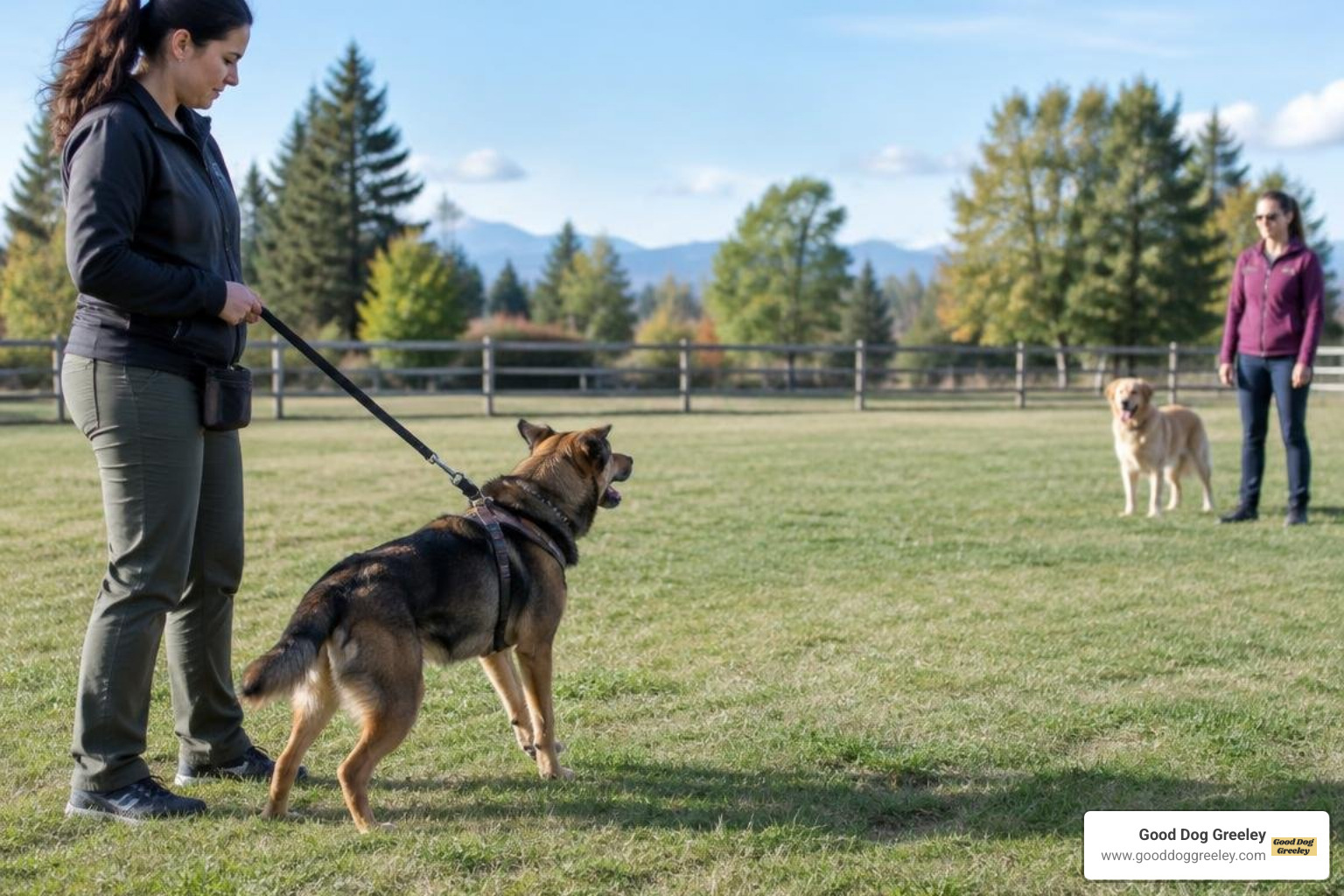
An immersive environment resets that baseline. Your dog gets predictable daily routines, structured rest, physical exercise, and clear boundaries from day one.
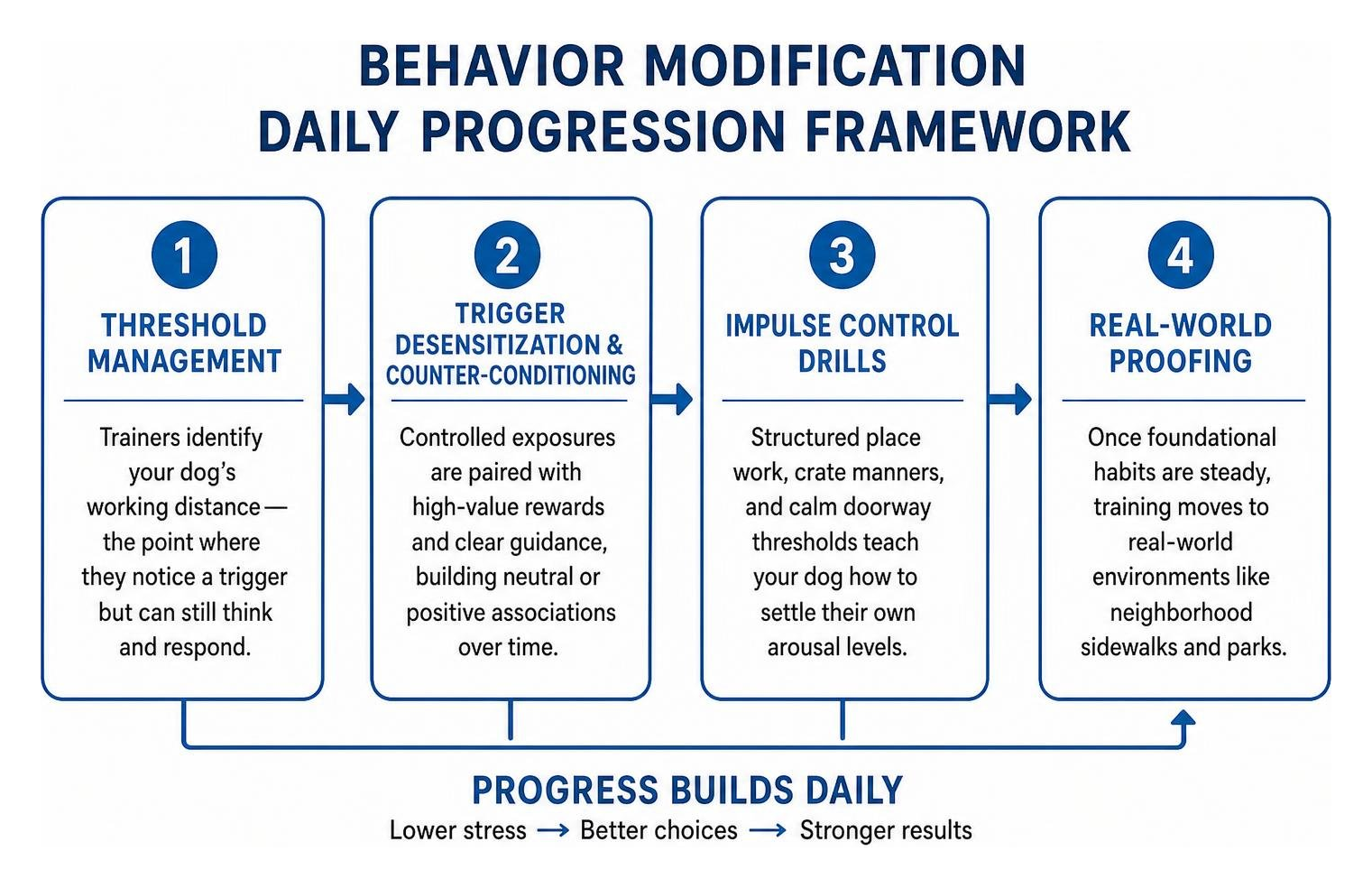
Here is what daily progress looks like inside a professional program:
- Threshold Management: Trainers identify your dog's working distance, which is the exact point where they notice a trigger but can still think and respond without melting down.
- Trigger Desensitization and Counter-Conditioning: The trainer pairs controlled exposures with high-value rewards and clear guidance, gradually helping your dog build neutral or positive associations.
- Impulse Control Drills: Structured place work, crate manners, and calm doorway thresholds teach your dog how to settle their own arousal levels.
- Real-World Proofing: Once foundational habits are steady, training moves to real-world environments like neighborhood sidewalks and parks across Denver, Broomfield, or Castle Rock.
How to Find the Best Aggression Board and Train Near Me
Finding the right trainer for a reactive dog requires careful research. Just as someone looking for martial arts classes evaluates specific disciplines and schools through resources like a local dojo directory, you want to find a dog trainer whose methods and setup match your dog's distinct behavioral needs.
Start by asking local veterinarians, groomers, and fellow pet owners across areas like Lafayette, Louisville, or Highlands Ranch for recommendations. Once you have a shortlist, schedule an evaluation or consultation.
Take a close look at the physical environment where your dog will stay. Commercial kennel facilities house dozens of dogs in loud, high-stress kennel runs, which can elevate arousal for an already reactive dog. In contrast, home-based board and train settings provide a calm, real-life household environment where dogs learn how to relax in a living room, greet guests calmly at a real front door, and practice household manners around the clock.
| Training Environment | Stress Level | Daily Structure | Best Suited For |
|---|---|---|---|
| Home-Based Immersive | Low to Moderate (Quiet, realistic home setting) | Continuous, real-world household manners and routines | Reactive dogs, fear issues, resource guarding |
| Commercial Facility | High (Multiple barking dogs, concrete runs) | Scheduled blocks between kennel resting periods | High-drive sport dogs, basic obedience |
| Day Training / Drop-Off | Moderate (Daily travel transitions) | Short daily sessions with evenings at home | Mild manners, basic puppy foundations |
Evaluating Cost and Program Length for an Aggression Board and Train Near Me
Modifying deep-rooted aggression is a gradual process. True behavior change requires time for a dog to decompress, learn new coping mechanisms, and generalize those skills across different handlers and settings. Comprehensive aggression rehabilitation programs generally run anywhere from three to six weeks or longer depending on the severity of the behavior.
Costs reflect the specialized skills, liability, round-the-clock management, and direct trainer attention required to keep everyone safe. If you are comparing options, take time to review our pricing guide for board and train programs in 2026 to see how program length and trainer experience influence overall rates. While you might be searching for finding affordable board and train options near you, when it comes to safety and aggression, quality and transparency matter far more than bargain shopping.
Key Qualifications, Training Philosophies, and Safety Red Flags
Dog training is largely unregulated, which means anyone can print business cards and advertise behavior modification. When your dog has serious behavioral challenges, you need a professional who understands canine body language, drive states, and balanced training principles.

Balanced training utilizes clear communication, fair boundaries, and positive reinforcement to guide a dog toward reliable choices. Trainers who practice balanced methods use quality training equipment, such as slip leashes, prong collars, and modern e-collars, as clear communication tools paired with plenty of praise and rewards. When properly fitted and introduced with patience, these tools provide safety, precision, and confidence for both the dog and handler on walks through busy spots like Cherry Creek or Washington Park.
Understanding how hands-on care impacts overall board and train prices helps you appreciate the level of individual attention your dog receives during their stay.
Warning Signs and Facility Red Flags
Keep an eye out for these red flags when touring or interviewing prospective programs:
- Guaranteed Quick Fixes: Any trainer promising to "cure" severe aggression in just a few days is setting unrealistic expectations. Behavior modification takes consistent practice and long-term management.
- Vague Methodology: If a trainer cannot clearly explain what a typical training day looks like, how they reward good choices, or how they interrupt dangerous behaviors, look elsewhere.
- No Video Updates or Transparency: Reputable trainers happily share video progress of your dog working through challenges in real-time.
- Unattended Housing: Facilities that leave reactive or anxious dogs completely unattended overnight without monitoring systems present serious safety risks.
- No Owner Education: If the program does not include thorough hands-on transition lessons for you, the training will fall apart as soon as your dog comes home.
Transition Planning and Long-Term Success at Home
A board and train program lays a solid foundation, but the real test happens when your dog returns to your living room. Dogs are contextual learners, meaning they quickly understand what behaviors work with their trainer. Your job is to step into the driver's seat and maintain those same clear standards.
During turnover sessions, your trainer should coach you through:
- Proper Leash Mechanics: Holding the leash comfortably, reading your dog's subtle body language cues, and giving clear guidance before your dog fixes on a trigger.
- Threshold and Crate Routines: Keeping daily boundaries intact so your dog practices impulse control at doorways, meal times, and greeting moments.
- Managing Secondary Stress Behaviors: Addressing stress habits like pacing, barking at fences, or working on destructive chewing and anxiety by maintaining clear daily structure and mental enrichment.
Structured Follow-Up Support
Your relationship with your trainer shouldn't end at the pickup handoff. Long-term behavioral success relies on ongoing support as you navigate real-world situations across Erie, Superior, or Niwot.
Look for programs that include private follow-up lessons, group maintenance classes, and easy communication via phone or email. Having an expert in your corner gives you the confidence to work through unexpected bumps in the road and celebrate your dog's progress over time.
Frequently Asked Questions About Aggression Board and Train Programs
How long does a board and train for aggression typically take?
Because severe reactivity and aggression involve deep emotional habits, rehabilitation programs typically require several weeks of immersive daily work. Complex cases involving multiple bite incidents or severe fear often take a month or more to build reliable responses in distracting real-world settings.
Can a board and train program completely cure dog aggression?
It is more accurate to view behavior modification as building reliable coping skills and a clear management plan rather than an outright "cure." A quality program dramatically lowers your dog's reactivity, increases their responsiveness to cues, and gives you the tools to prevent dangerous situations throughout your dog's life.
What training tools are safe and effective for reactive dogs?
Balanced training tools like properly conditioned prong collars and modern low-level e-collars are safe and humane communication aids when introduced correctly by an experienced professional. They provide clear tactile feedback that cuts through high adrenaline, allowing reactive dogs to remain focused and calm without physical struggle.
Partner with Experienced Behavior Specialists
Rehabilitating an aggressive or reactive dog takes patience, clear communication, and the right team behind you. With the right foundation and dedicated follow-through, you can replace daily walk anxiety with peaceful, structured routines.
If you are ready to build a calmer, more confident relationship with your pup across Northern Colorado and the Denver metro area, connect with professional training experts for customized behavior plans at Good Dog Greeley to schedule your initial consultation.