First Priorities: Home Routines, Socialization, and Mindset
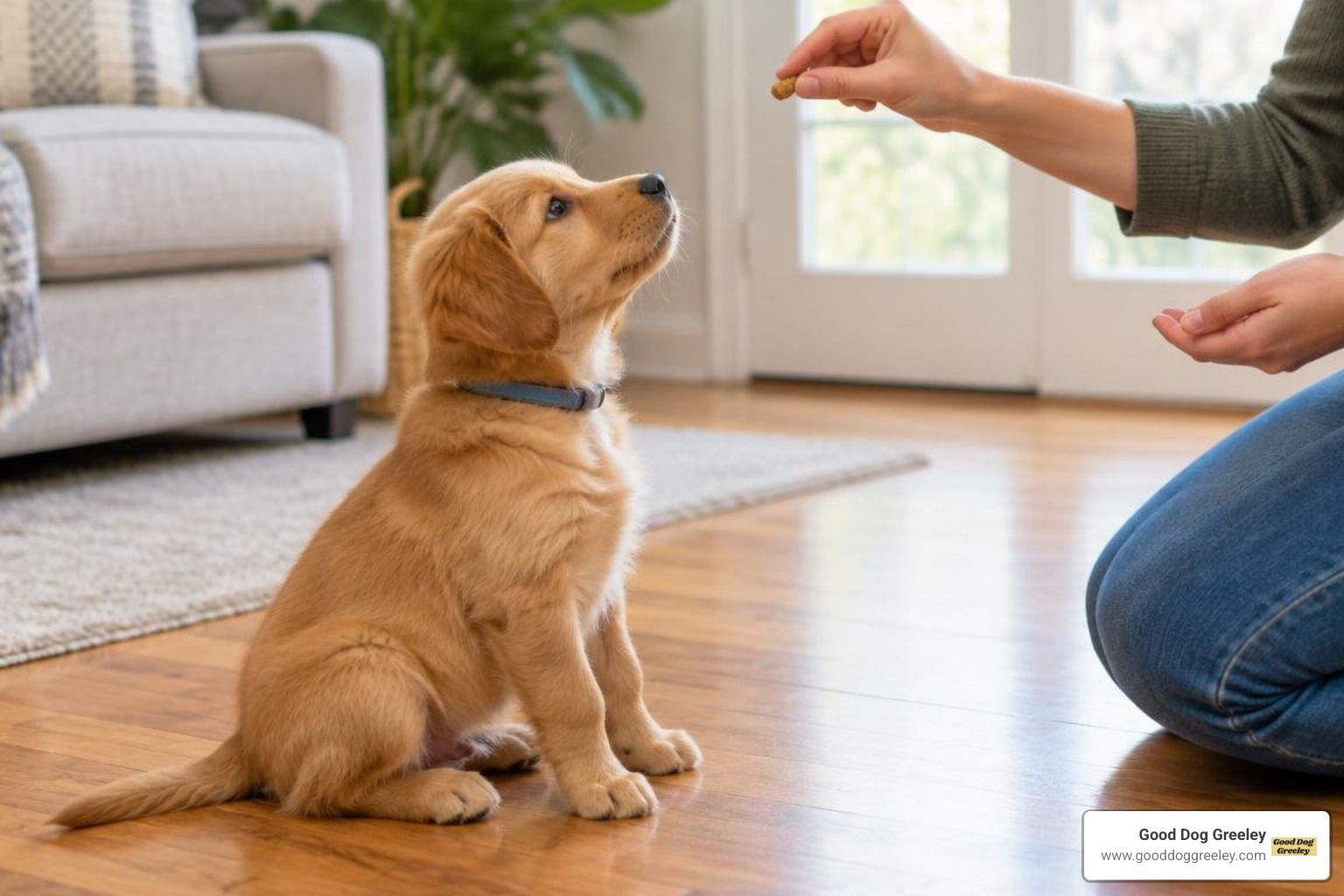
Bringing a brand-new puppy home is exciting, messy, and a little chaotic all at once. Before you worry about teaching flashy tricks, your primary goal is helping this little pup figure out how to live comfortably in your home. That starts with a predictable daily structure. Puppies thrive when they know what to expect. A steady routine for meals, naps, potty breaks, and playtime helps them settle in fast and prevents unwanted stress.
Early on, you will also navigate bite inhibition, crate comfort, and fear periods. When your puppy mouths your fingers with those needle-sharp teeth, a calm high-pitched "yip" followed by offering an approved chew toy helps them learn bite inhibition naturally. If you want to dive deeper into those first critical steps, check out What Are The First Things You Should Teach a Puppy? for extra pointers. Providing plenty of safe textures also keeps your furniture safe, and learning the basics of preventing destructive chewing early on will save your baseboards and shoes.
Building a Foundation: Puppy Obedience vs Rigid Compliance
There is a huge difference between building true obedience and forcing rigid compliance. In the dog training world, rigid legalism looks like demanding perfection out of fear or frustration. True obedience is rooted in clarity, trust, and teamwork.
When your pup understands what you want and feels safe working with you, they offer voluntary cooperation. They want to engage because working together is fun and rewarding. This relationship-first mindset creates emotional resilience. Instead of shutting down when they make a mistake, your puppy learns to think through puzzles, stay engaged, and look to you for direction.
Priority Setup: Potty Training, Crating, and Routine
Potty training and crate conditioning go hand in hand thanks to a puppy's natural den instinct. Dogs naturally prefer not to soil the space where they sleep. By setting a proactive schedule, taking your pup out right after waking up, eating, or playing, you set them up for success.
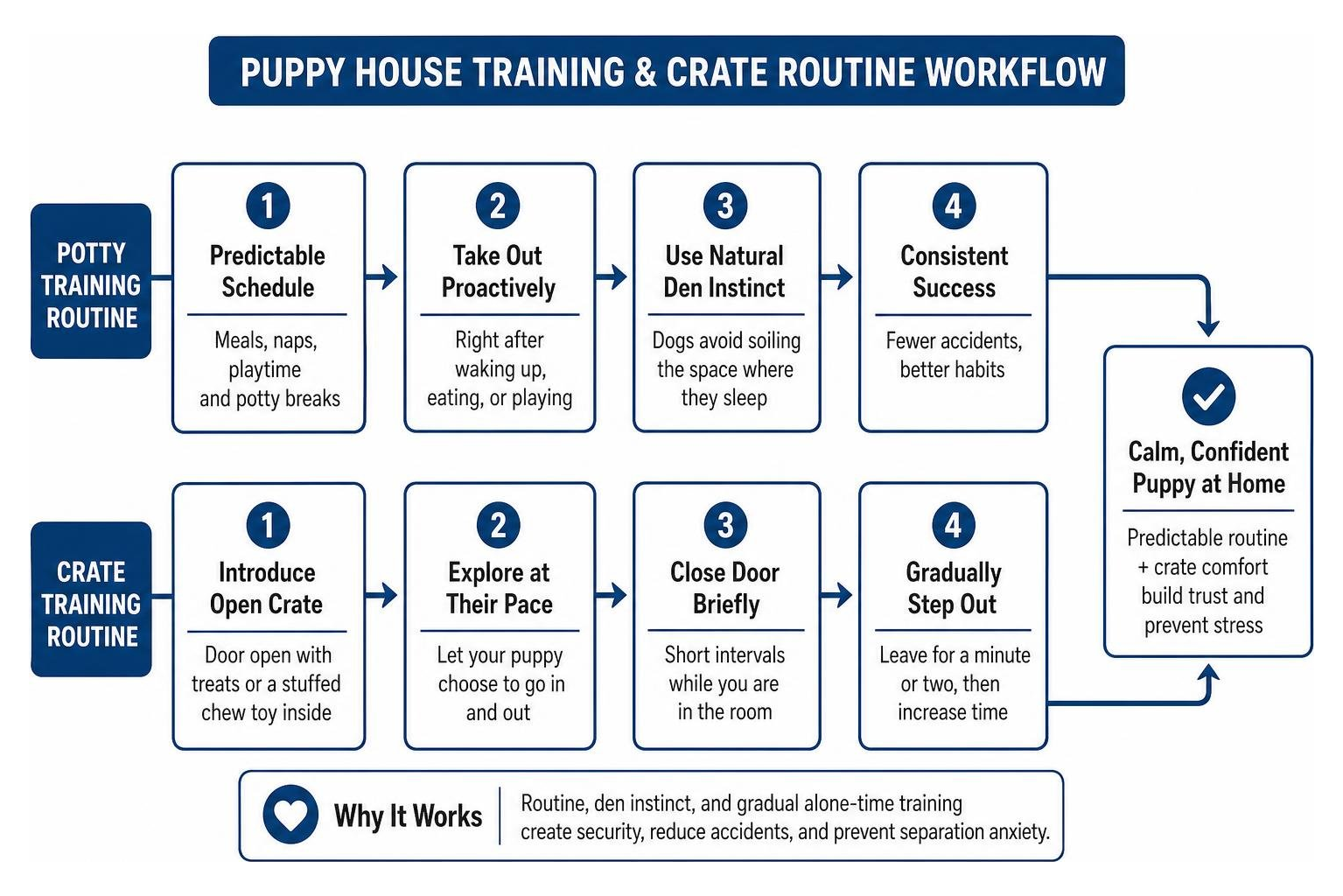
Crate training is also your best tool for alone-time conditioning. Start by leaving the crate door open and tossing in treats or a stuffed chew toy. Let your pup explore it at their own pace. Gradually close the door for short bursts while you are in the room, then step out for a minute or two. Teaching your puppy that resting alone is normal prevents separation anxiety down the road.
Mastering Puppy Obedience: Essential Methods and Progression
Teaching obedience cues is all about clear communication. We use positive reinforcement to build behaviors step by step. When your puppy does what you want, you mark that exact moment with a clear verbal marker like "yes!" or a clicker, and immediately follow it with a reward.
There are two primary ways to introduce a new behavior:
- Luring: You hold a tasty treat right at the puppy's nose and gently guide their body into position (like raising it slightly above their head to help their rear drop into a sit).
- Capturing: You simply wait for the puppy to offer the behavior naturally, like lying down to rest, and mark and reward it the second it happens.
Core Puppy Obedience Cues: Step-by-Step Progression
When teaching foundational cues, progress gradually. You can explore the AKC guide to Teach Your Puppy These 5 Basic Cues alongside the simple steps below:
- Recall (Come): Start in a quiet room with zero distractions. Say your pup's name or "come" in a happy tone. The moment they take a step toward you, mark with "yes!" and give a high-value treat. Practice across short distances indoors before ever trying this outside.
- Sit: Hold a treat at your puppy's nose, slowly lift it up and back over their head. As their nose follows the treat, their bottom will naturally touch the floor. Mark, reward, and add the verbal cue "sit" once they understand the motion.
- Down: From a sit, hold a treat right in front of their nose and lower your hand straight down to the floor between their paws. As they follow the scent down, slide your hand forward slightly. The second their elbows touch the floor, mark and treat.
- Stay and Release: Ask for a sit, pause for just two seconds while they remain still, reward in position, and then give a clear release word like "free" or "OK" as you invite them to move. Gradually build up duration before you start adding physical distance.
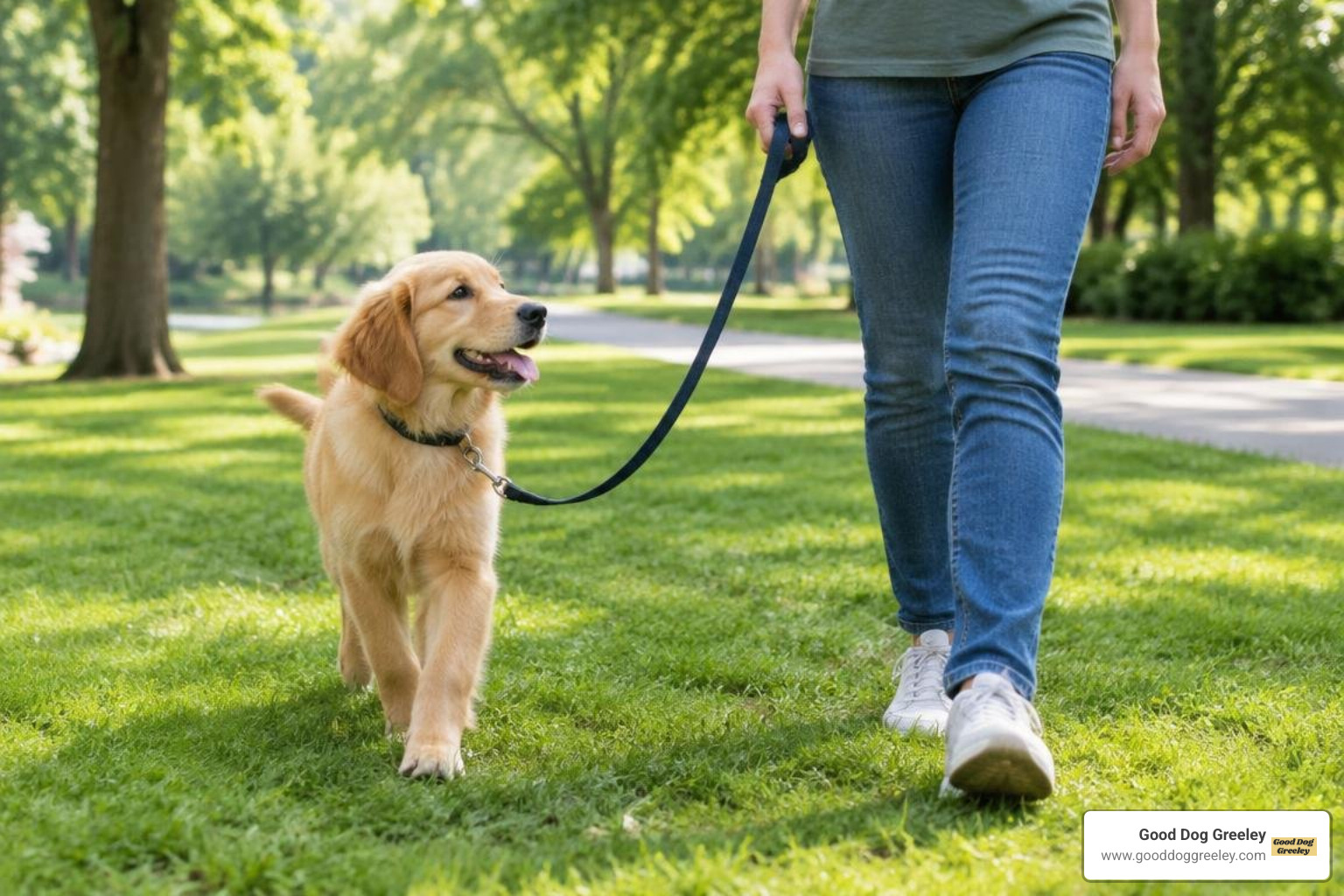
- Loose-Leash Walking: Clip on the leash in your living room or hallway. Reward your puppy every couple of steps for walking near your leg on a loose leash. If they pull ahead, stop moving like a tree. The moment the leash relaxes and they look back at you, reward and move forward again.
Structuring Micro-Sessions for Maximum Focus
Puppies have tiny attention spans. Keeping practice sessions to five to 10 minutes prevents mental fatigue and keeps enthusiasm sky-high. Use high-value rewards like small bites of real chicken, cheese, or freeze-dried meat.
Remember the old saying: a tired dog is a good dog, but a mentally and physically balanced puppy is even better! Quick, focused training games wear your puppy out faster than a long, aimless walk because their brain is working hard. Always end every session on a high note with a simple win and plenty of praise. For families seeking hands-on help, enrolling in puppy training in Greeley, CO provides practical support right when you need it most.
Training Environments: Home and Real-World Settings
Where you train matters just as much as how you train. A quiet living room is the best place to introduce a new cue because your puppy can focus completely on you. Once a behavior is reliable inside, you can begin practicing in slightly more challenging spots, like your backyard, a quiet driveway, and eventually a park.
| Training Setting | Main Advantages | Primary Challenges | Best Used For |
|---|---|---|---|
| Living Room / Home | Low distraction level, puppy feels secure, easy to capture focus. | Does not prepare pup for outside excitement. | Introducing new cues, crate practice, meal routines. |
| Fenced Backyard | Mild environmental scents and sounds while staying controlled. | Sniffing grass, bugs, and minor neighborhood noises. | Building recall distance and practicing stay duration. |
| Supervised Public Spaces | Teaches real-world focus, neutral socialization, leash handling. | Unpredictable dogs, people, sounds, and overstimulation. | Proofing known cues, loose-leash walking, impulse control. |
The goal of public exposure is environmental neutrality. You want your puppy to observe other dogs, people, bikes, and noises without feeling the need to run up to everything or panic. Keeping your pup under their stress threshold ensures they learn to stay calm and check in with you anywhere you go.
Common Training Pitfalls and Best Practices for Long-Term Success
One of the most common mistakes new puppy owners make is repeating cues over and over, like saying "sit, sit, sit, sit!" If your puppy does not respond the first time, repeating the word only teaches them that the first three were optional. Instead, get their attention first, reduce distractions, or help lure them into position.
Another pitfall is physically pushing a puppy into a sit or down. Forcing their body can create resistance and confusion. Guide them with a lure or capture the movement instead. If you find yourself hitting a wall with stubborn habits, learning how to handle disobedient dog behaviors will keep your daily progress moving in the right direction.
Choosing the Right Puppy Training Support
When looking for an instructor or puppy class, do a little homework. Ask if you can observe a class before signing up. Look for happy, engaged dogs and an instructor who explains concepts clearly and treats both owners and pets with patience.
A quality trainer knows how to handle common puppy challenges like biting, jumping, and barking without losing their cool. Whether you work with a trainer one-on-one or join a structured group class, make sure their teaching style matches your goals and values.
The Power of Patience and Household Consistency
Consistency is the glue that holds all puppy training together. If one family member lets the puppy jump on the couch while another scolds them for it, the puppy will end up confused.
- Get everyone in your home using the exact same cue words (choose either "down" or "off", not both).
- Set clear house rules from day one regarding furniture, jumping, and begging at the table.
- Track small wins day by day, like holding a stay for three seconds longer or ignoring a passing distraction.
Patience is everything. Your puppy is learning an entirely new language while growing at lightning speed. Stay steady, celebrate the small steps, and keep sessions upbeat.
Frequently Asked Questions About Puppy Obedience
When should puppy obedience training and socialization begin?
Training starts the day your puppy comes home, usually around 8 weeks old. Very young puppies can easily learn their name, basic manners, potty routines, and simple cues like sit. The critical socialization period closes around three months of age, so focus on safe, positive exposures to different sights, surfaces, and sounds while working alongside your veterinarian regarding vaccine schedules.
When should I seek professional help for puppy behavior?
If you feel overwhelmed, or if your puppy shows extreme fear, intense resource guarding around food or toys, or sudden unprovoked reactivity, it is wise to reach out to a professional right away. Getting professional guidance early prevents small behavioral quirks from turning into ingrained adult habits.
How do I stop puppy biting and jumping during obedience sessions?
Puppies jump and nip when they get overexcited. Use the "four on the floor" rule: all attention, treats, and petting stop the moment paws leave the ground. Turn your body slightly to remove your attention. As soon as all four paws are back on the floor, reward them calmly. For biting, keep a durable chew toy handy to redirect their mouth onto something appropriate.
Setting Up Your Puppy for a Lifetime of Success
Training a puppy is a journey made up of small, daily moments. From those first clumsy attempts at sitting in your kitchen to walking calmly through neighborhood parks, the time you invest today pays off for the rest of your dog's life. Focus on clear communication, keep your practice sessions short and fun, and enjoy watching your pup grow into a confident, well-mannered companion. If you ever need hands-on guidance or structured training support, our team at Good Dog Greeley is always here to help you and your dog succeed together.