What Is German Shepherd Board and Train and How Does It Work?
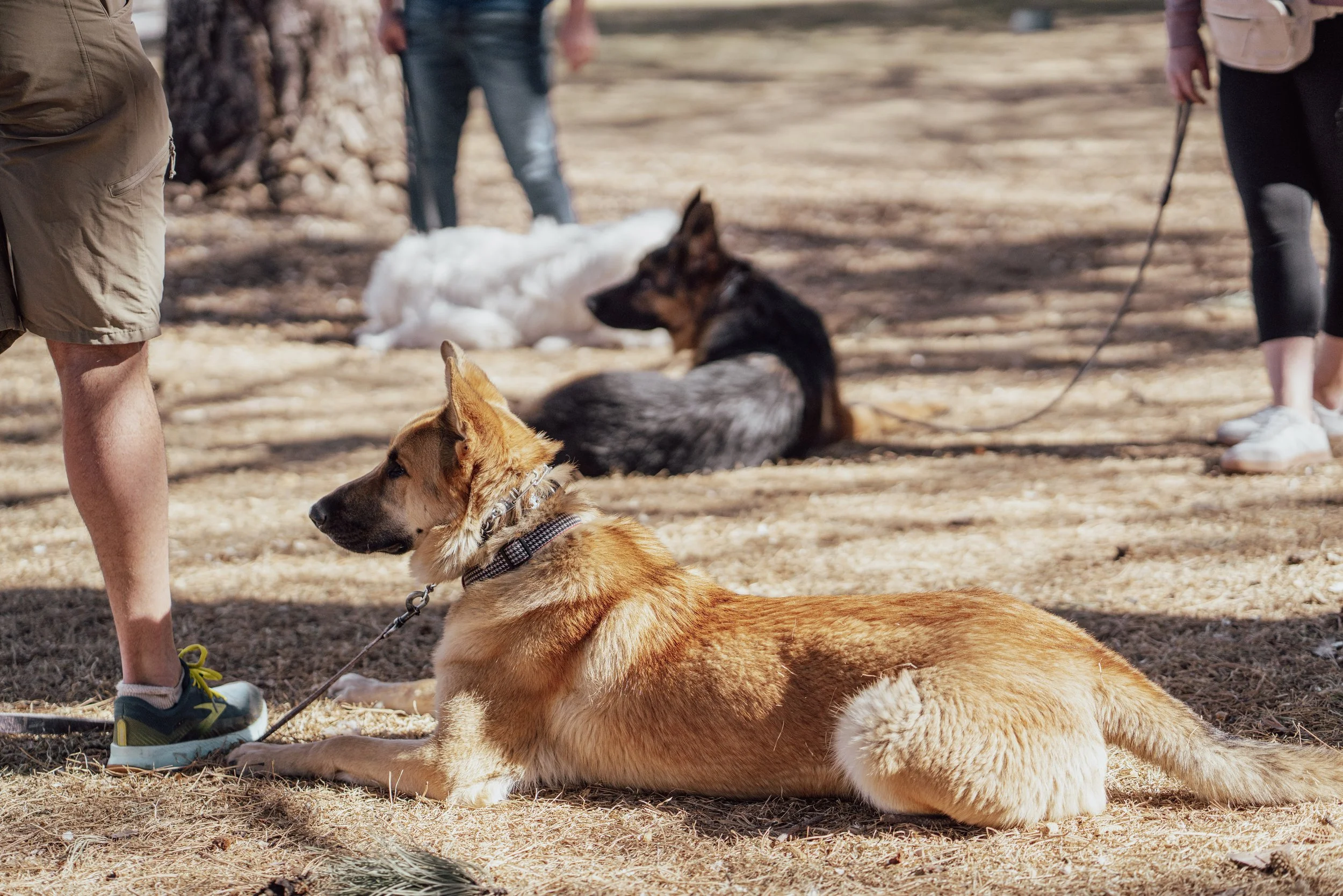
German Shepherd board and train is an immersive program where your dog lives with a professional trainer in a real home environment for several weeks. Instead of working through hourly weekly sessions, your dog stays directly with the trainer and practices real-world manners every single day. We focus on clear marker words, structured impulse control around normal household distractions, loose-leash walking, and reliable recalls. Dogs learn how to settle calmly during meal times, relax quietly in a crate, and navigate daily life without constant excitement. For a full breakdown of breed-specific training steps, check out this comprehensive guide to German Shepherd training.
German Shepherds are ranked as the #4 most popular dog breed in the United States by the American Kennel Club, and for good reason. They are loyal, athletic, and score a perfect 10/10 on the trainability index. They can pick up brand new cues in just a few repetitions. However, owning one can sometimes feel like being handed the keys to a high-powered sports car when you only know how to drive a golf cart.
Because Shepherds are working animals with big brains and plenty of natural drive, living with a trainer helps reset bad habits quickly. We work on calm crate behavior, doorway etiquette, and polite manners around guests, while giving them structured mental and physical outlets every single day. If you want to see how we structure our hands-on programs, take a look at our professional board and train services.
The Pros and Cons of German Shepherd Board and Train
Enrolling your dog in an immersive program comes with huge perks, but it is important to understand the full picture before jumping in. Here is a quick look at the main pros and cons:
| Factor | Pros | Cons |
|---|---|---|
| Learning Speed | Intensive daily reps create fast, reliable obedience foundations. | Dogs need consistent owner follow-up so skills do not fade at home. |
| Distraction Proofing | Practiced around real-world triggers, other dogs, and novel sights. | The owner is not physically present for the initial learning stages. |
| Owner Time & Effort | Professional handles the heavy lifting of breaking bad habits. | Requires an upfront financial investment compared to group classes. |
| Behavior Reset | Removes dogs from established routines that trigger reactive patterns. | Owners must be ready to change their own handling habits at turnover. |
The biggest benefit is the accelerated learning curve. Professional trainers spot subtle body language cues instantly, rewarding the right decisions and correcting mistakes before they become habits. On the flip side, board and train is an investment. You can review transparent board and train prices to see what fits your budget and lifestyle.
Determining the Right Age and Development Timing
Timing matters when sending a Shepherd away for training. The critical socialization window for German Shepherds closes right around 16 weeks of age. During this early stage, gentle, positive exposure to new sounds, surfaces, and sights is essential to prevent fear-based reactivity later in life.
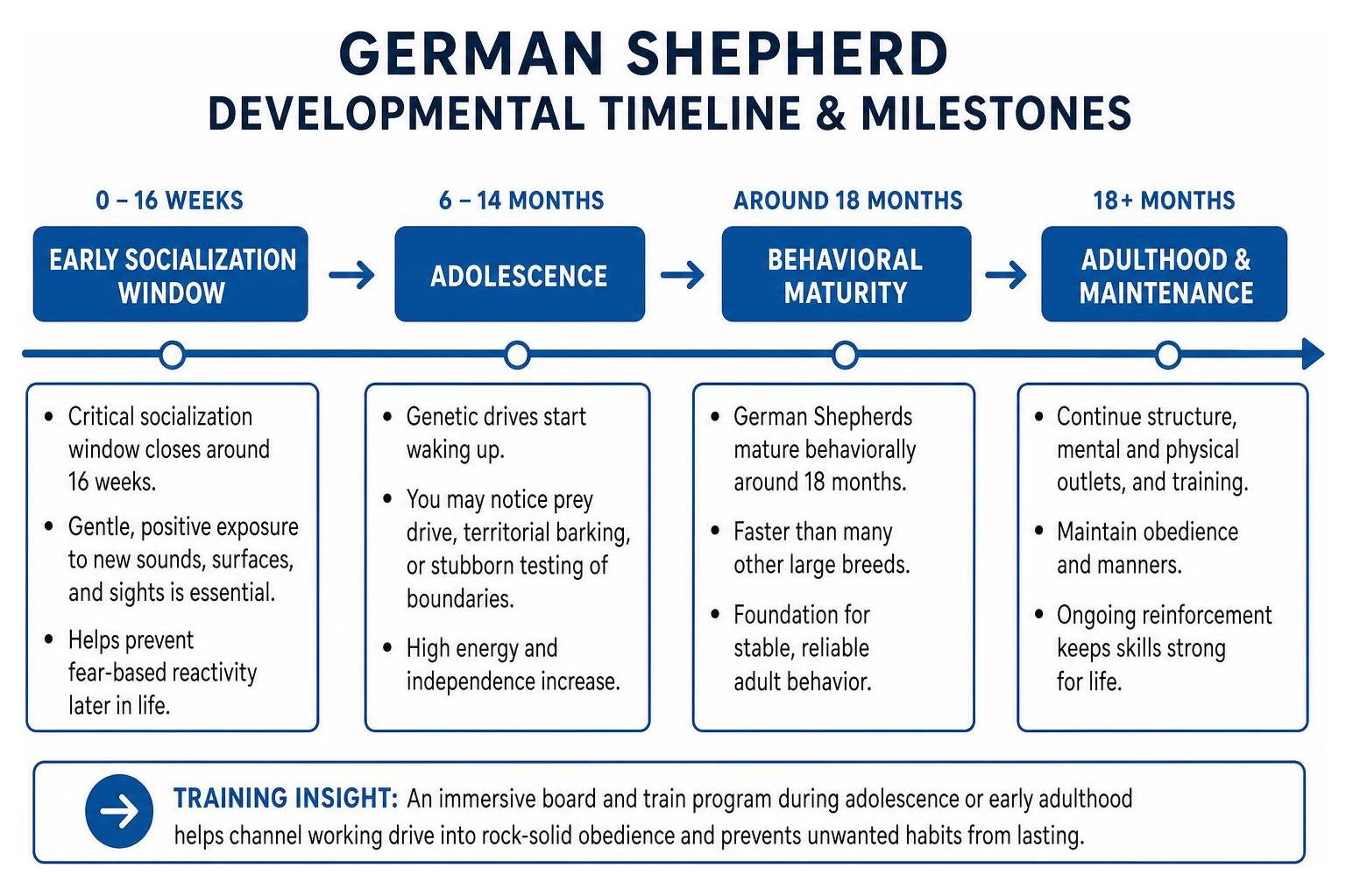
As these dogs hit adolescence between 6 and 14 months, their genetic drives start waking up. You might suddenly notice prey drive, territorial barking, or stubborn testing of boundaries. German Shepherds mature behaviorally around 18 months, which is faster than many other large breeds. An immersive program during adolescence or early adulthood helps channel their working energy into rock-solid obedience before unwanted habits turn into permanent adult behaviors.
Obedience Foundations and High-Drive Behavior Management
German Shepherds generally come from two distinct backgrounds: show lines and working lines. Show lines are often a bit more relaxed, while working lines have intense prey drive, high energy, and an unyielding desire to work. Both varieties share an instinctive need to participate in structured daily tasks.
If you do not give a high-drive Shepherd a clear job, they will happily create their own job. Usually, that self-assigned job involves barking at every passing leaf, chasing the neighbor's cat, pacing your fence line, or herding kids around the yard. Channelling that energy into purposeful obedience drills gives them a healthy, constructive outlet for their natural drives.
In our programs, we balance clear rewards with effective communication tools. Balanced training allows us to teach exact obedience cues with positive reinforcement while using properly conditioned tools like prong collars and e-collars for crystal-clear clarity. An e-collar acts like an invisible, gentle tap on the shoulder at a distance, making off-leash reliability and prey drive control possible even when your dog spots a sprinting squirrel. We dive deep into managing high-drive behavior and practical training tips across our behavior insights on our trainers blog.
It is also worth noting that while many people assume their Shepherd is a natural guard dog, only about 1% of German Shepherds have the right temperament for true personal protection work. For the other 99%, focusing on solid obedience, polite house manners, and calm focus makes them safe, confident companions for the whole family.
Handler Bonding, Behavioral Risks, and In-Home Transfer
A common concern among owners is whether sending their dog away will hurt their relationship. German Shepherds are famously loyal and tend to bond deeply with their primary handler. A stay with a trainer does not weaken that connection. In fact, returning home with clear boundaries and reliable obedience almost always improves your relationship because daily frustration and stress disappear.
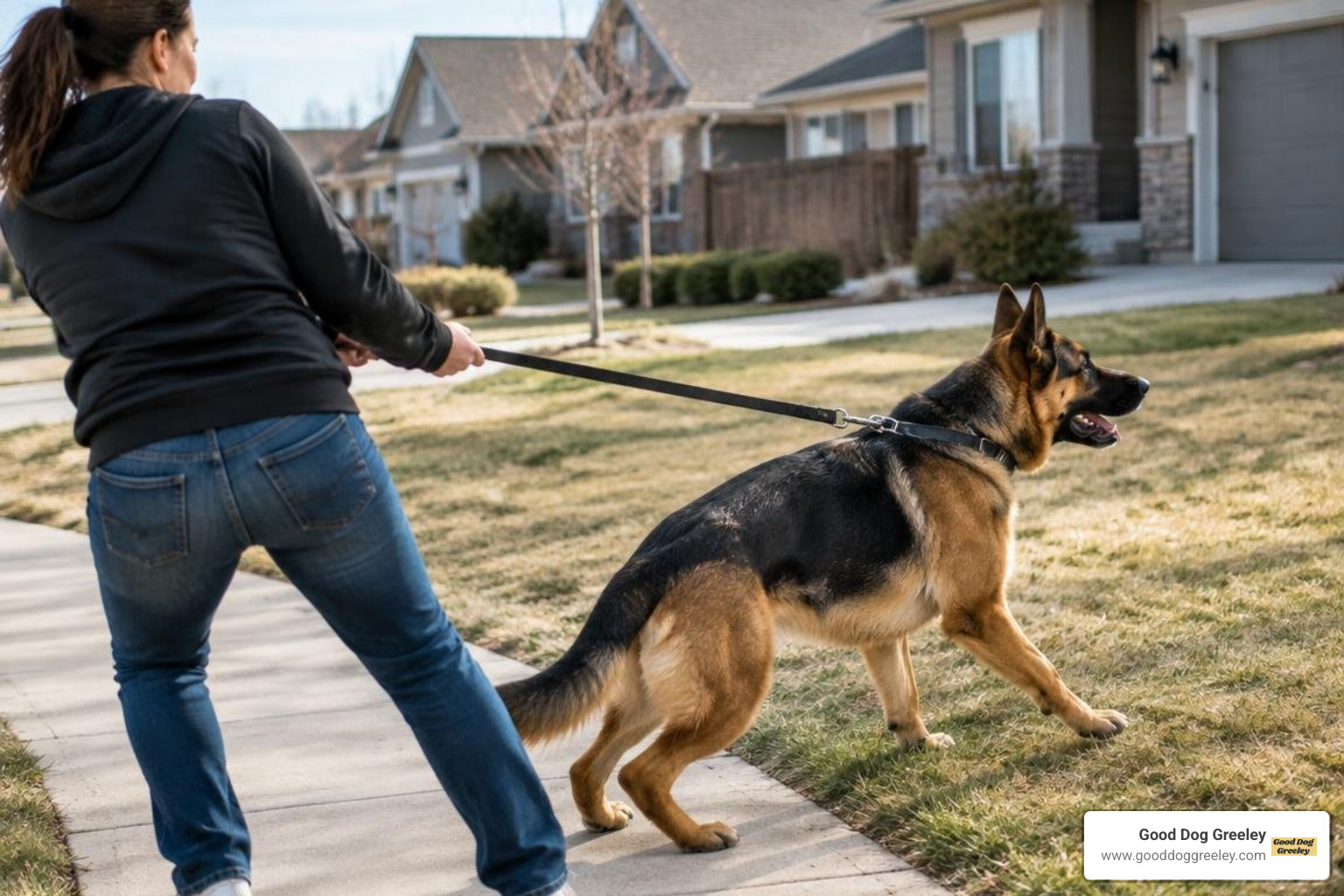
The main risk of any board and train program is the transfer back to your home. If a dog behaves like an angel for the trainer but goes right back to jumping on the counter and pulling on walks at home, the program failed its ultimate goal. German Shepherds are context-smart animals and quickly test whether family members hold the same expectations as the trainer.
To bridge that gap, we emphasize detailed turnover sessions and clear home maintenance routines. We teach you:
- How to hold the leash and maintain proper positioning during walks.
- How to use marker words and deliver rewards with the correct timing.
- How to set clear household boundaries using place commands and crate rest.
- How to handle distractions in your neighborhood without losing your dog's focus.
Key Selection Criteria for a German Shepherd Board and Train Program
Not all training facilities are built the same. When looking for the right partner for your Shepherd, keep these key points in mind:
- Home-Style Environment: Look for trainers who house dogs in a real home setting rather than a loud, warehouse-style kennel. Home setups replicate real living conditions, including doorbells, kitchen counters, and calm lounging.
- Balanced Tool Proficiency: Make sure the trainer is experienced and properly educated in using balanced tools like slip leads, prongs, and e-collars safely and humanely.
- Extensive Owner Coaching: A quality trainer spends ample time working directly with you before, during, and after the program.
- Breed Understanding: German Shepherds are sensitive and intelligent. Your trainer needs to understand how to read working dog body language without using excessive pressure.
If you are exploring local training choices across Greeley, Denver, Niwot, Lafayette, or Castle Rock, check our guide on finding an affordable board and train near me for practical tips on evaluating programs.
Frequently Asked Questions
Will my German Shepherd think they were abandoned during board and train?
Not at all. Dogs live in the present moment. While they might take a day or two to settle into their new routine, a structured schedule filled with walks, training sessions, and mental enrichment keeps their minds busy. When you reunite at the end of the program, they will be thrilled to see you, and the newly learned structure will only make your daily life together smoother.
How do I ensure my German Shepherd's training sticks after coming home?
Consistency is everything. The trainer builds the foundation, but you reinforce the habits. Follow the daily routine provided at your turnover session, keep your rules consistent across all family members, and practice short 5-minute obedience drills daily. If you stick to the plan, your dog will maintain their great manners for years to come.
Can board and train fix severe leash reactivity in German Shepherds?
Yes, immersive training is one of the most effective ways to address leash reactivity. Removing your dog from the environment where reactive habits formed allows a trainer to identify exact distance thresholds and teach calm impulse control around triggers. Once the dog learns how to make calm choices around other dogs and people, we show you how to maintain those same boundaries on your neighborhood walks.
Making the Best Choice for Your German Shepherd
Choosing the right training path comes down to your personal schedule, your training goals, and your commitment to ongoing practice. German Shepherds are brilliant, willing partners that thrive under clear guidance and daily structure. An immersive board and train program lays down rock-solid obedience, giving you a calm, reliable, and well-mannered companion.
If you are ready to transform your dog's manners with experienced, real-world guidance, explore our structured canine training and development programs today. We are always here to help you and your dog succeed together.