Why Puppies Nip and Explore with Their Mouths

To train a puppy to stop biting, start by teaching bite inhibition, or learning to use a softer mouth: hold your hand still, say a calm, clear "Ouch" when a bite hurts, and redirect those needle-sharp teeth to an appropriate chew toy. Praise the moment your puppy chews the toy instead of your skin, and keep the routine consistent every time mouthing happens.
Bringing home a new ball of fluff is one of life's greatest joys until those tiny jaws clamp down on your fingers. Puppies come equipped with about 28 baby teeth, and anyone who has felt them knows they are as sharp as little needles.
Mouthing is not a sign of bad intentions, dominance, or malice. Dogs do not have hands to pick up objects, test textures, or investigate their surroundings. They explore the world mouth-first. When puppies are with their mother and littermates, play biting is a full-time job. If one puppy bites a sibling too hard, that sibling lets out a sharp yelp and stops playing. This natural feedback teaches them that biting too hard makes the fun stop.
Teething adds another layer of discomfort. Around 12 to 16 weeks, adult teeth begin pushing through the gums, creating soreness that drives puppies to gnaw on anything within reach. Combine sore gums with natural curiosity and playful energy, and your puppy is naturally inclined to nip. The ASPCA guidance on mouthing explains why puppies need practice learning how hard is too hard.
Dog Training for Puppy Biting: How to Teach Bite Inhibition First
Start by helping your puppy learn a softer bite. Trainers call this bite inhibition: learning how much pressure to use with their mouth. Your puppy is learning that human skin needs a gentler touch than a furry littermate. That practice can help them control their bite, but it does not guarantee a gentle bite if they get startled, hurt, or scared later in life.
Start by helping your puppy bite more softly, then work toward less mouthing. When your puppy mouths gently during play, let it happen for a moment without making a fuss. If the bite hurts, say a calm, clear "Ouch!" or give a high-pitched yelp, and let your hand go limp. When your puppy pauses or licks, praise softly and resume play. Over several weeks, gradually ask for a gentler mouth: give feedback for medium bites, then light bites, until teeth do not touch skin at all.
Common Owner Mistakes That Escalate Nipping
When puppy teeth sink into your skin, your natural reflex is to pull away fast, yell, or push the puppy away. Unfortunately, these natural human reactions often backfire:
- Yanking your hands away: Quick, jerky movements mimic prey. To your puppy, a hand zipping away looks like a squeaky toy trying to escape, triggering their instinct to chase and grab harder.
- Rough wrestling with bare hands: Using your hands to push your puppy around in play teaches them that human skin is an acceptable chew toy.
- Inconsistent rules across the house: If one person lets the puppy mouth their fingers while another scolds them, the puppy gets confused. A puppy that gets mixed messages will keep trying because they do not know what the actual boundary is.
Effective Dog Training for Puppy Biting: Step-by-Step Solutions

Stopping unwanted nipping comes down to staying calm, giving clear feedback, and keeping toys handy. When those little teeth come out, try this simple routine:
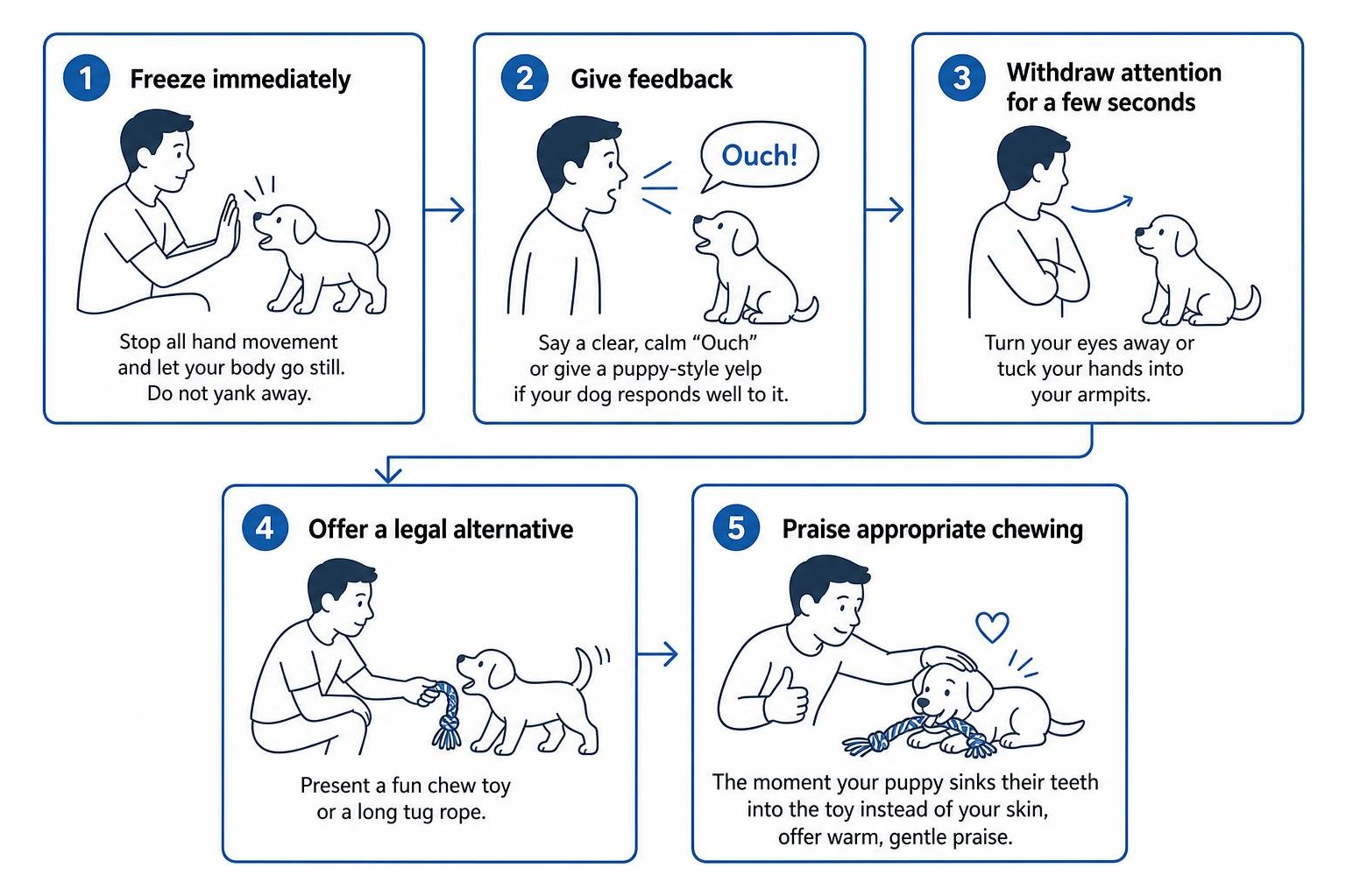
- Hold still: Stop moving your hands and keep your body still. Do not yank away.
- Let them know it hurt: Say a calm, clear "Ouch" or give a puppy-style yelp if your dog responds well to it.
- Take a tiny break from play: Look away or tuck your hands into your armpits for a few seconds.
- Bring out something they can chew: Offer a fun chew toy or a long tug rope.
- Cheer on the toy chewing: As soon as your puppy bites the toy instead of your skin, give them warm, gentle praise.
The AKC puppy biting guide emphasizes that rewarding what you want is far more effective than just saying no. Keep durable toys stationed in every room so you never have to scramble to find an alternative when those sharp teeth make an appearance.
A Daily Routine for Puppy Biting and Teething
A good daily routine mixes exercise, brain games, and quiet time. A predictable day can help keep your pup from getting so wound up that they start biting harder.
- Scheduled naps: Young puppies need 18 to 20 hours of sleep per day. An overtired puppy can have a harder time settling down and keeping those little teeth to themselves. Plan for an hour of awake time followed by one to two hours of crate rest or quiet pen time.
- Brain games: Try feeding meals through puzzle toys, snuffle mats, or frozen Kongs instead of always using a bowl. Licking and chewing give your pup something soothing to do, and suitable chews can help with sore gums.
- Toy rotation: Keep five or six different textures on hand, such as natural rubber, textured nylon, twisted rope, and chilled teething rings. Rotate them every couple of days so your pup stays interested.
- Mini-training sessions: Spend two to three minutes practicing simple cues like "sit," "touch," and "leave it" several times a day. You can find plenty of great ideas in our Trainers Blog to keep those young minds busy.
Taking a Short Break from Play
When your puppy is so worked up that a toy swap does not help, a quick break can help them settle down. You are not locking your puppy away in frustration. You are simply pausing your attention and the fun for a moment.
Use what trainers call a "reverse time-out." Instead of picking up a squirming, biting puppy and wrestling them into a crate, step over a baby gate or walk out of the room for 10 to 20 seconds. Close the door behind you just enough so the puppy cannot follow.
Keep the break short. Ten to twenty seconds is plenty of time for a young pup to realize that biting makes their favorite human disappear. Step back in calmly. If they sit or approach gently, resume interaction. If they launch right back into biting, step back out for another brief pause.
What to Try When Your Puppy Bites Feet, Clothes, or Hands

Different situations trigger nipping for different reasons. Understanding what sparks your puppy's excitement allows you to step in before teeth ever touch fabric or skin.
Stopping Ankle, Foot, and Clothing Biting
Flowing pant legs, shoelaces, and moving feet naturally activate a puppy's instinct to chase. To an energetic pup, your feet look like moving targets.
- Freeze your motion: The instant your puppy grabs your pants or socks, stop moving completely. Become a boring statue. Motion fuels the game; freezing kills the fun.
- Carry a pocket toy: Keep a long fleece tug or soft toy with you as you walk around the house. Drag the toy along the floor slightly ahead of you so your puppy targets the toy rather than your heels.
- Use treat scatters: If you need to walk past an excited puppy, toss a small handful of kibble across the floor in the opposite direction. While they use their nose to search out the treats, you can walk freely across the room.
Helping Your Puppy Around Kids and During Grooming
Children move fast, make high-pitched noises, and often react to puppy bites by waving their hands and running away. To a puppy, this looks like the best game on earth. Teach children to turn into "trees" by folding their arms across their chest, looking at the sky, and standing still if the puppy jumps or nips. Always supervise puppy-child interactions directly, and give children long toys to use during playtime so little hands stay safely out of reach.
Grooming and handling are another common trigger. Brushing, nail trims, and collar grabs can make puppies squirmy and mouthy. Keep handling sessions very short, starting with two or three seconds. Smear peanut butter or wet food on a silicone lick mat attached to a low cabinet. While your puppy focuses on licking, gently stroke their ears, touch their paws, or run a soft brush along their back. If you need hands-on help building these early foundations, our professional services can set you and your puppy up for lasting success.
When a Tired Puppy Gets the Zoomies and Starts Nipping
Just like human toddlers, puppies do not know how to put themselves to bed when they are exhausted. When they stay awake too long, they lose self-control and turn into wild, snappy biters.
| What You Notice | Playful Mouthing | Biting When Overtired |
|---|---|---|
| Eye Contact & Focus | Soft eyes, takes treats easily, can focus on cues | Glazed or frantic eyes, ignores even their favorite treats. |
| How Hard They Bite | Gentle to moderate pressure, easily redirected | Hard, relentless clamping, latches onto clothing |
| Body Language | Loose, wiggly, bouncing postures | Stiff, hyperactive racing, sudden wild zoomies |
| What Happens When You Offer a Toy | Switches happily to a chew toy or tug | Ignores toys, dodges around items to bite hands |
| Best Solution | Redirect to toy, reward soft mouth, short game | Enforced nap in a quiet, dark crate or puppy pen |
Growing Out of Puppy Biting: What to Expect and When to Get Help
Learning a softer bite takes time while your puppy grows and gets their adult teeth. Here is what you might notice over the first few months:
- 8 to 12 Weeks (Lots of Little Teeth): Puppies have full sets of sharp baby teeth and are still learning to pause before acting. Expect plenty of mouthing throughout the day. Keep up the toy swaps and regular naps.
- 3 to 4 Months (Teething Picks Up): Adult teeth start moving below the gums, adding to the urge to chew. You may notice more chewing and nipping for a while. Cold chews and textured rubber toys can offer relief.
- 4 to 5 Months (Progress May Show): With steady practice, you may start seeing fewer hard bites and an easier switch from skin to toys. Every puppy moves at their own pace.
- 6 to 7 Months (Adult Teeth Are In): All 42 adult teeth are usually in place by month seven. Keep practicing gentle play and toy swaps, even as teething winds down. Getting adult teeth does not mean every puppy will stop mouthing right away.
The PetMD puppy biting guide explains that teething can make puppies want to chew more. Keep your household rules consistent as you help your pup learn gentler habits.
Playful Nipping or Something More? When to Ask for Help
Puppy nipping is often about play, tiredness, or teething. Still, it helps to look beyond the teeth and notice signs that your puppy is scared or biting to protect themselves.
During playful mouthing, you may see a loose, wiggly body, an open mouth, and bouncy movements. Your puppy might growl during tug, but the growls can have a steady rhythm while their body stays relaxed.
Watch for a puppy who suddenly goes still and stiff. A fixed stare, a wrinkled muzzle, bared teeth, or deep, throaty growls can be reasons to pause, especially when someone approaches their food bowl, favorite bone, or resting spot. If your puppy bites hard when scared, stiffens when handled, or guards items, get help figuring out what is going on. Meet our experienced trainers on our about page and ask about gentle guidance for your puppy.
Frequently Asked Questions about Puppy Biting Training
At what age do puppies naturally stop biting?
Most puppies show dramatic improvement between 4 and 5 months old with consistent guidance. By 6 to 7 months, once all adult teeth have fully emerged and the teething phase wraps up, mouthing should be mostly resolved.
Should I yelp or say "ouch" when my puppy bites me?
For many puppies, a sharp yelp or clear "Ouch" mimics the feedback they would get from a littermate and causes them to pause. However, some very energetic or easily excited puppies view high-pitched noises as an invitation to play harder. If a yelp winds your puppy up, use a quiet, calm freeze instead, tucking your hands away and stepping out of reach.
How many times a day should I practice bite redirection training?
You do not need to save toy swaps for training time. Keep a toy handy whenever you are playing with your pup. You can also try three to five short, two-minute practice sessions each day with basic cues and games that help your puppy pause before acting, like "leave it." Keep things fun and give your pup plenty of breaks.
Calm Patience Creates Gentle Paws
Teaching your puppy not to bite takes time, clear routines, and steady patience. Those needle-sharp baby teeth will not last forever, and every time you calmly redirect your pup to a toy or offer a needed nap, you are shaping a polite, confident family companion.
If you are feeling overwhelmed by puppy zoomies, sharp teeth, or house training hurdles across northern Colorado, we are always here to help your family find balance. Reach out to our team through our contact page or visit Good Dog Greeley to explore our hands-on puppy programs and in-home board-and-train options. Let us help you turn those chaotic puppy days into a calm, joyful partnership!