What a Board and Train Program Really Does

A board and train program is a dog-training stay where your dog lives with a trainer for a set period, follows a daily routine, and practices skills in everyday settings. A four-week program commonly works on loose-leash walking, coming when called, settling on a bed or mat, door manners, paying attention to you, and staying calmer around distractions.
It can be a great fit for busy owners, puppies needing a solid start, and adult dogs with habits that need a reset. But it is not a magic fix. Your dog can learn the skills during the stay, yet lasting results depend on you learning how to use and maintain them at home.
The best programs combine clear structure, daily practice, safe boarding, and regular updates so you can see progress while your dog is away. They should also include a real handoff process, where you practice handling your dog before calling the job done.
This guide breaks down what to expect, what questions to ask, and how to tell whether residential training is the right next step for your dog and your household. For a broader look at how dogs learn, check out dog training on Wikipedia.
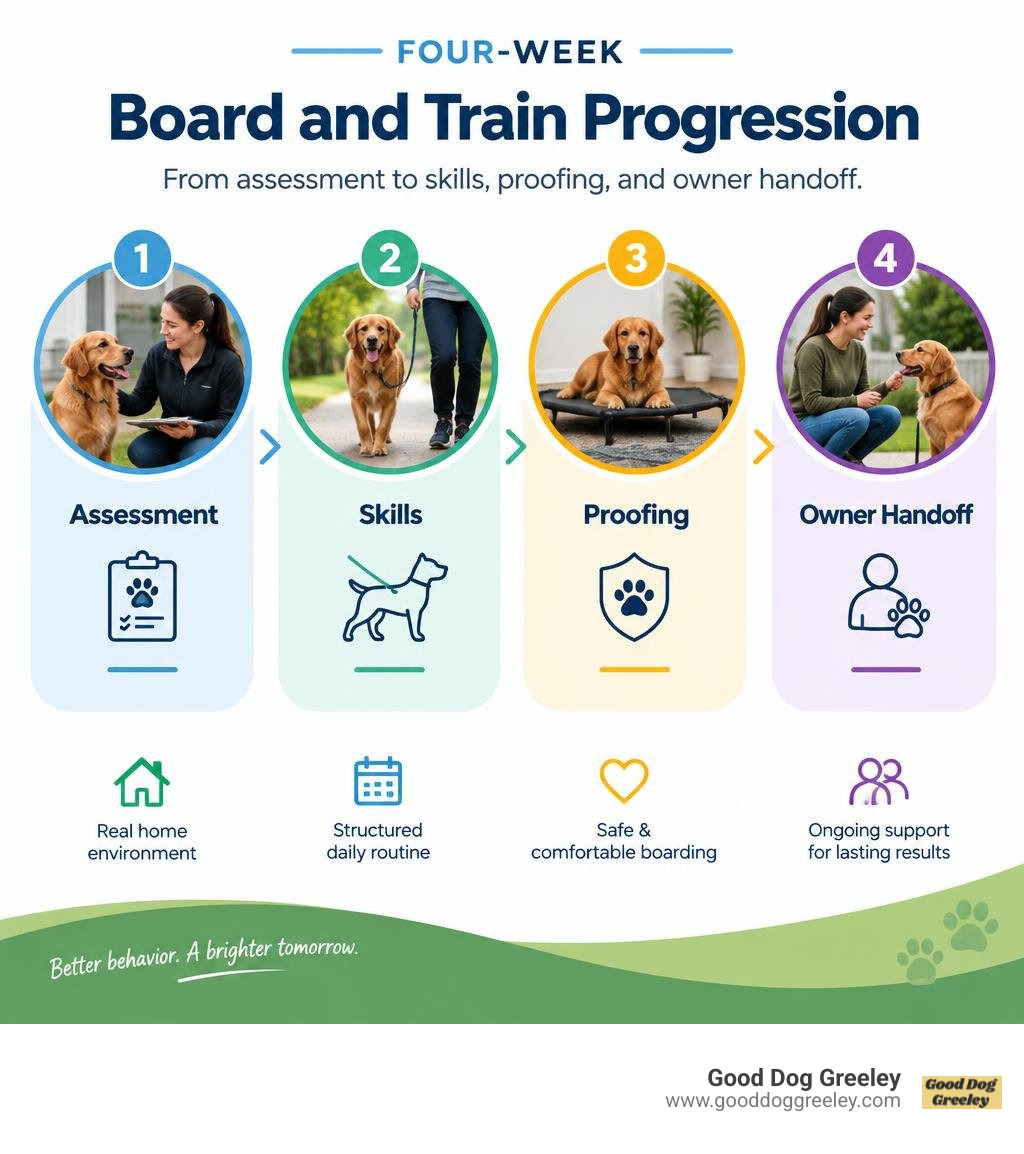
How a Board and Train Program Works
A standard residential program spans 28 nights of boutique, home-style boarding. Instead of spending their days sitting in a loud kennel run waiting for a brief bathroom break, your dog steps right into our everyday living environment. They learn how to behave inside a real home from morning until night.
Throughout the day, your dog gets short, focused training sessions with time for exercise, relaxed walks that give them a chance to unwind, and planned rest breaks. This routine helps your dog learn that downtime is safe, calm, and predictable.
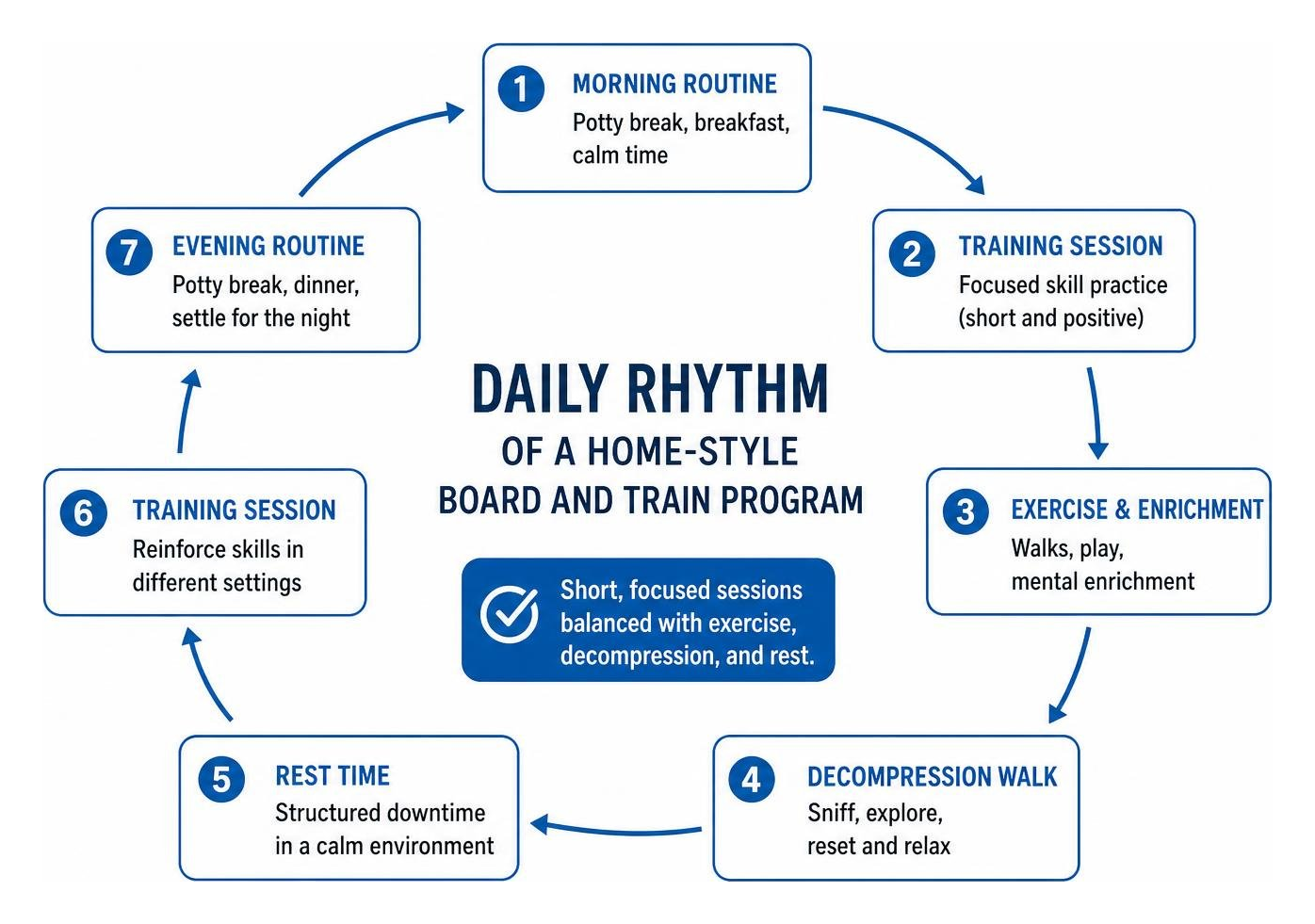
What Happens During the Four Weeks
Changing your dog's habits takes time, practice, and clear guidance. We break the 28 days into manageable steps so your pup can build confidence without feeling overwhelmed.
- Week 1: Getting to Know Your Dog. We build trust, learn your dog's personality, and start with clear communication in quiet spaces. Your dog learns that a short word or sound means they've done something right.
- Week 2: Everyday Skills. We help your dog learn sit, down, settling on a bed or mat, loose-leash walking, and the basics of coming when called.
- Week 3: Practicing Around Distractions. We practice those skills around other dogs, people, unfamiliar noises, and new neighborhood sights.
- Week 4: Bringing It Home. We keep practicing around bigger distractions and begin lessons with you so you can take the lead.
| Feature | Home-Style Board and Train | Traditional Kennel Board and Train |
|---|---|---|
| Living Environment | Inside a real home setting | Commercial kennel run / outdoor suites |
| Daily Training Rhythm | Multiple short sessions throughout the day | Often 1 or 2 timed sessions daily |
| Practicing House Manners | Constant (counters, doors, couch boundaries) | Mostly practiced in a training room |
| Stress Levels | Lower, natural household sounds and routines | More everyday noise and things that can stress dogs |
| Where Dogs Practice Around Distractions | Neighborhoods, parks, and real living spaces | Primarily kennel yards or training arenas |
How We Help Your Dog Learn
We believe training should be fair, clear, and fun for your dog. We combine rewards with clear guidance to help you and your dog understand each other. We use positive reinforcement to motivate and teach brand-new behaviors, making sure your dog understands what wins them rewards like food, play, and praise.
Once your dog understands what we're asking, we add gentle guidance and clear boundaries to help them follow through. That balanced approach makes expectations clearer. We work on both responding to your cues and staying calm and settled in everyday life.
What Your Dog Will Practice for Everyday Life
Our goal is not just a dog that does party tricks; we want a companion who fits seamlessly into your active lifestyle. Exploring our comprehensive dog training services shows how real-world obedience lays the groundwork for stress-free living across Colorado.
Core Skills Mastered in a Board and Train Program
During your dog's stay, we work on everyday skills that make life together more enjoyable:
- Loose-Leash Walking: More comfortable walks are the goal. Your dog practices matching your pace, walking past distractions, and keeping the leash slack.
- Recall Foundation: We build the basics of coming when called, even when outdoor smells are tempting.
- Place Command: Your dog practices settling calmly on a designated bed or mat until released, a handy skill for family dinners or work-from-home meetings.
- Door Manners: Waiting politely at doorways instead of barging through the moment the latch turns.
- Focus and Engagement: Checking in with you naturally and paying attention to you even when the world gets busy.

Helping Dogs Who Bark, Worry, or Struggle with Manners
Many dogs come to board and train because daily walks have become stressful. Whether your dog barks at other dogs on leash, cowers around new sounds, or jumps on every guest who visits, a focused training stay helps your dog work on calmer responses.
We introduce things your dog finds upsetting gradually, at a distance and pace they can handle without becoming overwhelmed. We help them practice watching calmly and checking in with you instead of barking or lunging.
Expectations vs. Reality: The Handoff and Owner Responsibility
Here is the plain truth: sending your dog away for training does not mean you receive a pre-programmed robot back in the mail. A trainer can teach a dog every cue in the book, but your dog must also respect and understand you as their everyday guide.
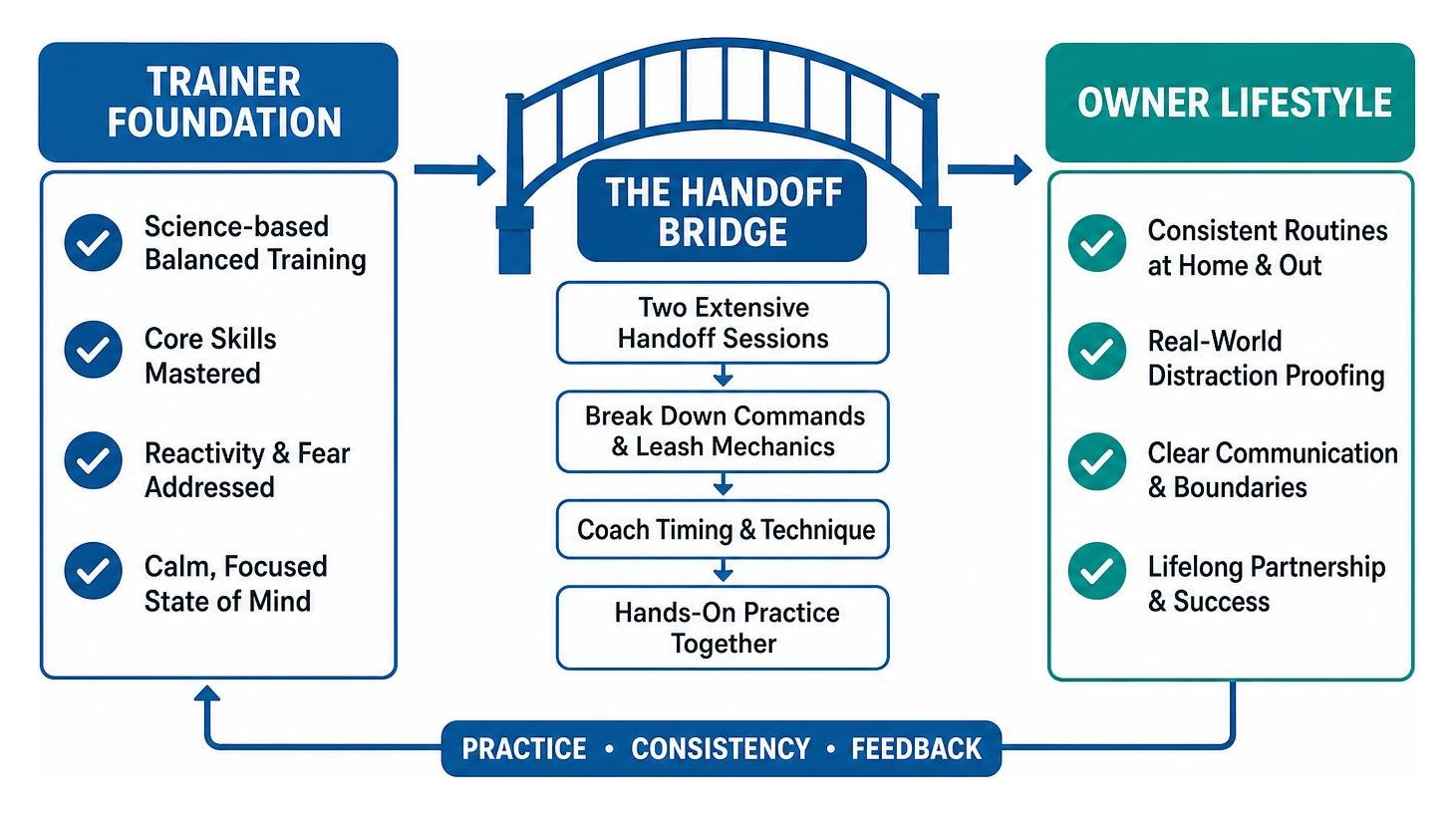
Why Handoff Does Not Equal Graduation
Handing the leash back to you is not graduation day. Real graduation happens when you and your dog run your routines smoothly together in your own living room and neighborhood.
That is why our process includes two in-depth handoff sessions with you. We walk you through every command, show you how to handle the leash, help you get your timing right, and give you hands-on practice before you head home.
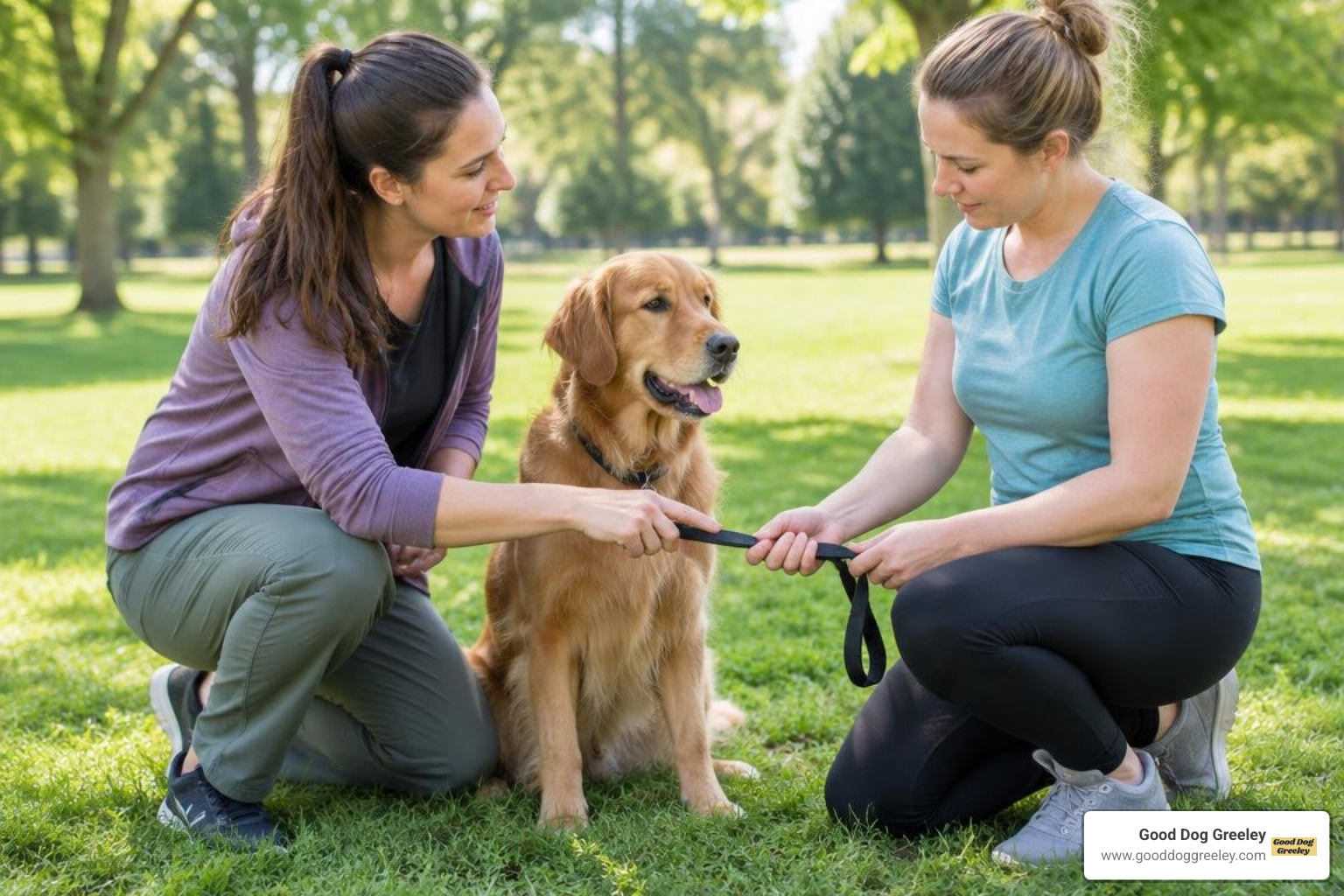
Keeping Good Habits Going at Home
To help you feel ready at home, we send you off with a complete written training guide covering daily routines, tips for when things get tricky, and household rules.
Because we care about lasting success, we also provide ongoing support. If you run into a rough patch down the road, you are never left figuring it out on your own.
Finding the Right Fit and Getting Ready
Every dog has unique needs. Getting the most out of residential training starts with selecting the right program and arriving prepared.
Who Benefits Most from a Board and Train Program?
This setup is ideal for:
- Puppies needing a good start with everyday habits, a potty training routine, and safe chances to get comfortable with new experiences.
- Busy families and professionals who need help getting daily practice with the basics underway and can keep it going at home.
- Adult dogs struggling with pushy habits, poor leash manners, or getting too worked up to settle or listen.
- Dogs needing a fresh start with clear, consistent rules.
Our experienced training background helps us tailor the stay to meet your exact household goals.
Packing Checklist, Logistics, and Equipment
Packing for your dog's training stay is easy and straightforward:
- Current Food: Bring enough of your dog's regular food for the full 28 days to prevent tummy troubles.
- Medications: Any daily prescriptions or supplements with clear dosing instructions.
- Favorite Blanket or Toy: A familiar scent helps your pup settle in comfortably on night one.
- Current Collar and Leash: What you normally use for drop-off and pickup.
We provide all professional training gear, clean bedding, enrichment toys, and safe resting setups. For added convenience, we can also coordinate pet taxi pickup and drop-off within our local service areas.
Frequently Asked Questions About Residential Dog Training
How do progress updates work during residential training?
We know you miss your four-legged family member while they are away. You will receive weekly photo and video updates showing your dog's real-time breakthroughs, daily routines, and working progress.
What equipment is used and provided during the stay?
We use a variety of tools customized to each dog's personality and needs, which may include slip leads, place boards, prong collars, or modern e-collars. All specialized gear used during your dog's stay is fitted properly, introduced with care, and provided to you at handoff.
Are payment plans and initial consultations available?
Yes! We begin with a free consultation to evaluate your dog, discuss your training goals, and confirm whether residential training is the right fit. We require a deposit to hold your reservation, and we provide flexible payment plans through Square to fit your budget. You can reach out for consultation details to get all your questions answered.
The Good Dog Greeley Difference
Every dog deserves clear communication, and every owner deserves a peaceful home. Our residential training takes the heavy lifting out of foundation work, giving you a focused, polite, and confident companion ready to enjoy life across Greeley, Denver, Erie, Broomfield, Louisville, Superior, Lafayette, Niwot, Cherry Hills Village, Greenwood Village, Highlands Ranch, Cherry Creek, Washington Park, Castle Rock, and Castle Pines.
If you are ready to turn daily walking chaos into calm companionship, explore our professional board and train programs and let us help you build a better life with your dog today.