How to Stop Excessive Puppy Barking

Start with the reason your puppy is barking. Check for a potty break, fear, or tiredness first. Then reduce the trigger and reward the behavior you want instead. If your puppy barks for attention, wait for a quiet pause before offering attention. If a sound or sight sets them off, give them more distance and reward them for turning back to you. Keep practice short and calm.
The goal isn't a puppy who never barks. It's a puppy who can settle, feel safe, and learn another way to ask for what they need. When you begin bark training a puppy, real success starts with understanding the clues behind each bark.
I'm Katelyn Mendigorin, owner of Good Dog Greeley, with 10 years of hands-on dog training experience. I'll walk you through practical steps for bark training a puppy that you can use at home, starting with decoding those noisy outbursts.
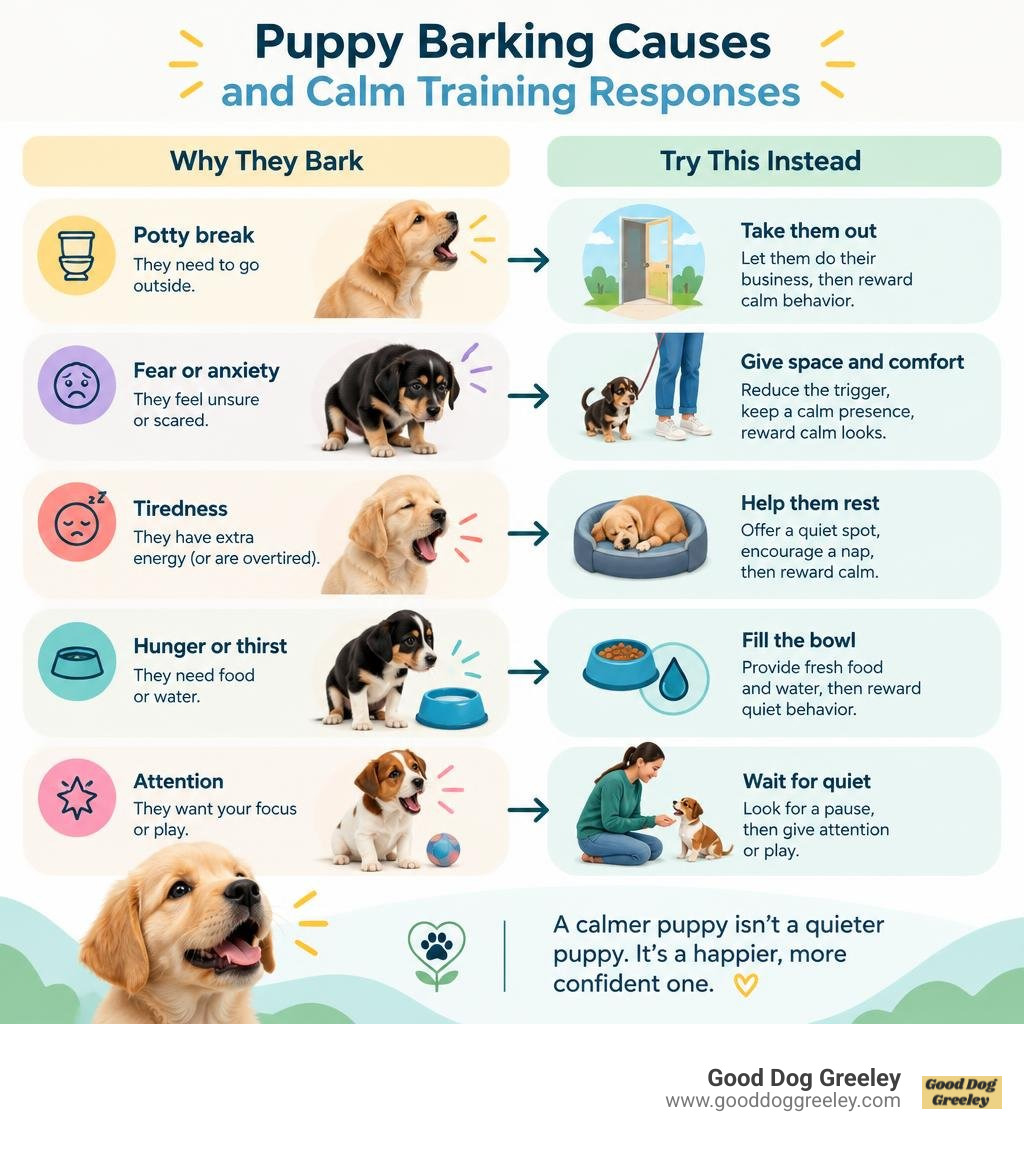
Understanding Why Puppies Bark: Triggers and Root Causes
Puppies do not bark just to test your patience. Barking is their primary vocal tool for communication. Around the 8-week mark, young pups start discovering their voices. They begin experimenting with yips, chirps, and full-on barks to interact with their world.
When your pup sounds off, they are sharing vital information about their internal state or immediate environment. A bark might point to a physical need like an urgent bathroom break, an empty water bowl, or an empty tummy. Other times, it is an emotional reaction to an unfamiliar sound, a shadow moving across the living room wall, or pure excitement during play. Getting to the bottom of the trigger is the first step toward building quiet, polite habits.
Barking Types: Attention, Boredom, Fear, and Alert
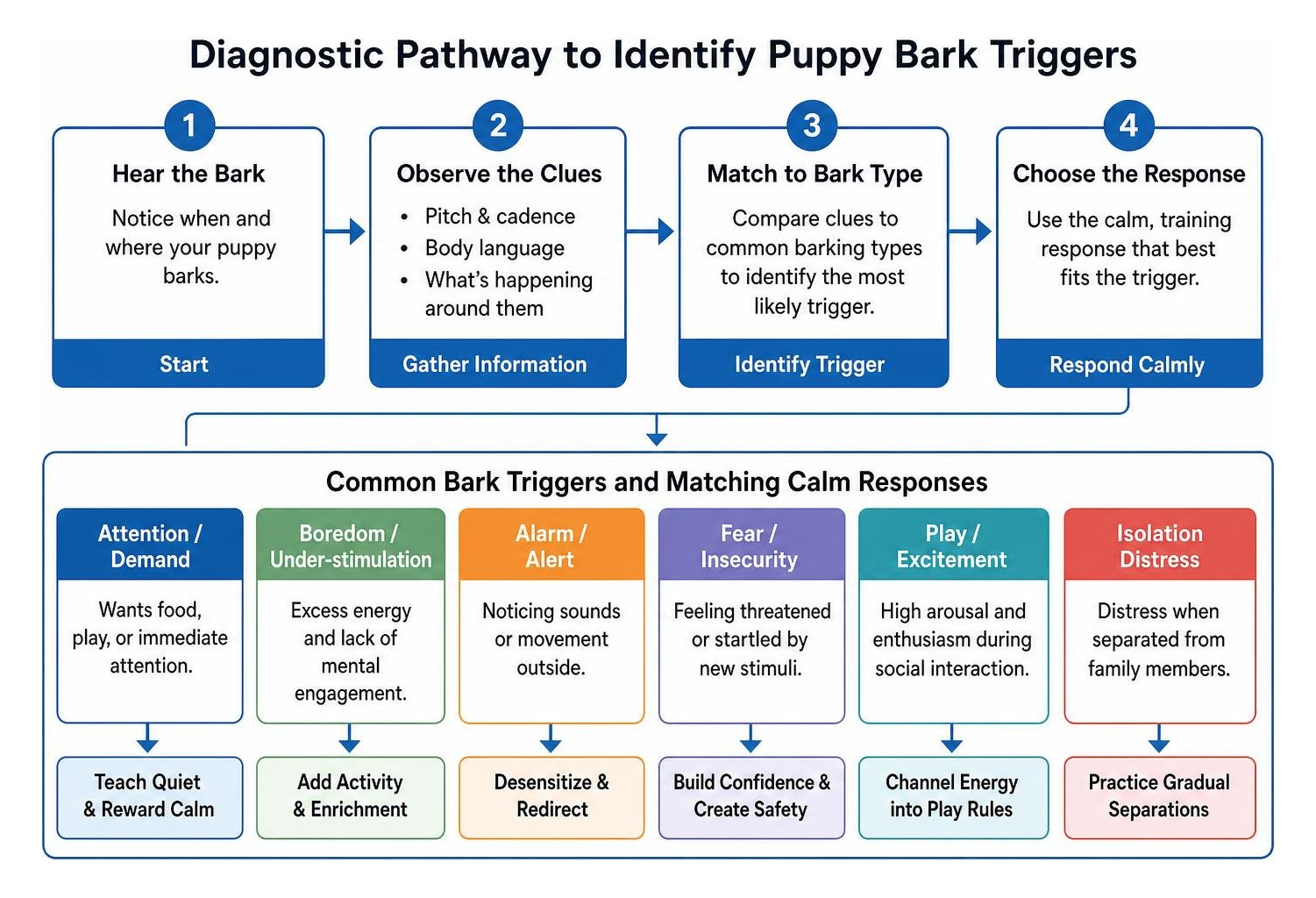
To respond effectively, we need to decode the specific message behind the noise. Here are the most common barking types you will encounter:
- Demand Barking: Sharp, rhythmic, and persistent. Your pup stares directly at you while barking to say, "Throw that ball right now!" or "Hand over that treat!"
- Boredom Barking: Monotone, repetitive barking when left with nothing to do. It often comes with pacing or chewing.
- Alarm and Startle Barking: Sudden, sharp bursts triggered by a doorbell, a passing delivery truck, or footsteps outside.
- Fear Barking: Higher-pitched, backed by a tense posture, tucked tail, or retreat. Your pup feels overwhelmed by an unfamiliar person, animal, or object.
- Play and Excitement: High-pitched, bouncy yips accompanied by play bows and a wagging body.
- Isolation Distress: Frantic yelping, whining, or howling when separated from family members.
| Bark Type | Pitch & Cadence | Body Language Signals | Underlying Cause |
|---|---|---|---|
| Attention / Demand | Sharp, direct, persistent bursts | Direct eye contact, standing squarely in front of you | Wants food, play, or immediate attention |
| Boredom / Under-stimulation | Repetitive, monotone, steady spacing | Pacing, wandering, looking for random household objects | Excess energy and lack of mental engagement |
| Alarm / Alert | Quick, sharp, sudden bursts | Ears forward, stiff posture, head high, staring at window/door | Noticing sounds or movement outside |
| Fear / Insecurity | High-pitched, sharp, escalating | Tucked tail, weight shifted backward, lip licking, retreating | Feeling threatened or startled by new stimuli |
| Play / Excitement | Variable pitch, bouncy rhythms | Loose posture, play bows, wiggly tail, eager approach | High arousal and enthusiasm during social interaction |
Age Milestones and Sleep Requirements
Puppy development moves quickly, and barking changes across each stage of growth. Reviewing expert puppy training tips shows that matching your expectations to your pup's developmental age makes training far smoother:
- 8 to 16 Weeks (The Foundation Window): Pups explore vocalizing. Barking is mostly about basic needs, sudden surprises, or social connection.
- 4 to 6 Months (Teething and Boundaries): Teething discomfort and newfound confidence can cause an uptick in demand barking and irritability.
- 6 to 18 Months (Adolescence): Hormones surge and territorial awareness blossoms. Alert barking at the fence or window often spikes here.
Many excessive barking episodes are simply caused by an overtired puppy. Young puppies need between 18 and 20 hours of sleep every day. Older pups still require 16 to 18 hours. When a puppy stays awake too long, they lose impulse control and become frantic vocalizers. Before assuming your puppy is acting out, make sure they are getting enough scheduled naps in a quiet, dark spot.
Essential Bark Training Techniques: A Step-by-Step Guide

When you are bark training a puppy, success relies on a clear, two-pronged approach: prevent the unwanted behavior from being practiced, and teach an incompatible replacement behavior. Following a solid guide to puppy barking fixes by cause ensures you address the actual reason for the noise instead of just putting a temporary lid on it.
If your puppy barks at every passerby out the window, you first block their view. Then, you teach them to lie calmly on a designated place mat instead.
How to Teach the "Quiet" Cue
Teaching a reliable "quiet" cue gives you a gentle, clear way to interrupt barking without raising your voice. We like using the "3-Bark Rule." This rule acknowledges your pup's natural instinct to alert you while establishing a clear boundary:
- Allow the Alert: When your puppy barks at a sound, let them bark two or three times. They are doing their job by letting you know something happened.
- Introduce the Scent: Walk up calmly without yelling. Hold a high-value, smelly treat (like a piece of roast chicken or freeze-dried liver) right in front of their nose.
- Mark the Silence: A dog cannot sniff and bark at the same time. The moment their mouth closes to sniff the treat, say "Quiet" in a calm, conversational voice.
- Reward the Pause: Wait for two full seconds of silence, mark with "Yes!", and feed the treat.
- Build Duration: Over several daily sessions, increase the required silent pause from 2 seconds to 5, then 10, before delivering the reward.
- Fade the Lure: Start giving the "Quiet" verbal cue before presenting the food treat. Once your pup responds reliably, shift to a random reinforcement schedule so they do not expect a treat every single time.
Managing Demand and Attention-Seeking Vocalizations
Demand barking happens when a puppy discovers that making noise gets them what they want. If your puppy barks at you while you prepare their meal and you set the bowl down, they just learned that barking speeds up dinner.
To stop demand barking, use a strict zero-attention protocol:
- Remove All Feedback: The instant your pup demand barks, freeze. Turn your back, cross your arms, and avoid eye contact, speaking, or touching them.
- Expect the Extinction Burst: When you stop rewarding barking, your pup will likely bark louder and faster for a few days to see if the old trick still works. This sudden spike is called an extinction burst. Stand firm, because giving in during this burst will make the barking even harder to stop.
- Reward the Natural Pause: The second your pup takes a breath and offers three seconds of silence, turn back around and reward them with calm praise or a treat.
- Install an Auto-Sit: Teach your puppy that sitting quietly is the only key that unlocks food, leashes, door openings, and petting.
Environmental Management and Trigger-Specific Solutions
You cannot train a puppy who is constantly overstimulated by sights and sounds. Smart management protects your training progress while your pup builds impulse control.
- Visual Blockers: Apply opaque window film to the lower half of living room windows. This stops your pup from staring down squirrels, delivery drivers, and neighbors walking by.
- Sound Masking: Run a white noise machine, box fan, or soothing classical music near your pup's favorite resting zone to buffer outside noises.
- Brain Games: Mental work burns energy faster than running laps. Use food-dispensing puzzle toys, snuffle mats, and lick mats with frozen wet food or peanut butter.
- Sniffing Outings: Take your puppy on structured decompression walks where they can explore scents. Sniffing naturally lowers a dog's heart rate and promotes calm behavior.
Bark Training Routines for Crate and Nighttime Whining
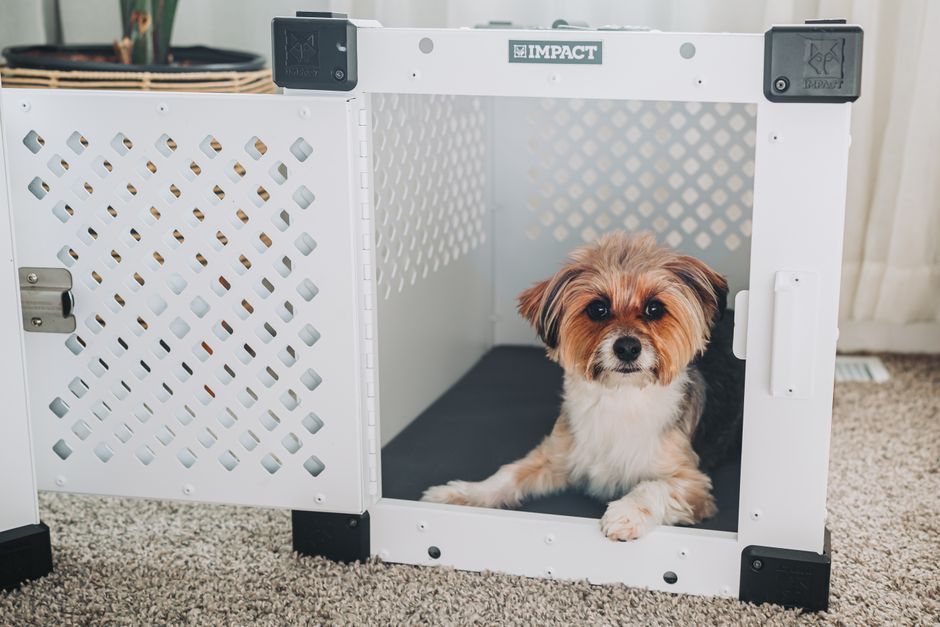
Nighttime crate vocalizing can test any owner's sleep. The secret to smooth crate training is separating genuine distress or bathroom needs from habitual fussing.
First, keep the crate in your bedroom for the first few weeks. Pups are pack animals and feel much safer hearing your steady breathing nearby. Stick to a predictable nighttime routine: take them out for a boring bathroom trip on a leash right before bed, place them in the crate with a safe chew or an unwashed shirt carrying your scent, and turn on a white noise machine.
If your puppy whines in the middle of the night, ask yourself if their bladder is genuinely full. Very young pups can rarely hold it all night. Carry them straight outside to their potty spot without talking, playing, or turning on bright lights. If they go, praise them gently, place them back in the crate, and let them settle. If you know their physical needs are met and they are just protesting, wait for a quiet window before opening the door.
For puppies who get frustrated or chew on bedding while settling, pairing crate quiet time with dog training for destructive chewing creates great daytime decompression habits that carry right into the night.
Bark Training Exercises for Outdoor Reactivity and Doorbell Alerts
Doorbell alarms and yard reactivity are common headaches, but you can teach your puppy to make better choices using structured setups:
- The "Place" Command for Doorbell Rings: Pair the sound of the doorbell with running to a raised cot or dog bed. Have a family member tap the doorbell at low volume, guide your pup to their place cot, ask for a down-stay, and feed high-value rewards there. With practice, the doorbell becomes a cue to go lie on their bed rather than charge the front door.
- Managing Threshold Distances Outside: If your puppy barks at other dogs on walks, you are too close. Increase the distance between your puppy and the other dog until your pup can look at them without barking. Reward your pup for checking in with you and making eye contact.
- Structured Recall: When your pup is barking along the backyard fence line, call them back using an enthusiastic whistle or verbal recall cue. Reward them generously when they sprint back to you, then redirect them into an engaging game of fetch or a food puzzle.
Common Mistakes to Avoid and Tool Evaluation
When trying to stop puppy barking, well-meaning owners often pick up habits that accidentally reward the noise:
- Yelling Back: Shouting "Quiet!" or "Stop barking!" sounds like excited barking to your puppy. It adds energy to the room and encourages more noise.
- Inconsistent Standards: Letting your pup bark for tennis ball throws on Saturday while scolding them for barking at the dinner table on Sunday creates confusion.
- Exercising an Overtired Puppy: Trying to run a barking puppy into exhaustion often backfires, creating an overtired, overstimulated animal. Focus on balanced mental enrichment and structured naps instead.
- Letting "Collar Wisdom" Develop: Anti-bark collars that spray or beep can sometimes lead to collar wisdom, where a pup simply learns to bark whenever the collar comes off.
At Good Dog Greeley, we practice balanced training. We believe in clear, fair communication that pairs positive rewards for good choices with clear, humane boundaries for unwanted behavior. Modern training tools, including properly fitted prong collars and e-collars, are valuable communication tools when introduced with professional guidance. These tools are designed to provide clear, low-level feedback without causing harm, helping dogs understand expectations and stay safe in the real world.
When and How to Address Fear-Based or Compulsive Barking
Puppies go through distinct fear periods, especially around 8 to 11 weeks and again during adolescence between 6 to 14 months. During these phases, a pup may suddenly bark at objects they used to ignore, like a trash can on the curb or a person wearing a wide-brimmed hat.
Never force a fearful puppy toward something that scares them, and never punish them for fear barking. Create distance immediately, let them observe from safety, and feed high-value treats to build a positive association.
If your puppy shows intense panic, compulsive repetitive barking, or signs of severe separation distress, reach out for professional help early. Check out our trainers blog for deeper dives into canine body language and practical training strategies.
Frequently Asked Questions About Bark Training
Do puppies naturally grow out of excessive barking?
No, puppies do not automatically grow out of excessive barking. While some early vocal exploration settles as pups mature, barking is a self-reinforcing behavior. Every time a pup barks at a mail carrier who subsequently walks away, the puppy believes their bark successfully drove the intruder off. Without training and environmental management, puppy vocalizations quickly turn into lifelong habits.
How long does it take to see progress with bark training?
Most owners see noticeable changes within one to two weeks of consistent management and daily practice. Progress usually looks like shorter barking bursts, lower volume, and a much faster recovery time when interrupted. Long-standing habits or breed-specific alarm barking may take four to six weeks of steady work to become reliable.
Should I completely ignore my puppy whenever they bark?
No. You should only ignore pure demand or attention barking when you are completely certain all physical and emotional needs have been met. If your puppy barks because they need to use the bathroom, feel frightened, or are in pain, ignoring them will increase their distress. Always assess the root cause before deciding whether to wait out the noise or step in to help.
Restoring Peace in Your Home
Raising a puppy is an incredible journey, but constant barking can leave everyone in the house feeling frayed. Transforming a noisy home into a calm environment comes down to understanding your dog's triggers, managing their surroundings, and rewarding quiet alternatives with crystal-clear consistency.
If you are balancing a busy family schedule or struggling with stubborn barking, our team is here to help. Good Dog Greeley offers professional dog training, structured pack walks, and premier home-style board and train programs across Northern Colorado and the Denver metro area, including Greeley, Erie, Broomfield, Lafayette, Highlands Ranch, and Castle Rock. Our hands-on approach helps puppies and adult dogs build real-world obedience and manners in a loving home setting.
Ready to enjoy a calm, well-mannered canine companion? Explore our professional dog training services or visit Good Dog Greeley to schedule a consultation with our training team today!