Understanding Dog Reactivity vs. Aggression

Reactive dog training starts with a simple, practical loop: learn your dog's threshold distance, keep them far enough away to stay calm, pair the sight of a trigger with high-value treats, and play the 'Look at That' game to help them look away from the trigger and back at you. When your dog can notice a trigger and check back in with you instead of barking or lunging, you are already changing how they feel about the world.
Living with a reactive dog can feel isolating and exhausting. You might feel embarrassed when a quiet morning stroll suddenly turns into a circus act of barking, lunging, and frantic leash pulling. It is easy to wonder if your dog is secretly aggressive or simply broken. We want to reassure you right away: reactivity and aggression are not the same thing.
A reactive dog has a big reaction to everyday things, often because they're scared, unsure, or frustrated. Aggressive behavior involves threats or physical force, sometimes to drive away something the dog sees as a threat. The two can overlap, so barking or lunging alone doesn't tell you what your dog is trying to do.
When your dog is on a leash, their natural instinct to move away from something scary is taken away. Because they cannot flee, they make a massive scene to scare the trigger away first. Other times, dogs experience barrier frustration. They genuinely want to say hello, but the restraint of the leash frustrates them so much that they throw a vocal tantrum.
Here is a quick look at how these behaviors typically compare:
| Trait | Reactive Behavior | Aggressive Behavior |
|---|---|---|
| What may be behind it | Fear, anxiety, frustration, or lack of early socialization. | Guarding food, toys, or other valued things; defending their space; or learned threatening behavior. |
| Common Leash Behavior | Lunging, high-pitched barking, spinning, or pulling toward or away. | Staring intensely, growling low, holding their body stiff, or lunging to bite. |
| How they act off leash | Often plays well off-leash or avoids triggers entirely when given space. | May still act hostile or threatening when off leash. |
| What they may be trying to say | "Please make that scary thing go away!" or "I cannot reach that fun thing!" | "Back off or I will physically make you back off." |
| Response to Distance | Calms down quickly once the trigger moves far enough away. | May move toward or chase the person or animal they're reacting to if given the chance. |
Reactivity comes in many forms. Inherited traits, missed chances to get comfortable with new people and experiences during early puppyhood, or a single scary experience can all play a part. A scared dog may sometimes threaten or bite to protect themselves, so helping your pup feel comfortable and keeping everyone safe go hand in hand.
Common Reactivity Triggers and Threshold Distance
Every reactive dog has a unique list of things that cause their heart rate to spike. Some pups struggle with things they see, like people wearing big winter hats, delivery trucks, or someone riding a skateboard. Others react only to other dogs, especially high-energy breeds or dogs that stare directly at them.
Reactivity is heavily driven by trigger stacking. Think of your dog's stress tolerance like a bucket. A noisy garbage truck in the morning adds a splash of water. A mail carrier walking past the window adds another cup. By the time you head out for an afternoon walk and spot a neighbor walking their golden retriever, the bucket overflows. That final dog was not the sole problem; it was simply the drop that made the bucket spill over.
To help your dog, you need to understand their threshold. Your dog's threshold is the exact distance at which they can notice a trigger without losing their cool.
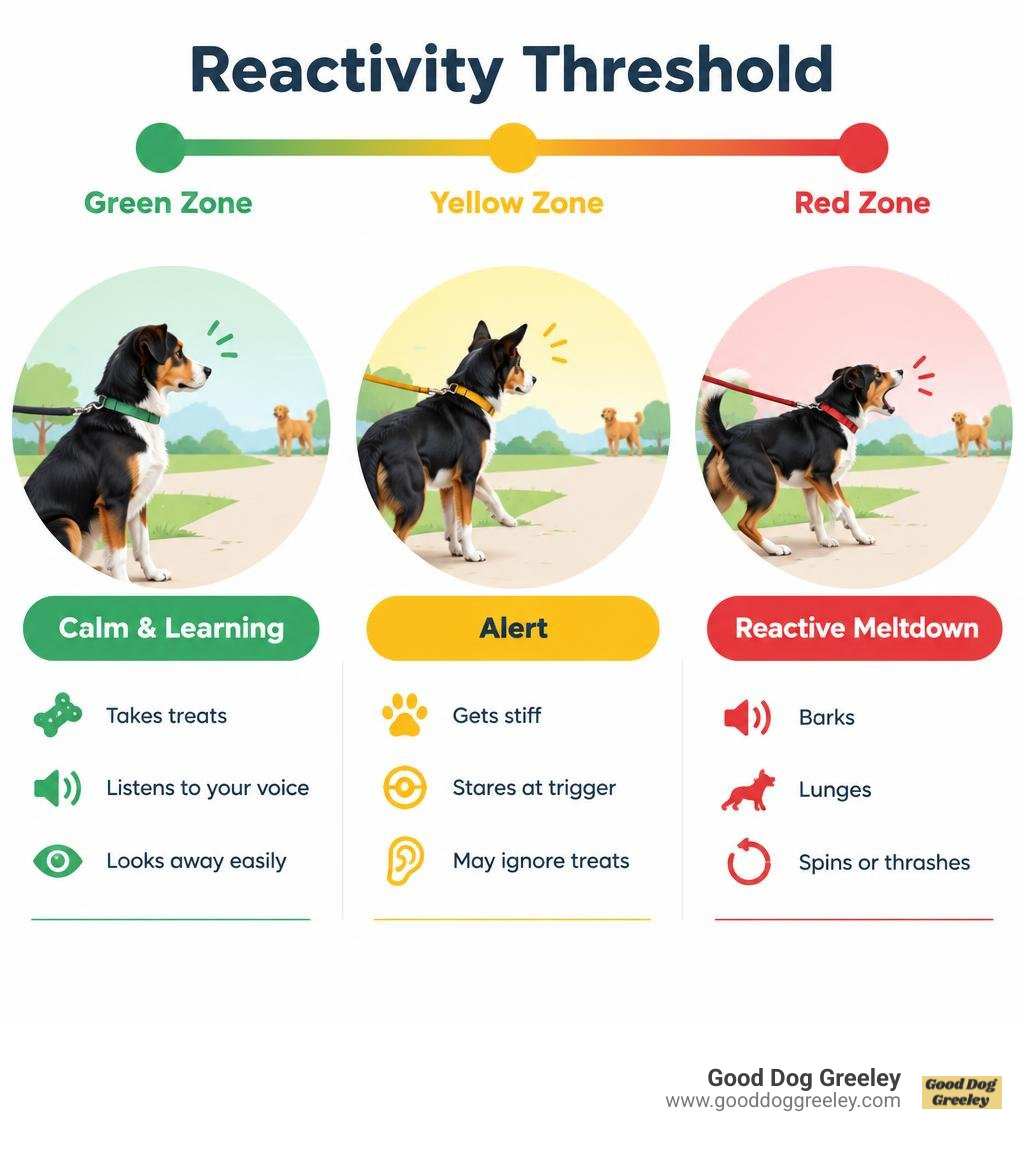
- The Green Zone (Under Threshold): Your dog sees the trigger in the distance, but they can still take treats, listen to your voice, and look away easily. This is the only zone where true learning happens.
- The Yellow Zone (At Threshold): Your dog gets stiff, stops sniffing, and stares hard at the trigger. Their ears perk up, and they might ignore high-value treats. They are right on the edge.
- The Red Zone (Over Threshold): The thinking brain shuts off and the emotional brain takes the wheel. Your dog barks, lunges, spins, or thrashes. At this point, training is impossible, and your only job is to get them out of the situation.
Learning to read subtle canine body language helps you catch your dog while they are still in the Green Zone, long before a full meltdown happens.
Helping Your Reactive Dog Feel More Comfortable
Helping a reactive dog means working on how they feel about the world, not just how they act. A helpful training plan works on both your dog's reactions and the feelings behind them.
Two approaches can help: systematic desensitization and classical counter-conditioning. Those are big names for taking things slowly and building happier associations.
- Systematic Desensitization: Start far enough from the trigger that your dog feels comfortable. As their confidence grows, you can gradually move closer without rushing them.
- Classical Counter-Conditioning: Help your dog connect the trigger with good things rather than scary feelings. Pair the sight of the trigger with something your dog loves, like roast chicken, hot dogs, or string cheese.
When you combine these methods, seeing another dog no longer means "Danger is approaching!" Instead, it begins to mean "Hey, look! That other dog just made delicious treats appear from my human!"
If you ever feel stuck or overwhelmed trying to balance distance and timing, working alongside professional dog training services can give you the hands-on guidance and customized structure you need to make steady progress. You can also learn more about the science behind this process through the American Veterinary Society of Animal Behavior.
Step-by-Step Reactive Dog Training: The 'Look at That' (LAT) Method
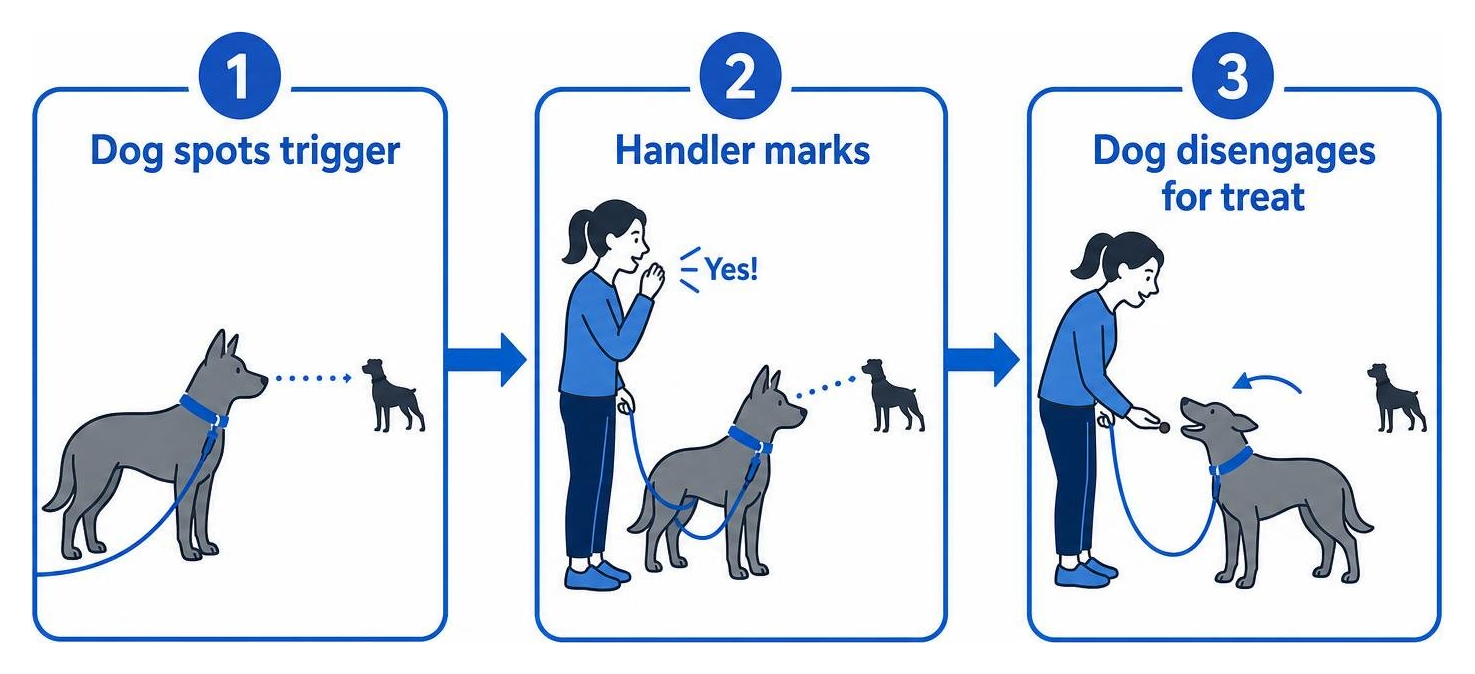
One of the most effective games you can play with a reactive dog is the 'Look at That' (LAT) game, created by trainer Leslie McDevitt. It gives your dog a clear job when they see something exciting or scary: look at the trigger, then turn back to you for a reward.
Here is the step-by-step process to practice LAT:
- Pick your marker: Choose a clear, distinct sound that tells your dog a treat is coming. You can use a clicker or a cheerful verbal word like "Yes!" Practice pairing this word with high-value treats inside your living room until your dog whips their head around every time they hear it.
- Find your starting distance: Take your dog to an open area, like an empty park or a quiet corner of a soccer field. Position yourself far enough away from triggers so your dog stays completely relaxed in their Green Zone.
- Mark the look: The instant your dog looks at the trigger, mark that moment with your clicker or verbal marker ("Yes!").
- Deliver the reward: When your dog turns their head toward you to collect their treat, give them a piece of high-value food. You are rewarding them for noticing the trigger and immediately disengaging.
- Repeat and reinforce: Let your dog look at the trigger again. The second their eyes touch the trigger, mark and reward. Repeat this sequence several times.
- Watch for the auto-check-in: After enough repetitions, you will notice a magical shift. Your dog will spot a trigger and automatically turn their head to look at you before you even mark. When this happens, celebrate with a jackpot of several treats in a row!
Practice this game in different places, adding new challenges slowly. Start in quiet spots with calm, predictable triggers before trying it on busier neighborhood sidewalks.
When a Trigger Catches You Off Guard
No matter how carefully you plan your training walks, life happens. An off-leash dog might sprint around a blind corner, or a neighbor might open their garage door right as you walk past. When a trigger appears out of nowhere and pushes your dog straight into the Red Zone, pause the lesson and focus on getting your dog some space.
Here are three handy ways to help your dog out of a tight spot:
- The Emergency U-Turn: Teach a cheerful cue like "Let's go!" in your living room. Pair the cue with a quick 180-degree pivot and run a few steps in the opposite direction, dropping treats as you move. On real walks, this allows you to turn smoothly and escape before your dog reaches their breaking point.
- The Treat Scatter: If you cannot turn around, drop a large handful of smelly treats directly on the grass in front of your dog's nose while saying "Find it!" Sniffing the ground lowers your dog's heart rate naturally and keeps their eyes off the passing trigger.
- Visual Blockers: Use your physical environment to break your dog's line of sight. Duck behind a parked car, step behind a privacy fence, or walk behind a large bush until the trigger passes.
If your dog does have an unexpected meltdown, do not scold them. Simply guide them away to safety, take a deep breath together, and head home to decompress.
Daily Management and Advocating for Your Dog
Training takes time, and daily management is what keeps your dog from practicing unwanted behaviors while they learn. Managing their environment prevents that stress bucket from filling up every single day.
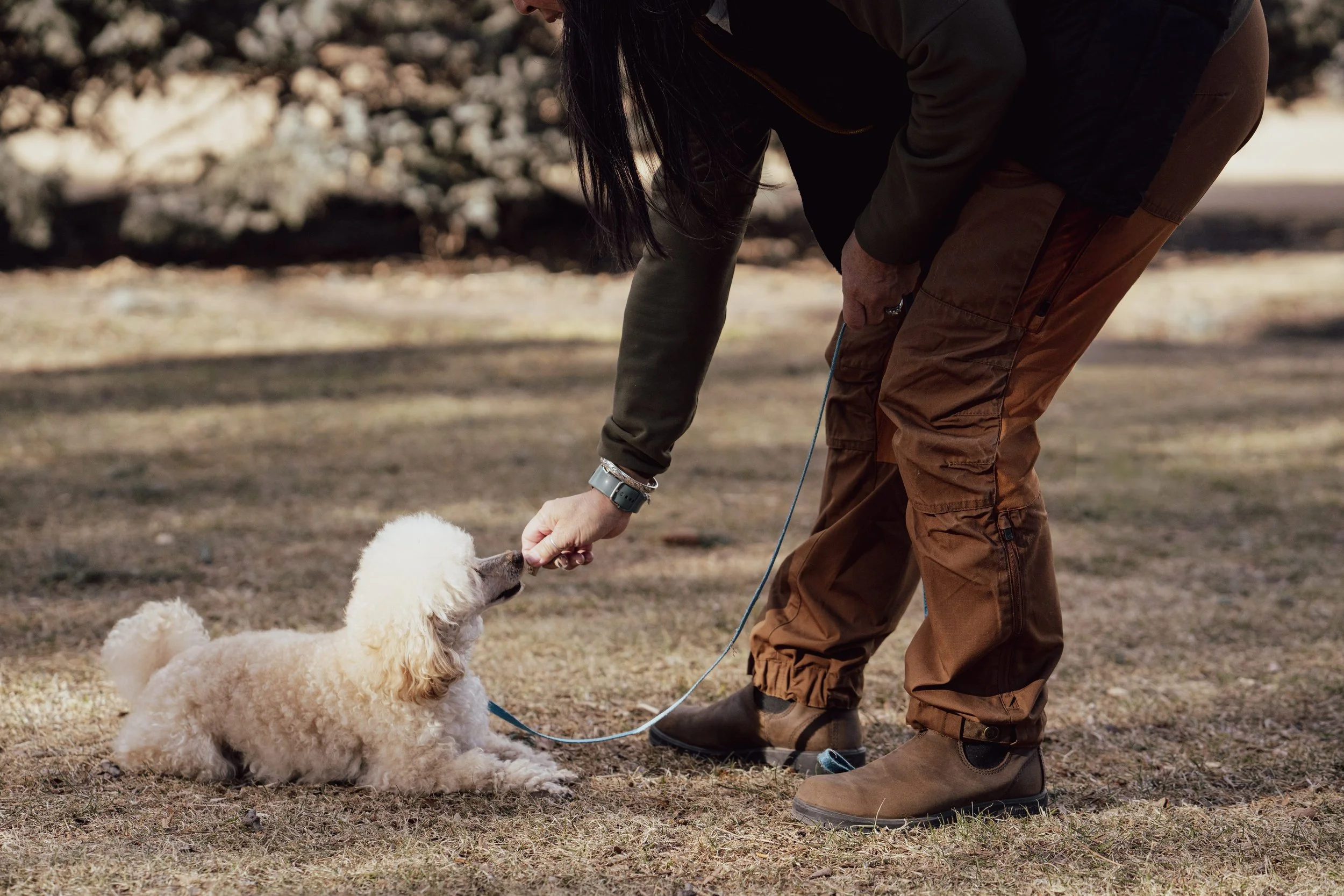
At home, close your blinds or apply frosted window film to keep your dog from practicing fence-line barking or window lunging at passing dogs. Choose walking routes and times that set you both up for success, like early mornings or quiet trails with plenty of open sightlines.
Most importantly, you must be your dog's primary advocate. Many people assume every dog wants to meet and say hello on leash, but that is rarely the case for a reactive pup.
Do not be afraid to set firm boundaries with strangers. A simple, cheerful, "Sorry, we are in training and need some space!" works wonders. You do not owe anyone an on-leash greeting. Learn more about our training philosophy to see how setting healthy boundaries builds a stronger bond between you and your pet.
Managing Multi-Dog Households During Reactive Dog Training
Walking two or more dogs together when one or both struggle with reactivity can quickly feel like juggling fireworks. Dogs can pick up on each other's stress. If one dog lets out an alert bark, the second may join in, leaving you with two upset dogs to help at once.
To train multiple reactive dogs successfully, keep these guidelines in mind:
- Separate your walks: Walk your reactive dog solo so you can give your full attention to how much space they need, their body language, and when to reward them.
- Teach each dog the basics first: Practice loose leash walking, the LAT game, and emergency U-turns with each dog on their own before trying to walk them together.
- Ease into walking together: Once each dog is comfortable on their own, ask a second person to help. Have one person walk each dog, leaving plenty of space between the two pairs while practicing calm behavior side by side.
- Keep busy indoors, too: If separate walks are hard to fit into your day, swap a walking session for food puzzles, scent work games, or indoor trick training. These give your dog something to do without putting them face-to-face with neighborhood triggers.
Frequently Asked Questions About Reactive Dogs
What is the primary difference between a reactive dog and an aggressive dog?
Reactivity means having a big reaction to everyday things, often because a dog is scared, unsure, overwhelmed, or frustrated by being on a leash. Barking and lunging may be their way of asking something scary to back off. Aggressive behavior involves threats or physical force, such as when a dog protects food, toys, or their space. These behaviors can overlap, and being on or off leash doesn't give you a clear answer on its own.
How long does it take to help a dog bark and lunge less?
Helping your dog feel calmer takes time, consistency, and patience. You're helping them build new habits and connect triggers with good things, so progress takes practice rather than happening overnight. There's no one-size-fits-all timeline. Look for small wins, like noticing a trigger and turning back to you, rather than setting a deadline for calm walks.
When should you consult a professional trainer?
Reach out to a professional trainer whenever you feel overwhelmed, your dog's reactions are getting stronger, or you notice snapping or biting. A qualified trainer can help you figure out what sets your dog off, practice when and how to give cues and rewards, and build a safe training plan that fits your dog. If you're ready for personalized guidance, contact our team to talk through the best next steps for your pup.
Life on the Other Side of Reactivity
Living with a reactive pup can feel like a rollercoaster, but you do not have to navigate this path all by yourself. With steady daily consistency, plenty of treats, and realistic expectations, those chaotic walks can transform into peaceful, enjoyable outings. Celebrate every single win, even the tiny ones where your dog simply glances at a passing neighbor and chooses to keep on walking.
If you are ready for a hands-on partner to help guide your journey, Good Dog Greeley is here to help you and your pup thrive together with practical, real-world solutions.