The Foundations of Calm Dog Walking: Mindset and Gear

Calm dog walking starts with a few simple habits: practice waiting calmly at the doorway, stop moving when the leash goes tight, reward your dog for walking in the loose-leash "sweet spot" beside you, and allow plenty of sniff breaks. These habits help your dog settle down and learn that keeping a little slack in the leash pays off.
Before you grab the leash, take a moment to check in with yourself. Feeling stressed, rushed, or ready for a tug-of-war? That mood can rub off on your dog. Give yourself permission to forget strict walking goals for a moment and focus on staying relaxed and patient before you head out.
Your gear also plays a massive role in how easy or difficult it is to communicate with your pup. The right walking tool distributes pressure safely, protects your dog's neck, and eliminates the frustration that fuels pulling.
| Equipment Type | Best For | How It Works | Things to Keep in Mind |
|---|---|---|---|
| Front-Clip Harness | Everyday leash training & pulling prevention | Clips at the chest and gently turns your dog toward you when they pull ahead | Needs proper fit around shoulders to avoid chafing |
| Flat Collar | Dogs that already walk politely without pulling | Sits comfortably around the neck for holding tags and light guidance | Can cause neck strain or airway pressure if your dog lunges |
| Head Halter | Strong pullers needing precise steering | Fits over the snout and behind the ears, guiding the head like a horse halter | Help your dog get used to it slowly, with treats and praise, so they don't paw at it |
| Calming Pheromone Collar | Anxious or noise-sensitive pups | Gives off man-made versions of the scent signals a nursing mother dog releases. | Best used as a background support alongside active training |
| Fixed 6-Foot Leash | All daily neighborhood strolls | Keeps the leash length steady, without a spring tugging on the line | Retractable leashes teach dogs that pulling extends the line |
| Herm Sprenger Prong Collar | Dogs whose training plan includes a prong collar | Links distribute leash pressure around the neck when fitted and used correctly | Choose the correct size and fit, and use it with clear handling guidance and consistent training |
| E-Collar | Dogs learning with an e-collar as part of their training plan | A remote signal can help you give your dog a cue at the right moment during training | Introduce the collar carefully, fit it correctly, and follow a structured training plan with professional guidance |
Many families find that pairing the right gear with reliable structured dog walking routines helps maintain consistency when work schedules get hectic.
Help Your Dog Settle Before Heading Out
A frantic exit can set the stage for a frantic walk. If your dog is whining, spinning, barking, or scratching at the front door while you try to clip the leash, they're already really worked up.
To make heading out a little calmer, help your dog practice waiting calmly at the door:
- Put your hand on the doorknob. If your dog jumps or whines, take your hand off and stand still.
- Ask for a calm sit. Wait until their body softens.
- Turn the knob slowly. If your pup gets up and scrambles forward, gently close the door.
- Keep practicing until you can open the door all the way while your dog stays sitting.
- Give a clear release word (like "Let's go") and step through calmly together.
Teaching this doorway pause lets your dog settle down before they hit the sidewalk.
Essential Gear to Prevent Pulling and Anxiety
Look for gear that fits well and lets you give clear, gentle cues through the leash. A well-fitted front-clip harness helps turn your dog back toward you when the leash tightens, rather than letting them lean forward and pull.
For loose-leash practice, skip retractable flexi-leads. They keep tension on the line as your dog moves forward, making it harder to practice walking with slack. A sturdy, five to six foot leather leash or a biothane leash made from easy-to-clean coated webbing gives your dog room to explore while helping you give clear cues through the leash.
Proven Training Routines for Loose-Leash Success
Positive reinforcement means rewarding behavior you'd like to see more often, like walking without pulling. Show your dog that staying near you with a little slack in the leash pays off. If you'd like help getting started, our professional dog training services can help you build a plan that fits your dog.
Step-by-Step Loose-Leash Techniques for Calm Dog Walking
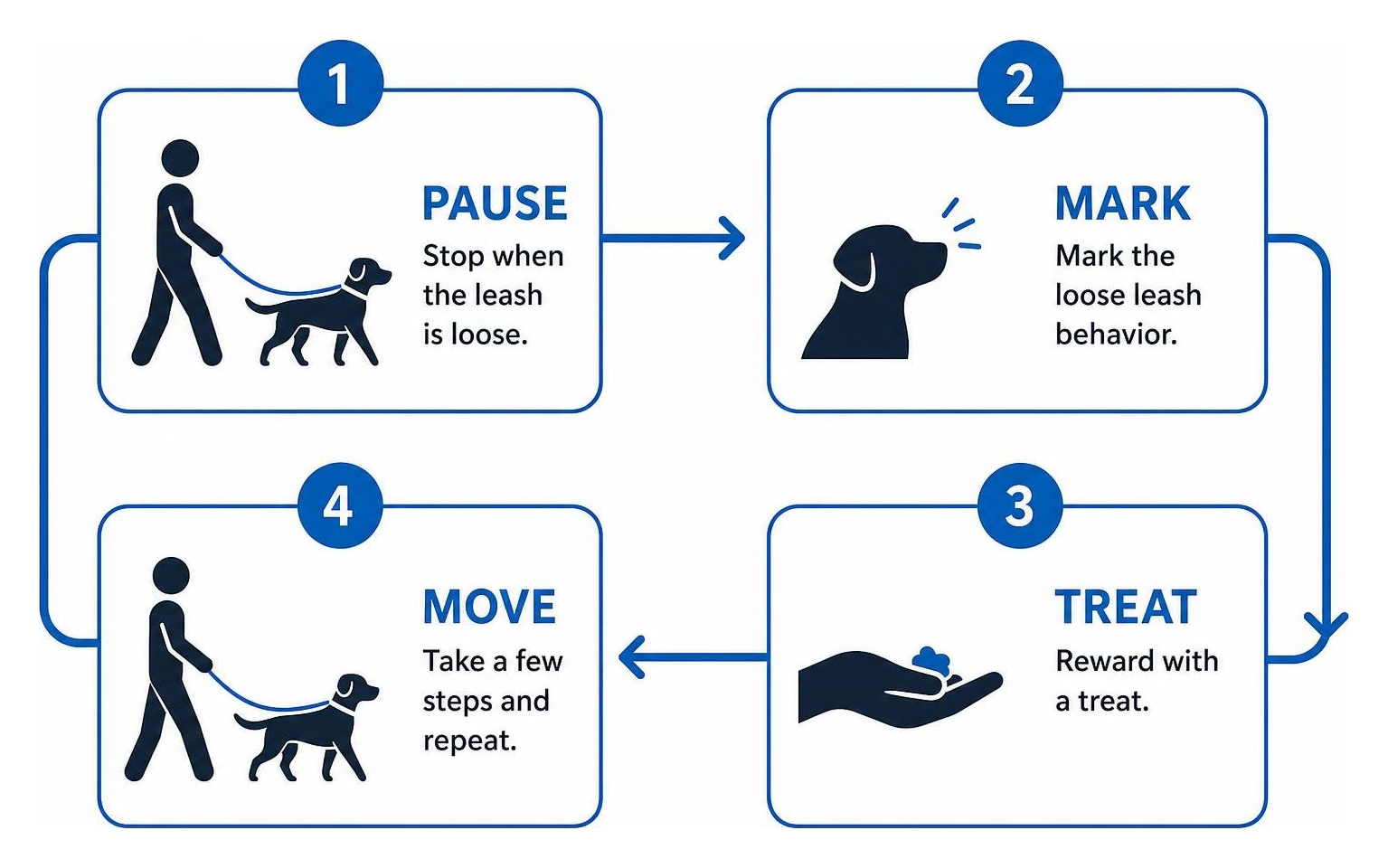
For a calmer stroll, start by pausing when the leash tightens and rewarding your dog for walking beside you. A friendly change of direction can help, too. Here's how to practice:
- The Pause-and-Release Method: As soon as the leash goes tight, stop walking and stand still like a tree. Instead of yanking the leash back, wait for your dog to pause, turn back, or take a step toward you. Once there's slack in the leash, say a cheerful "Yes!" to let them know they've got it, then take a step forward together.
- The Directional Change Game: If your pup keeps charging ahead, calmly turn around and walk the other way. When your dog turns to catch up, praise them and offer a tasty treat right beside your leg. Staying tuned in to you pays off!
- Rewarding the "Sweet Spot": Keep favorite treats, like small cubes of roast chicken or string cheese, in a pouch that's easy to reach. Offer treats right beside your leg while the leash hangs in a relaxed "J" shape.
Handling Reactivity, Lunging, and Common Triggers
Neighborhood walks are full of surprises, from delivery trucks to barking neighbor dogs. When something feels scary or a little too exciting, your dog can get too worked up to cope and start barking, lunging, or freezing.
To keep walks safe and calm:
- Create Distance Early: As soon as you spot something that might set your dog off, give them more room. Cross the street, step aside where it's safe, or make an upbeat U-turn.
- Use Visual Barriers: Step behind a parked car, large shrub, or utility box so your dog doesn't have to keep watching the distraction. A little break from the view may help them settle.
- Scatter Treats: If a distraction appears suddenly and you cannot move away, try dropping a handful of smelly treats into the grass. Sniffing out food gives your dog something to search for while the distraction passes.
For more help with tricky walking habits, check out our leash training insights.
Give Your Dog Time to Sniff and Unwind
There's more to a satisfying walk than tiring out your dog's legs. Dogs explore the world through their noses, so leave a little time for those interesting smells along the way.
Sniffing around gives your dog something interesting to do and can help make a walk more relaxing. Instead of rushing through every outing, leave time for those fascinating patches of grass. A sniff walk adds mental activity, but it isn't a fixed substitute for physical exercise. For more on slow, dog-led outings, read about the benefits of decompression walks.
Try an "Orientation Sniff" Before You Get Going
A park arrival or the first steps out the door can be an exciting moment for your dog. Try starting your outing with an orientation sniff: a little time to sniff around before you get going.
Spend the first five to ten minutes walking in a quiet, small loop near your starting point on a relaxed leash. Let your dog sniff the grass, light poles, and tree bases without rushing them. This little warm-up gives your dog a chance to settle down before you tackle busier paths.
Slow Walks and Sniff Breaks

A decompression walk is a slow, dog-led outing, typically done on a 15 to 30 foot long line in a quiet open space like a nature trail, quiet field, or open open-space park. Unlike structured neighborhood walks where you follow sidewalks, decompression walks let your dog pick the path, linger on fascinating scents, and wander at their own natural speed.
These sessions are wonderful for reactive or easily overwhelmed dogs because they remove the constant pressure of tight spaces. Decompression walks usually last anywhere from 30 minutes to an hour or two, giving your dog deep mental relaxation and joint-friendly exercise. You can even practice your own mindful sensory walks alongside your dog, tuning into the sights and sounds around you while your dog explores through scent.
Common Leash Walking Mistakes to Avoid
Even well-meaning dog parents can fall into habits that accidentally make pulling worse. Here are a few common pitfalls to steer clear of:
- Holding Constant Leash Tension: For loose-leash practice, aim for a little slack so your dog can learn the difference between a tight leash and a relaxed one.
- Rushing Past Sniffing Spots: Skipping every sniffing spot leaves fewer chances for your dog to explore.
- Walking Straight Into Overwhelm: Pushing your dog past triggers that cause them to bark or lunge can make those barking or lunging habits stronger. Give your dog more space, even if that means changing your route.
- Inconsistent Walking Rules: Allowing your dog to pull toward a favorite friend on Monday but scolding them for pulling on Tuesday confuses them. Keep the rules simple and clear every day.
- Marching at a Human Speed: Dogs rarely walk in straight lines at our exact human tempo. Alternating between polite walking and dedicated sniff breaks keeps things fun and balanced.
Frequently Asked Questions About Leash Manners
How long does it take to train an excitable dog to walk calmly?
Most dogs start showing improvements within two to three weeks of consistent daily practice. However, dogs with a long history of pulling or intense reactivity may take a few months to fully rewire their habits. Consistency from everyone in the household is the secret ingredient.
What should I do immediately if my dog starts lunging at another dog?
Stay calm, take a deep breath, and create space immediately. Focus on creating space and guiding your dog away with a clear, familiar cue. Turn your body away from the trigger, use an upbeat voice to call your dog, and walk briskly in the opposite direction. Once you have put safe distance between your pup and the other dog, reward them with a treat scatter in the grass to help them reset.
Can unhurried sniffing really replace physical running for high-energy dogs?
Not entirely. Sniffing gives your dog's brain plenty to do, so a sniff walk can be a great part of their routine. But mental activity and physical exercise aren't the same thing. Make room for both, with a pace and amount of exercise that suit your dog's age, health, and energy level.
Building Lifelong Leash Harmony
Transforming your daily walks from a frantic tug-of-war into a relaxing stroll is one of the best gifts you can give both yourself and your furry best friend. It takes a little patience, the right gear, and plenty of tasty treats, but the payoff is worth every minute. A great walk is not measured in miles logged or a stiff military heel; it is measured in the calm connection and joy you share together along the way.
Take your time, let your pup sniff the world, and celebrate the small wins every day. If you ever need an extra hand with training or want help setting up reliable daily routines, we are always here to help you enjoy peaceful strolls with Good Dog Greeley. Happy walking!