Essential Foundation: Why Start Basic Commands for Puppies Early?
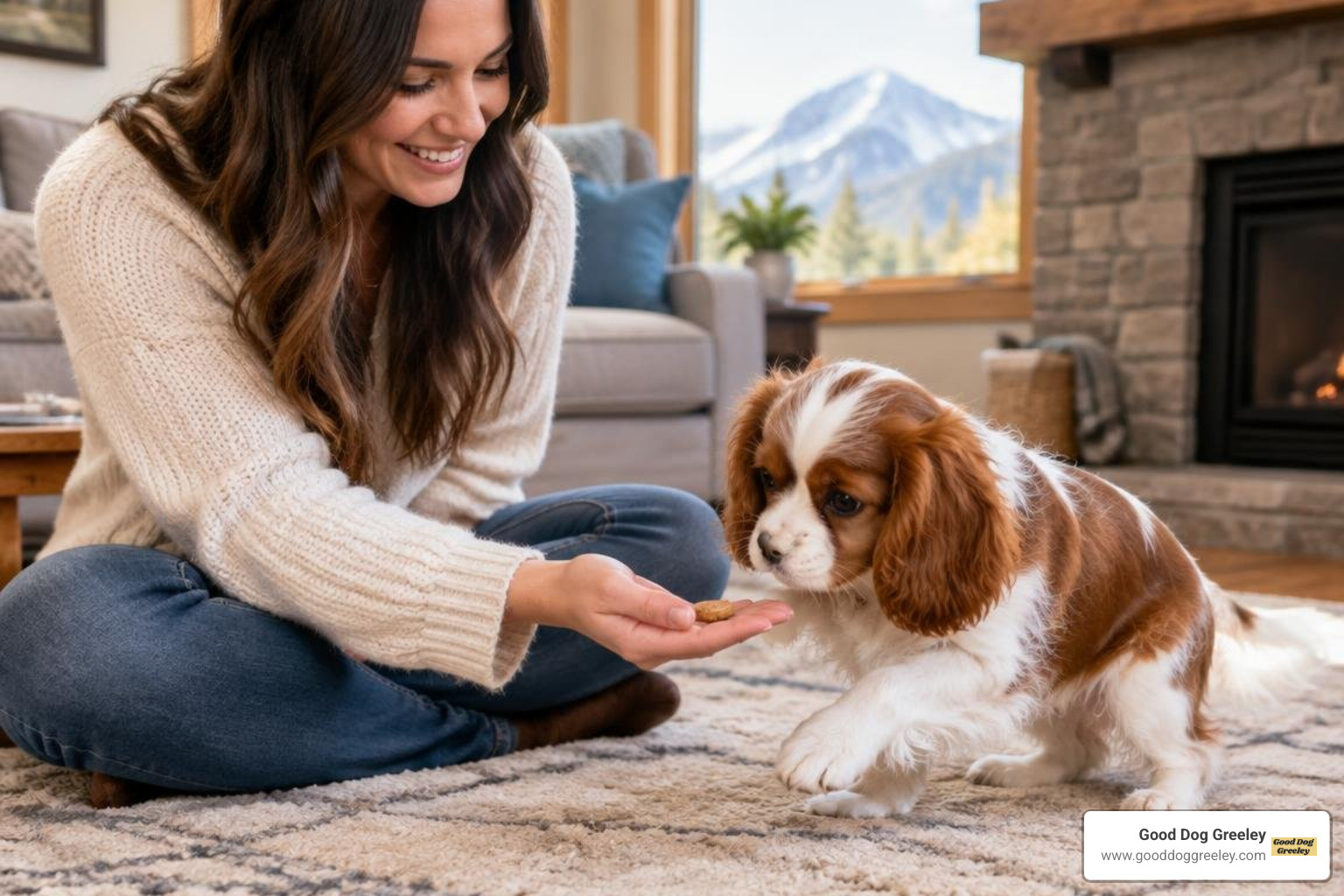
You can teach your puppy basic obedience commands in five easy steps: help them learn their name and sit, practice coming when called, practice lying down and waiting calmly, teach stay and wait with a word that tells your pup when they're free to move, and introduce walking without pulling on the leash. Keep each session to 3 to 5 minutes, say "Yes!" or click your clicker within 1 to 2 seconds of your puppy getting it right, and reward with tiny high-value treats so your puppy learns that listening is the best game ever.
Bringing home a new furry family member is one of life's greatest joys. It also comes with plenty of chewed slippers, middle-of-the-night potty trips, and sudden bursts of puppy zoomies. Starting training the day your pup arrives at around 8 weeks old sets everyone up for a peaceful household. Puppies are natural sponges. Every single interaction teaches them how your home works, so showing them clear communication from the start makes life easier for both of you.
Puppies have plenty to learn in those early weeks, so start with simple, playful practice. You don't have to wait until your pup is six months old to start building good habits. As outlined in Puppy Training Basics: The Complete Proven Beginner's Guide (2026), those first little lessons help your puppy learn the ropes of life with you.
Little Puppies, Short Attention Spans
While your pup's brain is ready to learn early, their attention span is famously short. Think of a two-month-old puppy like a toddler with fur and needle-sharp teeth. They can focus intently for about two to three minutes before a stray dust bunny or their own tail completely derails their concentration.
Pushing a young dog past their mental limits leads to fatigue, stubborn behavior, and training frustration. For puppies between 8 and 12 weeks old, keep sessions to tiny micro-bursts of 3 to 5 minutes spread throughout the day. When they reach 3 to 6 months old, you can stretch those sessions to 5 or 10 minutes. By keeping these practice moments brief, you ensure your puppy always finishes while having a blast.
Positive Reinforcement and Reward Timing
Positive reinforcement is hands-down the most reliable, scientifically backed way to train your dog. We want your puppy to think obedience is the best game ever invented. To do that, reward correct actions using tiny, pea-sized, high-value treats like cooked chicken, string cheese, or soft training morsels.
Timing is everything. Help your puppy connect your "Yes!" or click with what they just did by saying it or clicking within 1 to 2 seconds of getting it right. If your puppy sits and you spend five seconds fumbling through your pockets for a treat, your pup might think they are getting rewarded for standing up, scratching an ear, or looking away.
Avoid harsh corrections or using any training tool without first learning how and when to use it and having a plan. Puppies learn best when expectations are consistent and you stay calm. Balanced training can bring together praise, treats, guidance with a leash, and properly introduced tools, such as prong collars or e-collars, when they suit your dog and a qualified professional teaches you how to use them. Keep communication clear and follow-through fair, with the goal of a confident companion who enjoys working with you.
How to Teach the 5 Core Obedience Cues Step-by-Step
Training should be simple and fun. Rather than throwing ten commands at your dog at once, start with a few everyday cues. As shared in THE FIVE COMMANDS guide by the AKC, regular practice helps your pup get the hang of these everyday cues. Have everyone at home use the same words and hand gestures so your puppy doesn't get mixed messages.
Step 1: Teaching Name Recognition and Sit
Your puppy's name is the ultimate attention-getter. You want their name to mean, "Look at me because something wonderful is about to happen!"
- Sit on the floor with your pup in a low-distraction room.
- Say their name once in a happy, bright voice.
- The instant they make eye contact, say "Yes!" and deliver a treat.
- Repeat this 5 to 10 times until your pup whips their head toward you whenever you speak their name.
Once you have their attention, move on to teaching "Sit." Think of sitting as your puppy's polite way to say please. It gives your pup something to do instead of jumping on guests and helps them learn to wait calmly.
- Hold a small treat right in front of your puppy's nose so they can smell it.
- Slowly lift the treat in an upward arc over their head toward their tail.
- As their nose follows the treat upward, their bottom will naturally touch the floor.
- The moment their rear hits the ground, say "Yes!" and give them the treat.
- After a few good tries, say "Sit" just as you start moving your hand.
Step 2: Mastering Recall to Come When Called
"Come" is the single most important safety cue you will ever teach your dog. A reliable recall can keep your pup out of traffic or stop them from eating something toxic on a trail.
- Start indoors where it is quiet. Squat down to your puppy's eye level, open your arms wide, and call their name followed by "Come!" in an upbeat, welcoming voice.
- If your puppy hesitates, back up a few steps or make gentle clapping sounds to spark their natural desire to chase you.
- When they reach you, grab their collar gently with one hand (so they learn that reaching for them is safe) and deliver a jackpot of tasty treats and enthusiastic praise.
- Never call your puppy to come to you for something they dislike, like bath time or nail trims. Always go get them for unpleasant tasks so "Come" stays 100% positive.
Step 3: Practicing Down and Staying Calm
Teaching "Down" or "Lie Down" helps active puppies settle on their own and stay calm during family dinners or patio visits.
- Ask your puppy to sit.
- Hold a treat in front of their nose, then lower it straight down to the floor between their front paws.
- Pull the treat slightly forward along the ground in an "L" shape.
- Your puppy should follow the scent and slide their elbows to the floor.
- As soon as their chest and elbows touch the rug, say "Yes!" and give them the treat.
- If your puppy pops their rear up into the air, simply reset back into a sit and try lowering the treat a bit slower.
Step 4: Teaching Stay, Wait, and "You're Free!"
Many owners use "Stay" and "Wait" interchangeably, but giving them distinct jobs makes training much clearer for your dog.
- Stay means holding that sit or down: "Stay in this position until I tell you you're free to move."
- Wait means pausing before moving past a doorway or toward a food bowl: "Pause here until I give you permission to go ahead."
Always use a release word like "Free!" or "OK!" to mark the end of both cues.
| Command Feature | Stay Cue | Wait Cue |
|---|---|---|
| What it means | Hold that sit or down | Pause before going ahead |
| What your pup can do | Keep holding that sit or down | Stand, shift, or look around |
| How you end it | Go back to your pup and say "Free" | Say "OK" to let your pup move forward |
| Best Everyday Use | Vet visits, outdoor dining, greeting guests | Open car doors, front doors, food bowls |
To teach "Stay":
- Put your puppy in a sit or down.
- Hold your flat hand out like a stop sign and say "Stay."
- Wait 2 seconds, say "Free!", and reward them while they are still in position.
- Help your pup stay a little longer each time, working up to 10-15 seconds before you try taking one step back.
Step 5: Introducing Loose-Leash Walking and Heel
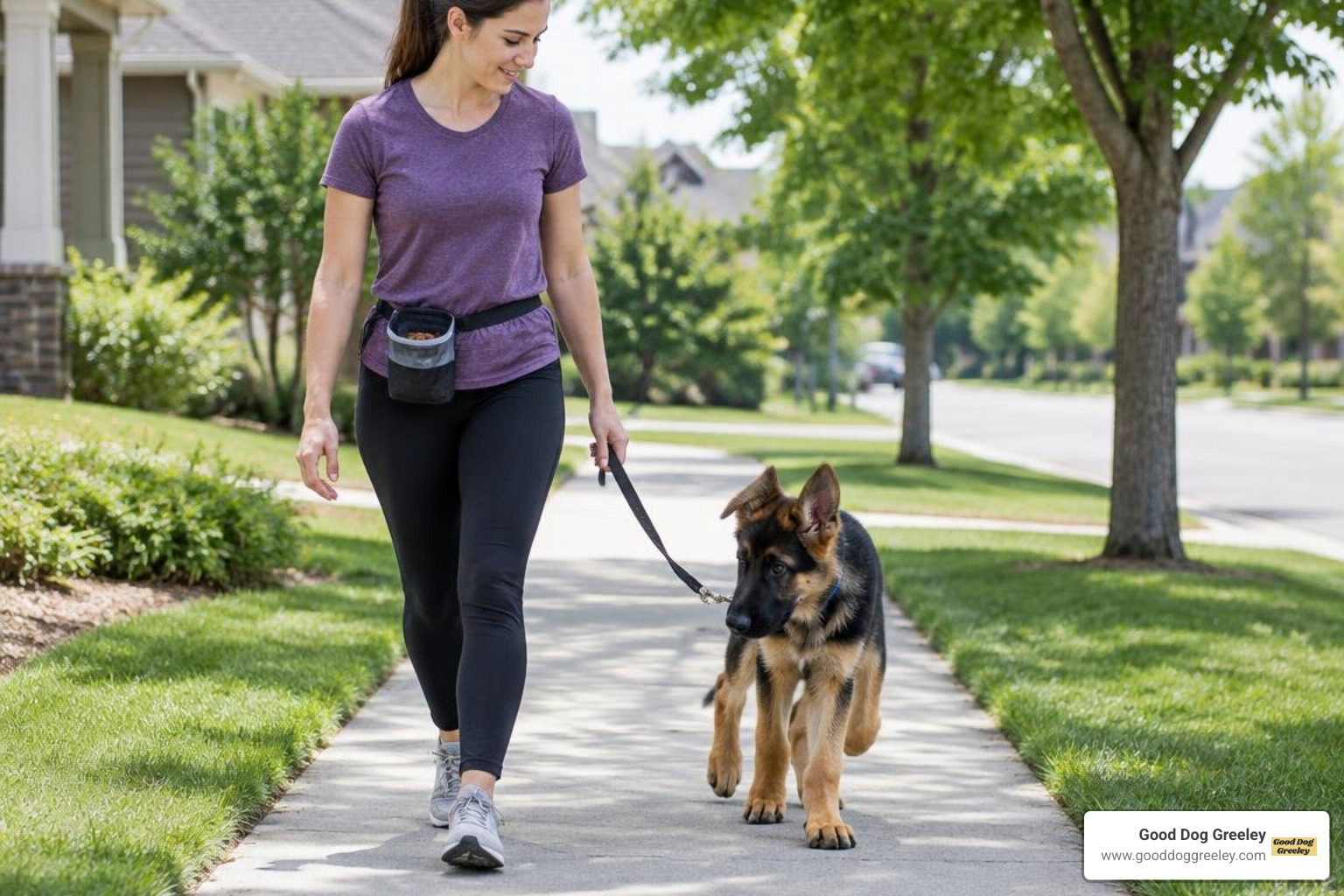
Taking your puppy for a walk should be relaxing, not a tug-of-war match. "Loose-leash walking" means your puppy walks without tension on the line, while "Heel" means walking closely by your knee.
- Start inside your living room or hallway without distractions.
- Attach a flat leash and hold treats on the side where you want your dog to walk (usually your left leg).
- Say "Let's go!" and take a few steps forward.
- Reward your puppy every couple of steps as long as the leash stays slack and they stay near your knee.
- If your puppy pulls ahead, stop walking completely like a tree trunk. Wait for them to turn around or slacken the line, then reward and keep moving.
For busy owners wanting personalized guidance on polite walking habits, our services offer hands-on coaching and structured day training to build manners quickly.
Best Practices and Common Mistakes in Early Training
Building solid obedience requires patience and a predictable routine. When you avoid common training traps, your puppy will make steady, enjoyable progress every week.
Avoiding Frustration with Basic Commands for Puppies
It is easy to get impatient when a puppy seems to ignore a cue. Most of the time, the dog is not being stubborn; they are simply confused or distracted.
- Repeating cues endlessly: Avoid saying "Sit, sit, sit, sit!" If your puppy does not respond the first time, help them into position with a lure or reset their focus. Repeating cues teaches dogs that they can ignore the first three requests.
- Bribing instead of rewarding: A bribe is showing the treat before the behavior happens every single time. A reward comes out after the dog performs the action. After a few successful tries, use the same hand motion without holding a treat, then reward your pup when they get it right.
- Ending on a bad note: If your pup is struggling with a new skill, drop back to an easy command they know well, reward them, and wrap up the session.
Practicing Puppy Commands While Exploring New Things
Your puppy's lessons aren't just for the living room! Socialization means helping your pup get comfortable with new sights, sounds, people, places, and surfaces. Practice easy cues during those introductions, too. The American Kennel Club's Canine Good Citizen program also emphasizes staying calm around everyday distractions.
Help your pup safely get used to new sounds, walking surfaces, delivery trucks, and calm people while practicing simple sits and attention games. You can learn more about how we train and help pups feel at home in everyday life across Greeley and Northern Colorado.
Frequently Asked Questions About Puppy Obedience
How long should daily puppy training sessions last?
Keep individual training sessions between 3 and 5 minutes for young puppies under 16 weeks old. Practicing three quick sessions a day around mealtimes is far more effective than one exhausting 20-minute session.
What should I do if my puppy breaks a stay command?
Stay completely calm and avoid scolding. Walk back, gently place your puppy back in the original spot, and ask for the sit again. Shorten the time or distance on the next rep so your puppy can succeed and earn their reward.
When should I transition from indoor practice to outdoor distractions?
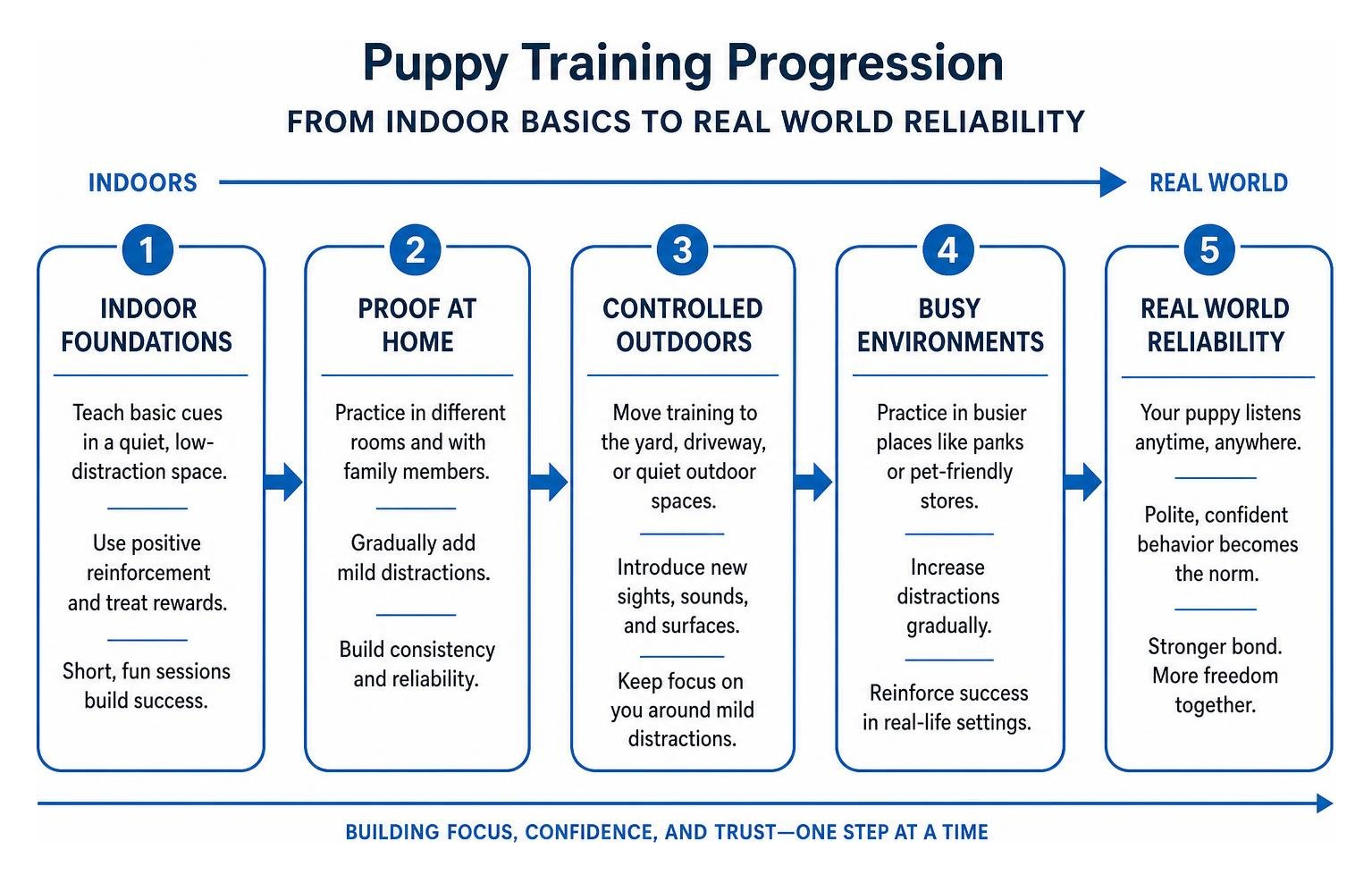
Build up three things a little at a time: how far away you stand, how long your puppy holds the cue, and what's happening around them. Aim for your puppy to get it right 85% to 90% of the time indoors before adding outdoor distractions. Start in a quiet backyard, then try sidewalks or parks. Keep your puppy on a secure long line, a longer leash that gives them room to practice, when working at a distance or near other dogs.
Starting Your Puppy's Journey
Raising a happy, well-mannered puppy takes time, consistent practice, and a good sense of humor. Celebrate the small victories, keep your training sessions lighthearted, and enjoy the wonderful bond you are building together each day.
If you ever need an extra hand with training foundations, structured walking, or puppy development, contact our friendly team anytime. Ready to take the next step toward stress-free ownership? Visit Good Dog Greeley to explore our personalized, in-home training options designed to bring out the very best in your companion.