Finding Structured Dog Walks in Louisville, Colorado

For structured dog walks in Louisville, Colorado, look for a plan that fits your dog's needs, not just a set time outdoors. Ask how the walker practices loose-leash manners, handles distractions, and adjusts the route and pace for your dog. A puppy, a senior dog, and a dog who reacts to other dogs may each need a different kind of walk.
I'm Katelyn Mendigorin, owner of Good Dog Greeley. I've spent a decade combining structured walks with hands-on training for puppies and reactive adults, and if you searched for "structured dog walks Louisville," I'll help you know what to look for.
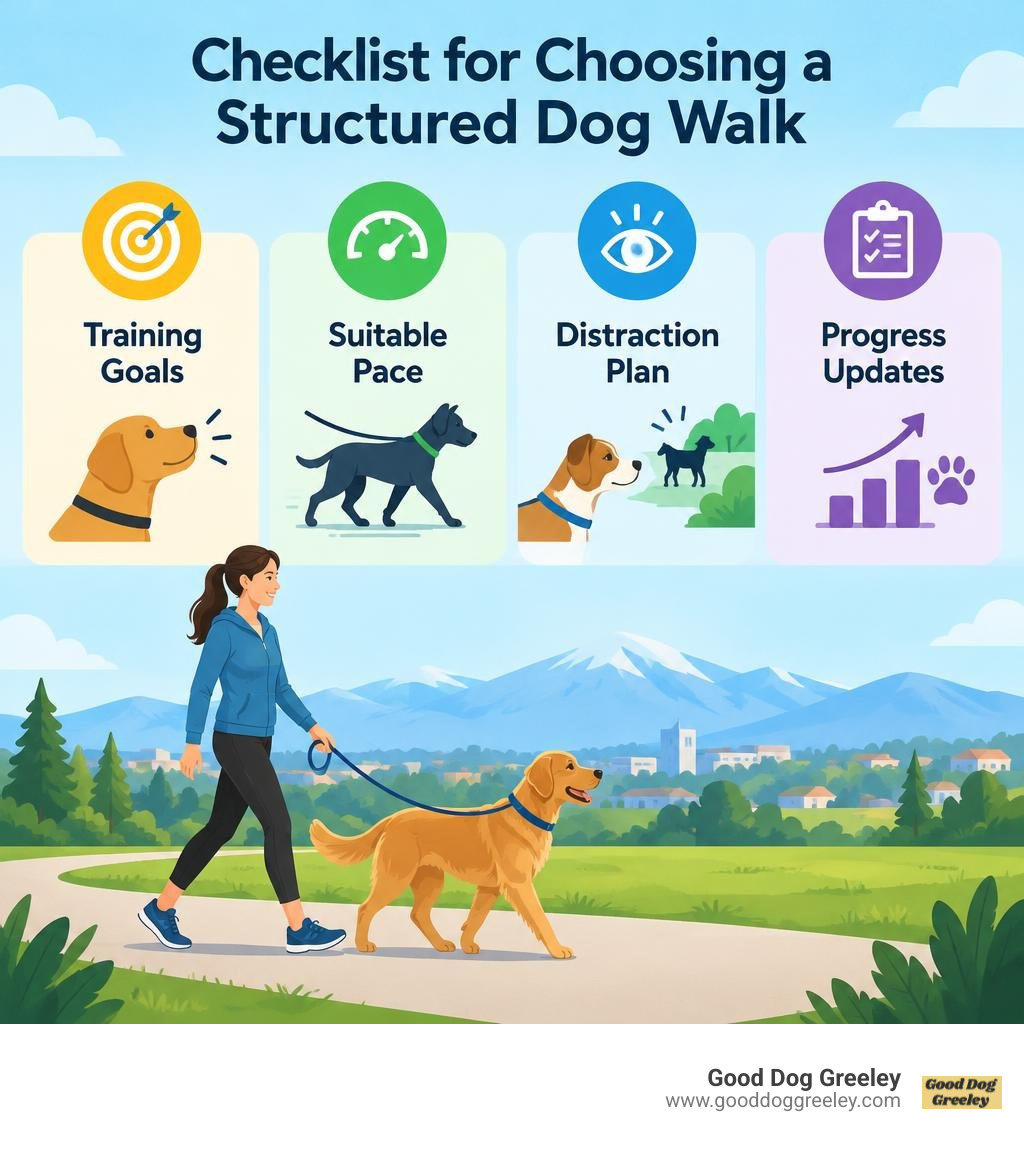
What Are Structured Dog Walks in Louisville and How Do They Work?
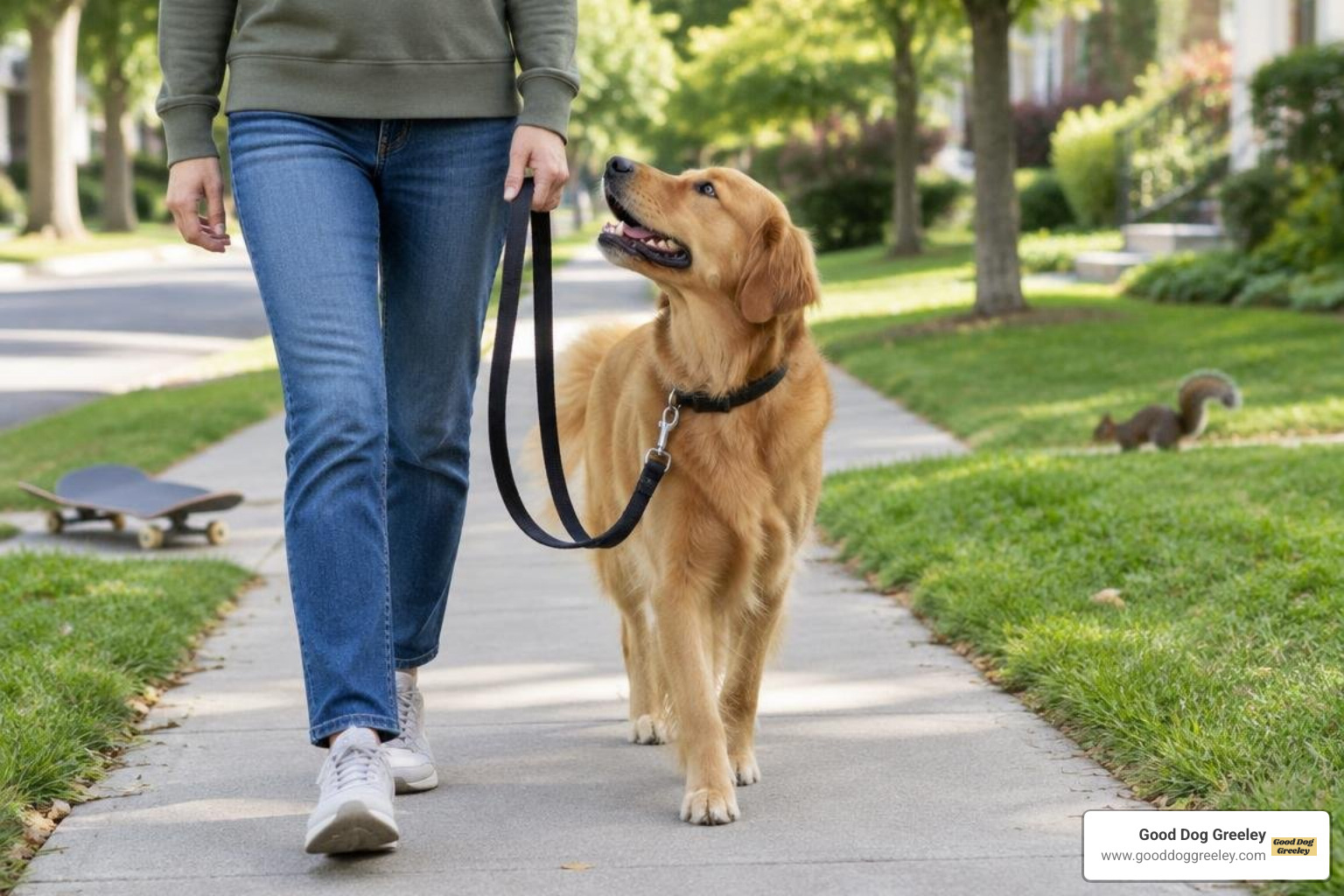
When most people think of dog walking, they picture a pup zig-zagging across the sidewalk, nose glued to the grass, dragging their human along for the ride. While sniffing is great fun, a regular casual stroll does very little to work a dog's brain.
A structured dog walk turns outdoor time into an active learning session. Instead of letting your dog wander aimlessly or pull you toward every fence post, we turn the walk into a purposeful conversation between dog and handler. The dog learns to yield to leash pressure, hold a relaxed heel position, and check in regularly.
By practicing impulse control around real-world distractions like passing skateboards, neighborhood squirrels, or barking yard dogs, your dog builds true environmental neutrality. They realize that just because something exciting appears down the street does not mean they get to pull toward it. That level of focus burns far more energy than physical exercise alone.
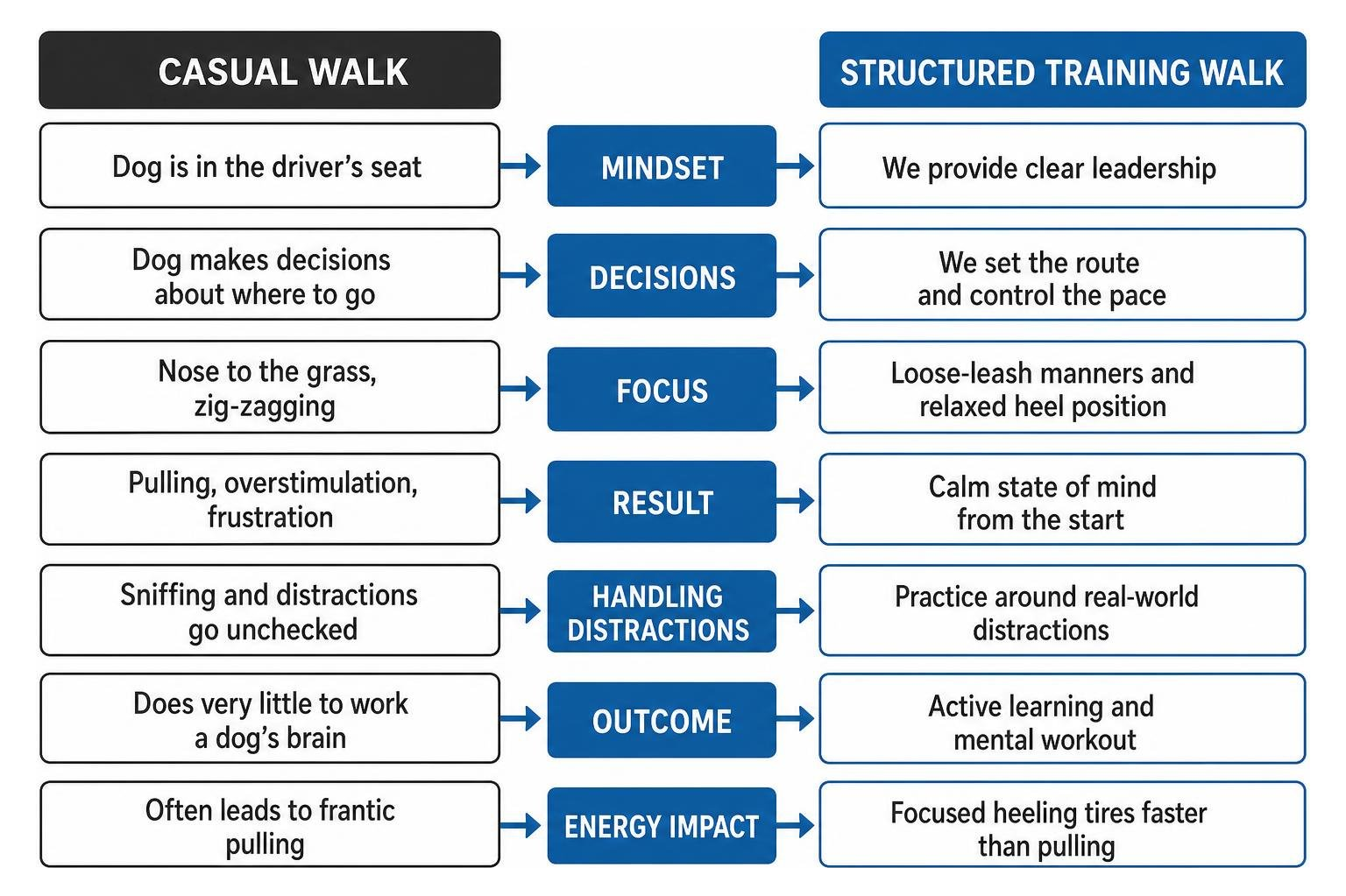
Key Differences Between Casual Strolls and Structured Walks
The main difference comes down to mindset. On a casual stroll, your dog is in the driver's seat. They make decisions about where to go, what to chase, and how fast to move. This freedom often leads to overstimulation, frantic pulling, and frustration for both of you.
On structured walks, we provide clear leadership and intentional pacing. We ask the dog to stay in a calm state of mind from the second we step through the front door. We practice doorway threshold manners, controlled stops at crosswalks, and steady footwork. Because your pup is actively working to match our pace and ignore outdoor triggers, they get a serious mental workout. Ten minutes of focused heeling often tires out a high-energy dog faster than an hour of frantic pulling around the block!
Essential Tools for Training and Control
Clear communication requires the right gear. Trying to teach leash manners on a flimsy retractable leash or a chest harness often encourages pulling and makes clear signals nearly impossible.
In our balanced training approach, we use tools that help you communicate clearly and safely with your pup. Depending on your dog's size, temperament, and training stage, we may utilize slip leads, properly fitted prong collars, or modern e-collars for off-leash safety. When introduced with proper education and care, these tools remove confusion and help dogs understand exactly what we are asking of them. If you want to dive deeper into practical handling setups, check out our dog walking tips guide 2026 for expert advice on setting up your walking gear.
Types of Structured Dog Walking Services Available
Every dog has a unique personality, fitness level, and behavioral background. A high-drive adolescent working dog needs something very different than an eight-week-old puppy or an arthritic senior. That is why professional structured walking programs offer several distinct session formats.
| Walk Type | Best Suited For | Key Focus | Typical Duration |
|---|---|---|---|
| Solo Walk | Reactive dogs, puppies, seniors, rehab cases | One-on-one focus, foundation cues, customized pacing | 30 to 45 minutes |
| Pack Walk | Socially neutral dogs, dogs needing group manners | Walking calmly alongside peers, ignoring dog distractions | 45 minutes |
| Adventure Hike | High-energy dogs, working breeds, active adults | Physical conditioning, trail manners, varied terrain | 45 to 60+ minutes |
Solo Sessions, Pack Walks, and Adventure Hikes
Solo sessions are the gold standard for dogs who need individualized attention. If your dog is working through leash reactivity, learning loose-leash manners from scratch, or recovering from surgery, a solo session lets the handler control every variable and move at your dog's exact learning pace.
Pack walks, on the other hand, build social neutrality. In a structured pack walk, dogs are not running around wrestling. Instead, they walk together in a calm, orderly group. We carefully match dogs by temperament and pace so they learn that being near other dogs does not mean party time. It teaches them to remain cool, calm, and collected in a group setting.
Adventure hikes take training out onto natural dirt paths and open spaces. These outings combine physical conditioning with trail obedience, giving active dogs a healthy outlet for their natural drives while reinforcing recall and focus on uneven terrain.
Tailoring Structured Dog Walks in Louisville for Puppies, Seniors, and Reactive Dogs
Structured walking is never one-size-fits-all. We adapt our handling style to match each life stage and behavioral profile:
- Puppies: Young pups need short bursts of engagement mixed with potty training reinforcement. We focus on building confidence around novel sights and sounds, teaching initial threshold manners, and keeping sessions upbeat before their growing joints get tired.
- Senior Dogs: Older pups still crave mental enrichment, but they need gentle pacing. We monitor their mobility closely, choose softer surfaces like grass or dirt trails, and take frequent hydration breaks to protect their joints.
- Reactive Dogs: For dogs who bark, lunge, or freeze when they spot other dogs or people, we use systematic trigger desensitization. We teach the dog that they can look at a distraction and choose to re-engage with the handler instead of reacting.
If your pup needs a comprehensive behavioral plan that blends daily walks with structured routines, explore our full range of training services to see how we help dogs thrive at home and in public.
Top Parks and Leash-Friendly Routes in the Louisville Area
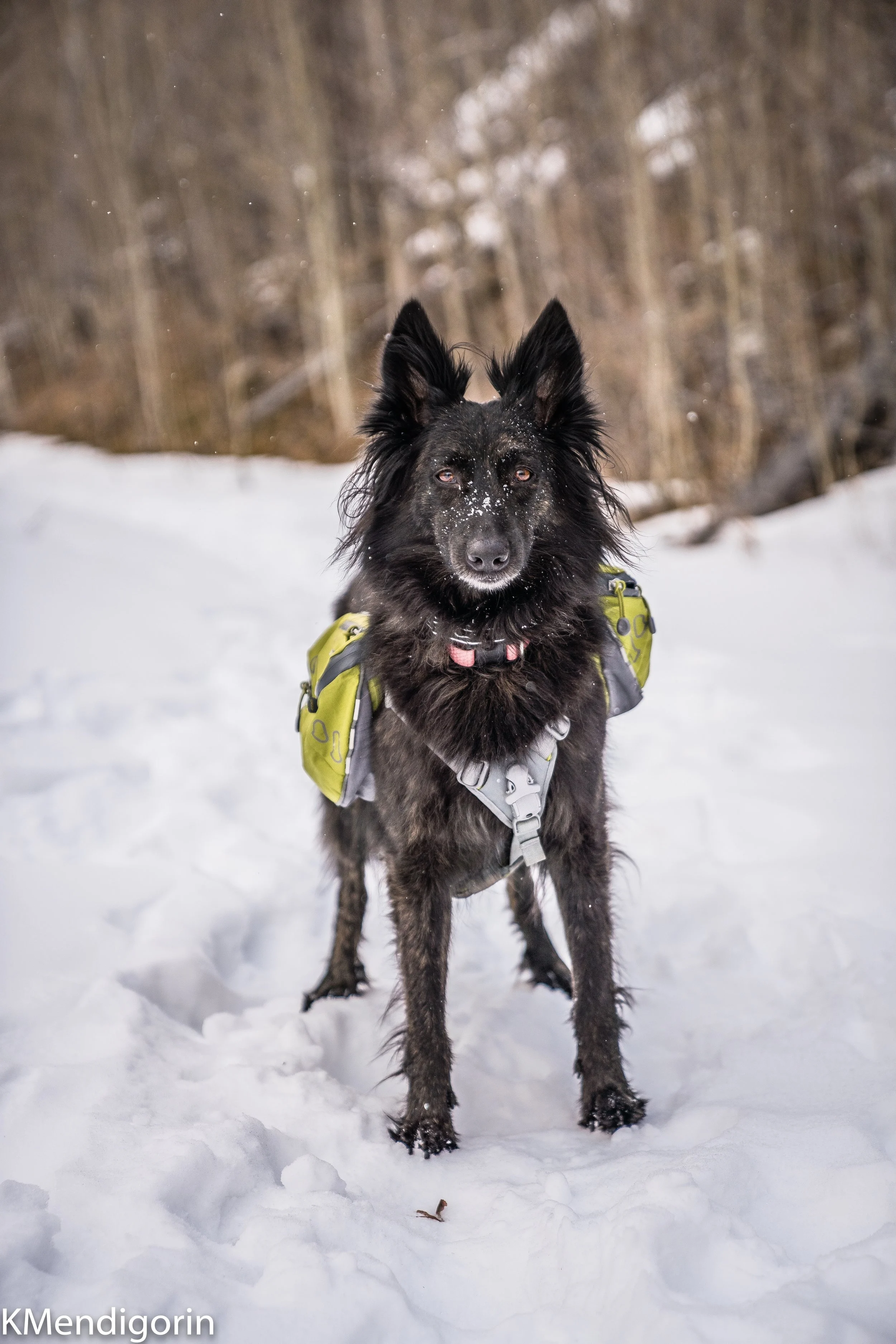
Practicing real-world obedience means stepping out into public spaces where distractions naturally occur. Working through public parks gives dogs an incredible opportunity to test their focus against joggers, wildlife scents, and passing bikes.
Best On-Leash Trails for Focus and Distraction Work
When training focus in open environments, paved paths and well-maintained loop trails provide predictable footing and ample room to create distance from unexpected triggers.
- Cherokee Park Loop: Spanning roughly 4.6 miles, this popular loop provides a fantastic mix of gentle elevation changes, shaded tree lines, and open greenspace. It is a wonderful venue for practicing loose-leash heeling around other hikers, strollers, and cyclists.
- Scenic Loop Trail: At an easy 2.4 miles on paved asphalt, this path features wide lanes and clear sightlines. The ample room makes it simple to step off to the side to work on impulse control while other park visitors pass by.
- Floyds Fork Trails: Following alongside peaceful waterways, these routes offer rich natural scents and moderate foot traffic, making them ideal for intermediate dogs practicing handler focus amid wildlife distractions.
Navigating Off-Leash Dog Runs and Multi-Use Parks
While structured walking focuses heavily on on-leash discipline, knowing how to navigate multi-use parks and designated dog runs is an important part of owning a balanced dog. Many large community parks feature dedicated dog runs where owners can practice off-leash recalls in safely fenced spaces.
For example, large regional parks often divide their off-leash zones into designated small-dog and all-dog sections to keep play safe and manageable. Locations like the Barklands of Floyds Fork provide roughly 4 acres divided into separate zones, while Champions Dog Run covers 3.6 acres with dedicated sides for dogs of different sizes. Other popular options include the 3-acre Cochran Hill run inside Cherokee Park and the sprawling 6-acre Sawyer Dog Park at E.P. 'Tom' Sawyer State Park, which offers multiple two-acre fields.
Before heading to any public dog run, always review local rules and safety guidelines. Bring current vaccination records, confirm the park is open after wet weather, and consult resources like Dog Run Information for park guidelines and seasonal updates.
How to Choose a Safe and Qualified Professional Dog Walker
Handing your leash over to someone else requires immense trust. Not every person with a pair of sneakers understands canine body language or knows how to prevent an emergency on the sidewalk. When searching for a provider, look for seasoned professionals who prioritize safety, structure, and accountability over simple companionship.
Always ask prospective handlers whether their staff are thoroughly background-checked, bonded, and insured. Inquire about their experience with canine behavior, safe leash handling, and whether they hold certifications in canine CPR and first aid. A truly qualified handler welcomes your questions and gladly explains how they handle emergencies or reactive encounters.
Evaluating Safety Protocols, GPS Tracking, and Daily Health Reports
Modern structured walking services use reliable technology to keep you connected throughout the day. You should never have to wonder where your dog went or how their session played out.
- Real-Time GPS Tracking: Detailed route maps show you the exact distance, speed, and time spent on the walk.
- Health and Elimination Updates: Handlers should note bathroom habits, water intake, and any physical abnormalities like limping or fatigue.
- Behavioral Notes: Clear feedback on how your dog handled specific distractions helps you maintain consistency during your evening family walks.
- Emergency Plans: A professional handler always carries first aid supplies, extra safety clips, and direct contact numbers for your preferred veterinarian.
Cost Expectations for Structured Dog Walks in Louisville
Because structured walks involve active handling and behavioral reinforcement, their pricing reflects the advanced skill and time invested compared to casual neighborhood drop-ins.
- Standard 30-Minute Structured Walk: Typically ranges from $25 to $35 per session. These are ideal for midday potty breaks combined with focused leash practice.
- Adventure Walks and Hikes (45 to 60 Minutes): Usually range between $35 and $55 per outing, accounting for travel to trailheads, longer exercise windows, and higher energy expenditure.
- Pack Walks (45 Minutes): Often priced around $20 to $30 per dog, offering great value for dogs ready for calm group socialization.
Investing in structured walking pays lifelong dividends by preventing expensive behavioral issues down the road. If you want more tips on training costs and real-world behavior fixes, browse our trainers blog for ongoing training insights.
Frequently Asked Questions About Structured Dog Walking
How do structured dog walks help dogs with leash reactivity?
Structured walks tackle reactivity by changing your dog's emotional state and teaching them a clear alternative behavior. When an untrained dog spots another dog, they often panic or get overly excited because they do not know what else to do.
During a structured walk, the handler maintains a safe threshold distance where the dog can see the trigger without losing control. We use counter-conditioning and clear leash cues to redirect their focus back to the handler. Over time, your dog learns that spotting another dog simply means "check in with my human," creating lasting neutrality.
How often should a dog participate in structured walking sessions?
Consistency is key to forming solid habits. For young dogs, working breeds, or pups working through behavioral challenges, participating in structured walks 3 to 5 times per week produces rapid progress.
Daily structured walking keeps energy levels balanced, prevents boredom-based destructive chewing at home, and ensures that leash manners become second nature rather than an occasional party trick.
What equipment should my dog wear during a structured walk?
Your dog should wear secure, properly fitted gear suited to their training level. We recommend a sturdy 4-to-6-foot flat leash paired with the training collar that matches your dog's current communication plan, such as a slip lead or prong collar.
We avoid stretchy elastic leashes and flexi-leads because they teach dogs that pulling generates forward movement. Adding a small safety backup clip connecting the training collar to a flat collar provides an extra layer of security on busy streets.
Building Lasting Leash Success Together
A walk around your neighborhood should be the most enjoyable part of your day, not a stressful battle of tug-of-war. By swapping chaotic strolls for intentional, structured outings, you give your dog the clear guidance, physical exercise, and mental stimulation they need to thrive.
Whether you are raising a bouncy puppy, helping an older companion stay active, or working through tough leash reactivity, the right structure changes everything. At Good Dog Greeley, we bring over a decade of hands-on experience using balanced, real-world methods that create dependable obedience on every block. If you are ready to transform your daily walks and build a calm, confident companion, check out our professional training and structured walking programs and let us help you reach your training goals.