Paws on the Pavement: A Practical Guide to Better Dog Walking
Dog Walking Essentials for a Healthier, Happier Dog
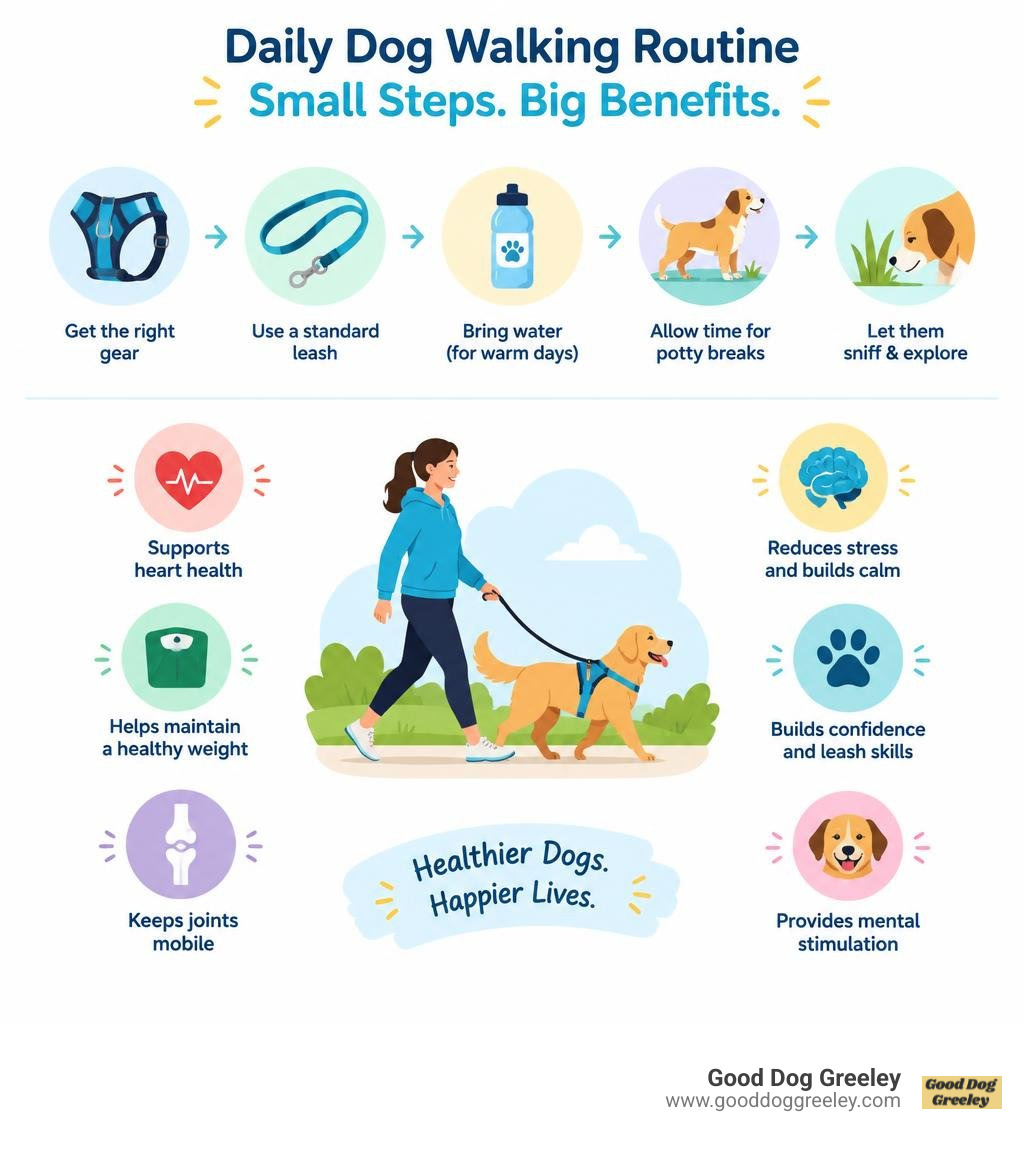
Dog walking works best when it is safe, consistent, and matched to your dog's age, health, and energy. Start with a properly fitted harness or collar, a standard leash, water when conditions are warm, and enough time for potty breaks and sniffing. Aim for daily movement, but split it into short walks if that better fits your schedule or your dog's stamina.
Regular walks do more than burn off energy. They can help with a healthy weight, keep joints moving, encourage calmer behavior, and give your dog practice with leash manners and everyday sights and sounds. For puppies, dogs who react strongly to other dogs or everyday sights and sounds, and busy households, a structured walk can also be a little daily training session.
The goal isn't to wear every dog out. It's to give them the right amount of movement, interesting things to sniff and explore, and focused attention without pushing them too far.
The Physical and Mental Benefits of Daily Dog Walking
We often think of taking our pups out simply as a way for them to use the bathroom. But slipping on that leash every day unlocks a whole world of physical and emotional perks that keep tails wagging for years.
Regular movement helps keep your dog healthy. Getting out into the neighborhood gets their heart pumping, gives their muscles some work, and offers a welcome break from the indoor routine. Walks also give them a chance to explore and can help them unwind afterward.
Here are a few ways daily strolls can help your pup:
- Building stamina and keeping their heart and lungs working
- Keeping joints moving to help ease stiffness
- Encouraging more predictable potty habits
- Giving them a chance to unwind and feel less anxious
- Building trust and a stronger bond with you
Weight Management and Joint Health
Extra weight can be tough on a dog. Those extra pounds put more strain on hips, knees, and backs, and can contribute to arthritis and problems with how their bodies use and store energy.
Daily walks burn calories without much pounding on the joints. They also help keep the muscles that support those joints strong. The American Kennel Club is one familiar name in the dog world, but your vet can help you work out a weight-management plan that fits your own pup. Keeping walks suited to your dog's needs makes it easier to stay active together.
Mental Stimulation and Boredom Relief
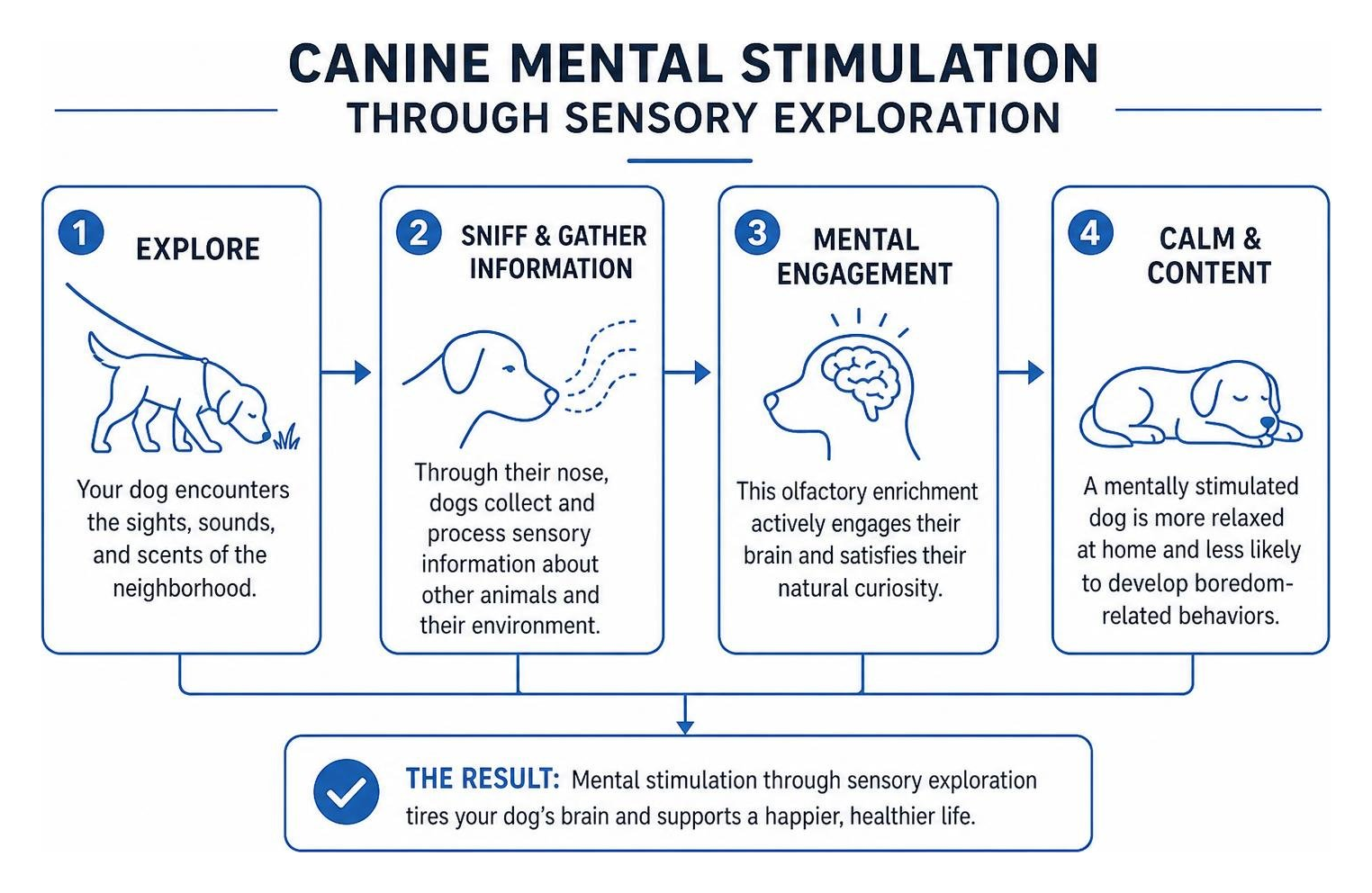
A walk isn't just a gym session for your dog; it's their daily newspaper. Their noses help them explore the world. When they sniff a tree trunk, a fire hydrant, or a patch of grass, they're picking up scent clues about other neighborhood animals.
All that sniffing gives a dog's brain a workout, too. When a pup stays indoors with little to do, boredom can show up as barking, chewing, or pacing. Giving them time to enjoy the neighborhood's sights, sounds, and smells can help them settle down at home.
How Often and How Long Should Your Dog Walk?
There is no one-size-fits-all formula for how long a walk should be. A tiny companion dog will have vastly different exercise requirements than a young working retriever.
Finding the sweet spot means balancing your dog's age, breed background, joint health, and natural stamina. Here is a quick reference table to help you gauge what your pup might need on a typical day:
| Your Dog's Age & Energy | Recommended Daily Walk Time | Suggested Frequency | What to Work On |
|---|---|---|---|
| Puppies (under 6 months) | 15 to 20 minutes per session | 2 to 3 short outings | Leash manners, gentle exploration, potty training |
| Active Adult Working Breeds | 45 to 60+ minutes | 1 to 2 brisk sessions | Burning calories, practicing walking beside you on cue, learning to pause before reacting |
| Small & Low-Energy Breeds | 20 to 30 minutes | 1 to 2 easy strolls | Neighborhood sniffing, light movement, socialization |
| Senior Dogs (7+ years) | 15 to 30 minutes | 1 to 2 gentle walks | Keeping joints moving, slow sniffing, gentle walking |
Finding a Walk That Fits Your Dog
Puppies are still growing, including the growth plates near the ends of their bones. Long marches can put stress on their developing joints. Keep outings short and playful, with plenty of chances to rest along the way.
Senior pups may have arthritis or hip dysplasia, a condition where the hip joint doesn't fit together properly. Slow, sniff-filled strolls on flat surfaces can be a good fit, with your vet's guidance if movement is uncomfortable. Energetic working breeds like German Shepherds, Border Collies, and Labs may enjoy brisk walks with clear practice goals, while a lower-energy companion dog may be happy with a relaxed 20-minute trip around the block. Let your dog's comfort and stamina help set the pace.
Could Your Dog Use More Walk Time?
Dogs communicate their frustration through body language and daily habits. If you notice any of the following behaviors, it may be time to increase their daily outing time:
- Frantic evening "zoomies" or pacing back and forth across the living room
- Destructive chewing on furniture, shoes, or drywall
- Excessive barking at every passerby out the front window
- Relentless pulling and lunging on the leash out of sheer frustration
- Unexplained weight gain or loss of lean muscle tone
- Difficulty settling down when the household relaxes at night
Mastering Safe and Structured Walks
A great walk starts with safety, attention, and comfortable, steady leash handling. A standard four- to six-foot flat leash gives your dog some room while helping you stay in control. Retractable leashes can cause burns, break under sudden pressure, or let dogs learn that pulling gets them more slack.

Sidewalk safety also means watching for common neighborhood hazards like broken glass, discarded food wrappers, foxtails, and off-leash dogs approaching unexpectedly. Teaching your dog to yield at street corners and check in with your eyes keeps outings relaxed and hazard-free.
Private Leash Walks vs. Group Pack Outings
Wondering whether to choose private one-on-one walks or group outings? Pack walks can look like a fun social hour, but an uncontrolled group comes with risks. Dogs may get overwhelmed, copy unwanted habits, or get into scuffles when they stop getting along. Close contact with other dogs can also increase exposure to kennel cough or parasites.
Private, one-on-one walks give your dog a handler's full attention. Their walker can watch for signs of stress and practice leash manners at your dog's pace. If your dog is shy, fearful, or reacts strongly to dogs or other things nearby, a private walk gives them space to build confidence without feeling overwhelmed.
Weather Safety and Handling Special Needs
Colorado weather can change in a flash, and keeping paws protected is essential year-round. In the blazing summer heat, asphalt can easily reach temperatures that burn tender paw pads. A great rule of thumb is the seven-second test: place the back of your bare hand firmly against the pavement. If you cannot hold it there comfortably for seven full seconds, it is too hot for your dog to walk on. Plan summer outings for early mornings or late evenings, stick to grassy paths, and bring along plenty of fresh water.
Winter brings freezing sidewalks, hidden ice patches, and harsh chemical ice-melt salts that irritate paws. Protective booties or paw balms help shield sensitive skin, while a quick rinse and towel dry when you get back inside removes toxic chemicals. If you ever need help keeping your dog active during challenging seasons or busy work weeks, our team offers structured dog walking in Greeley designed with complete safety and seasonal comfort in mind.
Hiring Professional Pet Care Walkers and Handlers
When work deadlines, long commutes, or family commitments get in the way of your dog's exercise schedule, hiring a professional walker is a wonderful solution. A trusted handler provides valuable midday potty relief, prevents indoor accidents, and breaks up long, lonely hours with positive human interaction.
When you're choosing a pet care provider, look beyond the app. Ask about their experience, hands-on training in dog behavior and pet first aid, business insurance that can help cover costs if they're responsible for an injury or property damage, and a bond that can help protect you against theft. If you need midday exercise, vacation visits, or pet sitting, take a look at our pet care services to find help that fits your routine.
What to Look for in a Dog Walker
You should feel comfortable knowing who's looking after your dog while you're away. A good walker keeps you in the loop and lets you know what happened on each visit.
Here are a few things worth looking for:
- Live GPS tracking so you can see the walk's route, distance, and duration
- Visit updates covering potty breaks and fresh water refills
- Clear, high-resolution photos sent to your phone after each walk
- Proof of business insurance for covered injuries or property damage, plus background checks for staff
- Safe, one-on-one leash handling that fits your dog's personality
How Structured Dog Walking Supports Behavior Training
Walks don't have to be a tug-of-war down the street. With a little structure, everyday exercise can become a fun training game. You can practice walking with a slack leash, waiting at crosswalks, letting bicycles pass, and walking beside you when asked.
At Good Dog Greeley, we've spent a decade pairing daily walks with hands-on training to help dogs practice good manners. Whether you've got an energetic puppy learning leash basics or an adult dog learning to stay calm around dogs or other things that set them off, our personalized walk programs bring that practice into everyday outings.
Frequently Asked Questions About Daily Exercise
How much do walking services typically cost?
Professional dog walks generally cost $20 to $40 for a 20 to 30-minute private walk, while 45 to 60-minute outings typically cost $35 to $55. Many walkers offer a monthly discount when you book regular weekday walks. If you've got more than one dog, there's usually a small fee for each extra pup. Holiday walks may also cost more during busy travel weeks.
What qualifications should I look for in a walker?
Look for a walker who's passed a background check, has business insurance for covered injuries or property damage, and carries a bond that can help protect you against theft. Ask whether they understand your dog's body language, use humane training methods that reward good behavior, and hold pet first aid and CPR certifications. A good walker will want to meet you and your pup before the first walk, get to know your routine, check emergency contacts, and help your dog feel comfortable with them.
How can I fit daily walks into a busy routine?
If you struggle to find a solid 45-minute block every day, break your outings into two or three 15-minute chunks. A quick morning stroll, a brief post-work outing, and a relaxing evening sniff session can easily meet your dog's physical needs without derailing your schedule. On especially frantic days, pairing a midday professional dog walker with interactive indoor food puzzles or flirt-pole games in the yard keeps your dog happy, fulfilled, and calm.
Building a Lifetime of Health and Happiness Together
Setting a predictable daily walking routine does wonders for your dog's health, happiness, and peace of mind. Every step you take together burns off excess energy, sharpens their obedience skills, and deepens the unique bond you share.
If life gets busy or your dog needs extra guidance on the leash, our team at Good Dog Greeley is always here to lend a hand with dedicated, structured care tailored to your family. Grab that leash, step out the front door, and enjoy making every single walk the best part of your dog's day!