Understanding How Dogs Learn and the Science of Dog Obedience
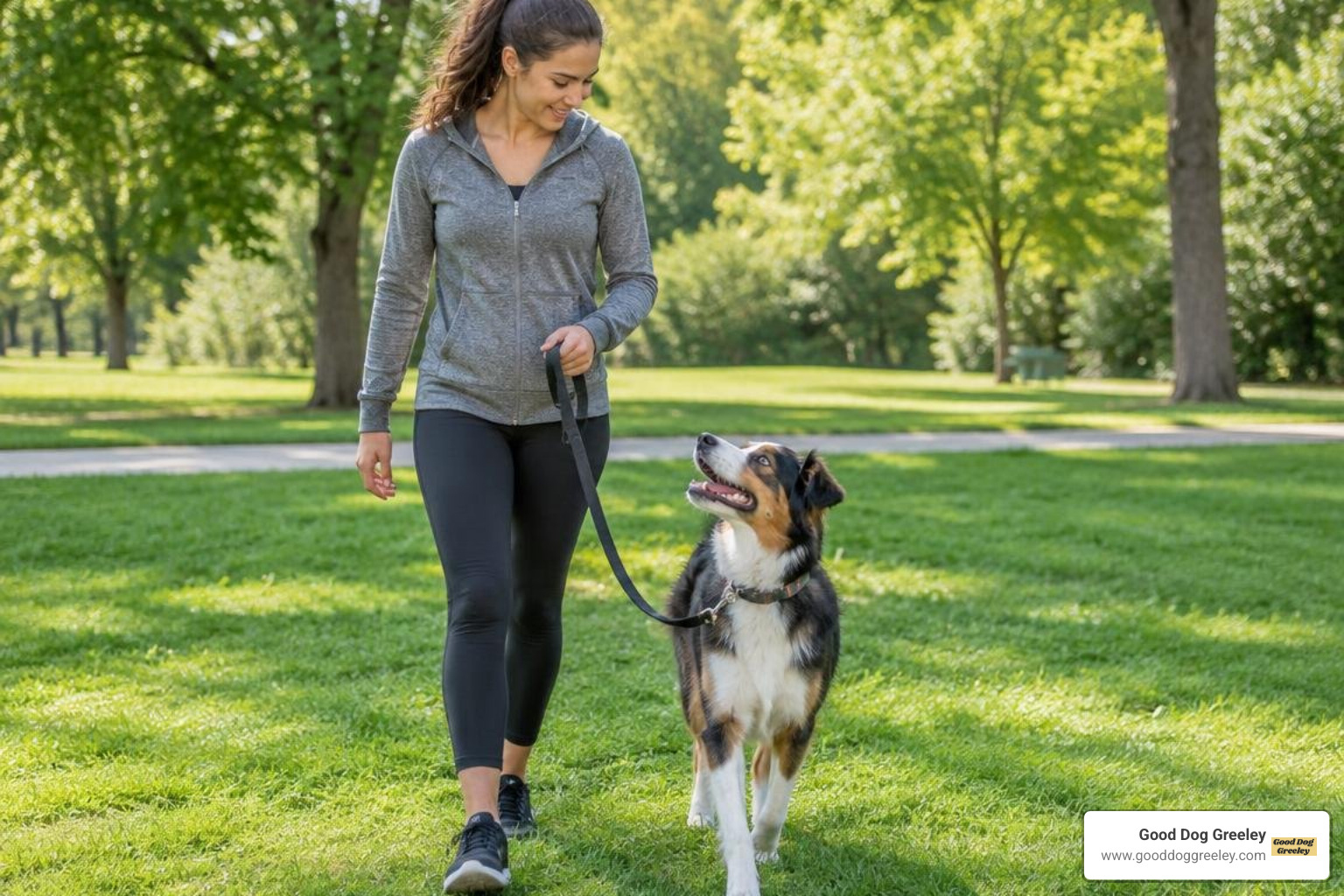
Getting started with dog obedience is simpler than it sounds. Pick one quiet spot, grab some tasty treats, and teach your dog that good choices pay off. When your pup sits and you mark that exact moment with a happy "yes!" and a treat, they start connecting the dots fast. Keep sessions short, around five to ten minutes, and end on a win.
Dogs are constantly taking in information from the world around them. When we work with our dogs, we tap into basic canine learning so they can understand exactly what we want.
Dogs learn mostly by connecting events together. Your dog hears the rustle of a treat bag and immediately perks up because they know food follows. That is classical conditioning at work, just like Pavlov ringing a bell before feeding his dogs. Dogs also learn through everyday experiences, like getting used to the normal sound of a dishwasher or becoming more alert to a repeated noise.
Operant conditioning is where training really happens. Your dog learns that their choices create specific outcomes. If sitting politely at the door opens the door to the backyard, they will sit politely next time.
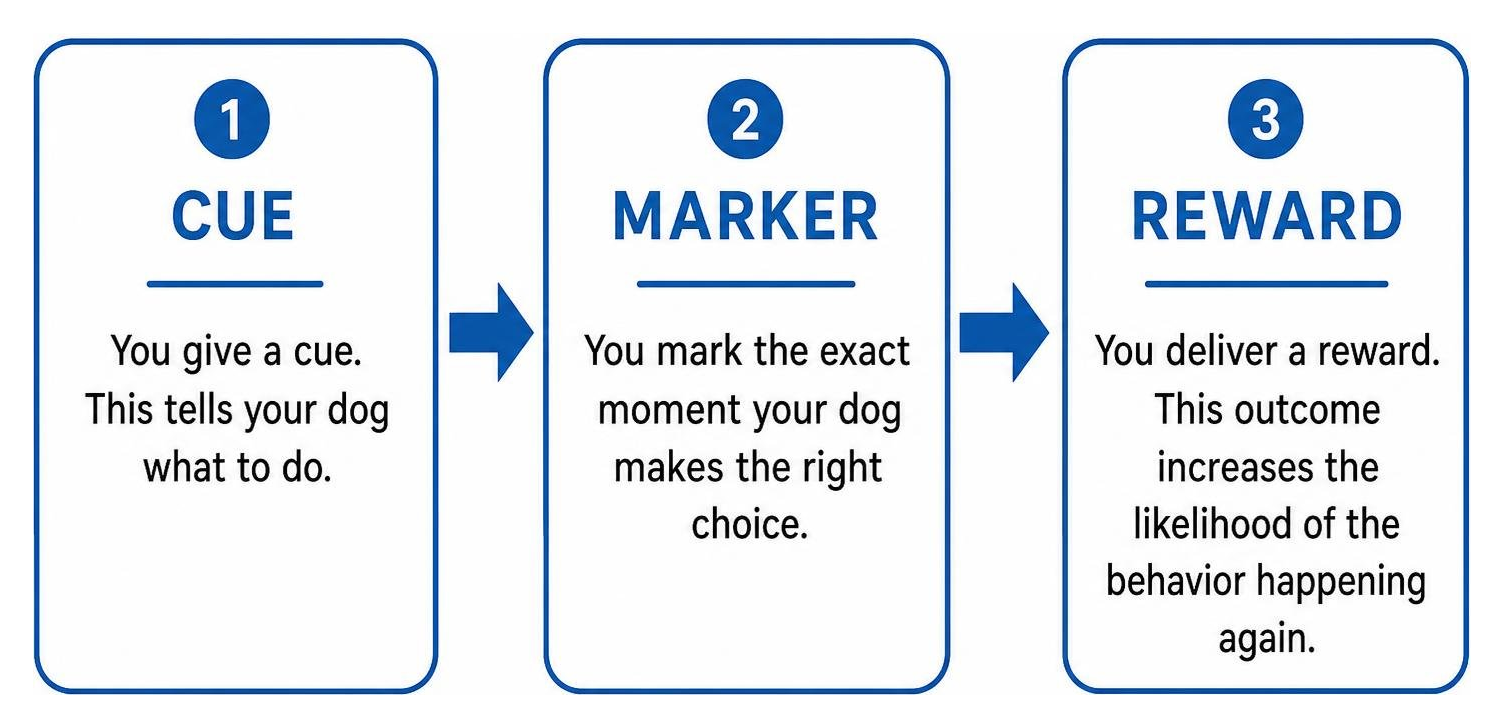
Timing makes all the difference here. When your dog offers the right choice, marking that exact split second with a clicker or a crisp verbal marker like "yes!" bridges the gap between the action and the reward. For a deeper look into canine psychology and day-to-day manners, you can explore our trainers blog.
The Four Quadrants of Operant Conditioning in Dog Obedience
In balanced dog training, we work with four simple ways to guide behavior. The words "positive" and "negative" do not mean good and bad here. Instead, think of them like simple math: positive means adding something, and negative means taking something away. Reinforcement means increasing a behavior, while punishment means decreasing a behavior.
| Quadrant | Meaning | Action Taken | Goal for Behavior | Real-World Example |
|---|---|---|---|---|
| Positive Reinforcement (+R) | Adding a pleasant reward | Add reward | Increase behavior | Giving a tasty piece of chicken when your dog sits |
| Negative Reinforcement (-R) | Removing a mild pressure | Remove pressure | Increase behavior | Releasing gentle leash guidance the moment your dog yields |
| Positive Punishment (+P) | Adding an unpleasant consequence | Add consequence | Decrease behavior | Giving a quick verbal correction when your dog jumps |
| Negative Punishment (-P) | Removing a desired reward | Remove reward | Decrease behavior | Turning your back and withholding attention when your dog jumps |
Using clear communication across these four quadrants helps dogs understand boundaries while keeping training engaging and fair. When tools like prong collars or e-collars are introduced, they provide clear, low-level guidance that helps clarify expectations for your dog.
Motivation, Reward Value, and Canine Sleep Needs
Motivation fuels great training. While praise and petting are wonderful, food is naturally the most effective reward for teaching brand new skills. High-value treats like real meat or cheese hold value in distracting environments, while kibble works fine in a quiet living room. Over time, you can mix in favorite toys or real-life rewards like getting to sniff a favorite tree.
Dogs can also learn by watching. Observational learning studies show that dogs can pick up puzzle-solving tasks much faster after watching another dog complete them first.
Just remember that learning requires tons of energy. Dogs need between 16 and 18 hours of sleep each day, and growing puppies need even more. A tired, overstimulated brain cannot process new information easily. Keep your active training sessions short, around five to ten minutes, and give your pup plenty of quiet nap time to let those new lessons sink in.
Essential Commands for Every Obedience Foundation
Every solid training plan rests on a few core cues that keep daily life safe and peaceful.
- Sit and Down: These are your baseline stationary positions. Lure your dog into place using a treat held close to their nose, mark the exact moment their rear or elbows hit the floor, and reward.
- Stay and Place: Teaching your dog to hold a position until released builds impulse control. Start by asking for a stay for just two seconds before rewarding, gradually increasing the duration over several days.
- Reliable Recall (Come): A reliable recall can save your dog's life. Always pair your recall cue with enthusiastic rewards and never call your dog to you just to do something they dislike, like clipping nails.
- Loose-Leash Walking and Heel: Walking politely without pulling makes daily outings fun. Reward your dog right beside your leg to show them that walking near you is the most rewarding place on earth.
Starting Early: Puppy Training vs. Adult Dog Obedience
Puppies between 8 weeks and 5 months old are sponges for new information. This critical developmental window is the ideal time for gentle lure-and-reward training, confidence building, and exposure to different surfaces, sounds, and sights. Early socialization teaches puppies how to stay calm around the world.
Adult dogs can learn just as easily, though they often bring established habits along with them. Training an adult dog simply involves reshaping old routines and building clearer communication. Whether you are working with an energetic rescue or an older family pet, patience, clarity, and daily practice produce great results at any age.
Proofing Behaviors and Generalization Across Distractions
Dogs are situational learners. A dog that sits perfectly in your kitchen might act like they have never heard the word before when they step onto a busy sidewalk.
To build reliable dog obedience, we use the 3Ds:
- Distance: How far away can you stand while your dog remains in position?
- Duration: How long can your dog hold a cue before you release them?
- Distraction: How much activity can happen around your dog while they stay focused?
Change only one "D" at a time. If you move further away, keep the duration short. If you add heavy distractions, step closer to your dog so they can succeed.
Training Pathways: In-Home Practice, Classes, and Advanced Dog Sports
Building great obedience starts in your living room, but expanding your dog's skills opens up a world of fun activities.
Practicing at home creates a distraction-free baseline where your dog can master mechanics without stress. Once those basics are solid, group classes introduce controlled distractions like other dogs and people, helping your pup learn to focus on you even in a crowd.
For hands-on help, our team provides a full range of services across Northern Colorado, including private lessons, structured pack walks, and home-style board and train programs designed to build real-world reliability.

Taking It Further: Canine Good Citizen and AKC Competition Obedience
If you and your dog love training together, there are fantastic milestones you can work toward.
The American Kennel Club Canine Good Citizen (CGC) program tests everyday manners, such as greeting friendly strangers politely, walking through crowds, and handling supervised separation. It is a fantastic goal for any pet owner and forms the foundation for therapy dog work.
From there, you can explore formal dog sports:
- AKC Obedience: Ranging from Novice to Utility, these trials test precise heelwork, figure eights, scent discrimination, and signals at a distance. If you are curious about entering the ring, check out the AKC guide on Getting Started in Obedience and review official obedience classes.
- AKC Rally: A fun, sport where handler and dog navigate a course of numbered signs, performing different obedience skills at each station.
- International Working Trials: Many handlers enjoy high-level precision sports governed by global regulations like the FCI obedience rules.
Frequently Asked Questions about Dog Obedience
When should I start formal obedience training with my puppy?
You can start gentle foundation training the day your puppy comes home, usually around 8 weeks old. Focus on potty routines, crate comfort, name recognition, and simple lure-and-reward games for sit and down. Keep everything light, positive, and playful.
What is the most effective reward for teaching new commands?
High-value food rewards like soft training treats, freeze-dried liver, or hot dogs are the most effective tools for teaching new behaviors. Once your dog understands the cue, you can fade continuous food rewards and incorporate play, praise, and life rewards.
Why does my dog obey at home but ignore commands in public?
Dogs do not automatically generalize cues to new locations. A backyard has familiar smells, while a public park is full of squirrels, other dogs, and new scents. To bridge this gap, practice in progressively busier areas, step closer to your dog, and use higher-value rewards until their focus matches the environment.
Building a Lifelong Partnership
Great training is not about having a robot dog. It is about building a clear, two-way line of communication so you and your dog can enjoy life together with confidence and freedom. By combining daily structured walks, fair boundaries, and clear rewards, you help your pup become the very best version of themselves.
Whether you are starting with an 8-week-old puppy or want to polish manners on your adult dog, consistent practice makes all the difference. If you live along the Front Range and want experienced, hands-on guidance tailored to your lifestyle, visit Good Dog Greeley to get started today.